 how-to
Why Email Marketing Works for Holiday Lets
Table of Contents
- Why Email Marketing Works for Holiday Lets
- How to Build an Email List for a Holiday Let
- Holiday Let Email Campaign Ideas That Drive Bookings
- Holiday Let Booking Email Examples and Templates
- Email Marketing Best Practices for Holiday Lets
- Measuring Email Success: Metrics That Matter
- Common Email Mistakes to Avoid
- Frequently Asked Questions
Last Updated: October 18, 2026
Why Email Marketing Works for Holiday Lets
Understanding why email marketing works for holiday lets reveals it builds direct relationships with past guests and potential visitors, warm leads who've already shown interest, unlike social media or paid ads.
When guests book, they enter your email list, your most valuable asset. You own that relationship; no algorithm change or platform fee can take it away.
Here's what makes email so effective for holiday lets specifically:
- Guests expect to hear from you before and after their stay
- Email builds trust through personalised communication
- You can remind past guests about availability without being pushy
- Direct bookings through email cost you nothing in commission
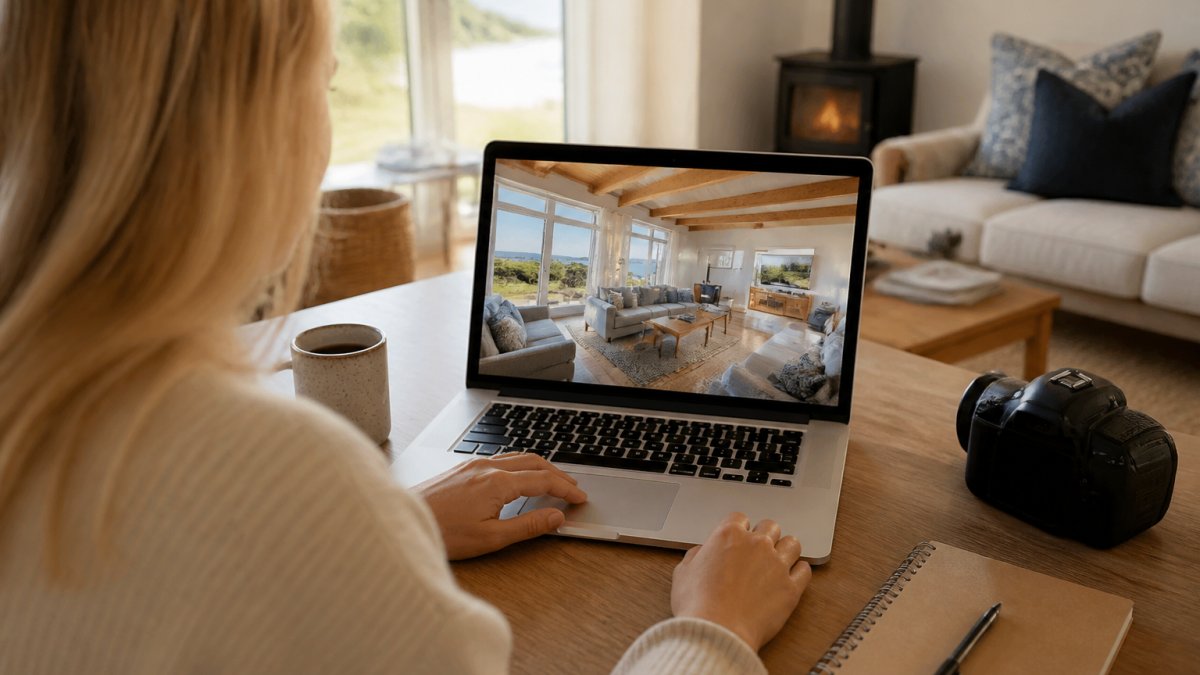
Combined with professional property imagery, email campaigns transform interested prospects into confirmed bookings: the email keeps guests engaged, and the photos sell them on your property.
How to Build an Email List for a Holiday Let
Growing an email list starts the moment someone shows interest. Capture details at every opportunity, and always ask permission to contact them. Start with your booking platform: most let you export guest contact details, and these people are your warmest leads.
Next, add a sign-up option to your listing description and offer something valuable in return, such as:
- A local guide with hidden gems and recommendations
- Early access to seasonal availability
- A discount code for their next booking
- Tips for getting the most out of the property
Make sign-up easy: a simple form asking for name and email is all you need. Asking for phone number or address upfront kills sign-ups.
Holiday Let Email Campaign Ideas That Drive Bookings
Email campaigns work best when they follow the guest journey. Send the right message at the right time.

Pre-arrival emails
Pre-arrival emails set expectations and build excitement. Send these 2-4 weeks before the guest arrives.
Start with a warm welcome confirming booking details and what to expect on arrival, check-in, parking, keys, answering questions before they ask. A week before, send practical details: WiFi passwords, appliance instructions, emergency contacts. Three days before, send a reminder with final details, ask if they need anything, and offer local restaurant or activity suggestions.
Post-stay follow-up emails
Post-stay emails build loyalty and encourage repeat bookings. Send the first within 24 hours of checkout, thanking guests and inviting feedback or photos. A week later, send a review request with a direct link, most guests won't leave reviews unless asked, and reviews drive future bookings. Two weeks later, send a soft re-engagement email with a special offer, such as 10% off if they book within 30 days.
Seasonal availability and special offers
Seasonal emails create urgency. Send them when you have availability gaps: highlight your quietest seasons and offer 15-20% off during shoulder seasons, making clear the offer expires. Send holiday-specific campaigns (Christmas, Easter, summer, bank holidays) 8-12 weeks ahead, since families plan early. Promote last-minute deals to past guests who've booked similar seasons before, they're most likely to convert.
Holiday Let Booking Email Examples and Templates
Effective emails are short, clear, and action-focused.
Welcome Email Template:
Hi [Guest Name],
Thank you for booking [Property Name] for [Dates].
Here's what happens next:
- Check-in is at 3pm on [Date]. Check-out is 11am on [Date].
- Your access code is [Code]. WiFi password is [Password].
- Parking is available [Location]. Bins go out on [Day].
If you have questions before arrival, reply to this email.
See you soon, [Your Name]
Review Request Email Template:
Subject: We'd Love Your Feedback
Hi [Guest Name],
How was your stay at [Property Name]?
Your review helps other guests decide to book with us.
[Click here to leave a review]
Thanks for choosing us, [Your Name]
Re-booking Offer Email Template:
Subject: Come Back Soon - 15% Off Your Next Stay
Hi [Guest Name],
You loved [Property Name] last [Season]. Come back and save 15%.
[View availability]
Looking forward to seeing you again, [Your Name]
Email Marketing Best Practices for Holiday Lets
Email success depends on consistency, relevance, and respect for your guests' inbox, plus getting the legal foundations right, since holiday-let marketing sits inside a specific UK rulebook most generic email guides ignore.
Personalisation and audience segmentation
Personalisation increases opens and clicks. Use guest names in subject lines and body copy, and reference their previous stay or interests. Segment by booking patterns (summer bookers differ from winter visitors) and guest type (families need different information than couples).
A practical segmentation model for a single property or small portfolio splits the list into four groups:
- Past guests, completed a stay; receive rebooking offers and seasonal availability.
- Enquirers who did not book, asked about dates but never confirmed; receive a short follow-up sequence and last-minute availability.
- Newsletter subscribers, opted in for guides or updates but never stayed; receive value-first content, not hard sells.
- Current bookings, upcoming stays; receive operational emails (arrival details, directions, access codes) rather than marketing.
Keeping these groups separate stops you sending a rebooking discount to someone who hasn't arrived yet, a common reason guests unsubscribe.
Email consent and compliance under UK rules
Always get permission before sending marketing emails. In the UK, two regimes apply at the same time, and holiday-let owners need to satisfy both.
UK GDPR governs how you collect, store and use personal data: you need a lawful basis, a short privacy notice, secure storage, and deletion when data is no longer needed.
The Privacy and Electronic Communications Regulations (PECR) govern electronic marketing specifically, requiring consent for marketing emails to individuals with a limited exception for existing customers.
The practical rules for a holiday let are:
- Do not pre-tick the consent box. Consent must be a positive action. A blank, unticked box that the guest actively selects is the safe approach.
- Separate consent from the booking terms. Do not bundle marketing consent into your booking conditions. If a guest must accept marketing to complete a booking, that consent is not freely given.
- Name your business and purpose. The consent statement should say who is contacting them and what they will receive (for example, "We would like to send you occasional availability updates and offers for [Property Name]")
- Include an unsubscribe link in every marketing email. It is a PECR requirement, and it must be easy to use. Operational emails about an existing booking are not marketing and do not need the same link, but they should still be clearly identified as booking-related.
List hygiene and deliverability
A clean list means better delivery. If someone hasn't opened an email in 6 months, remove them or send a re-engagement email first. Remove hard bounces immediately; retry soft bounces.
Two technical points matter more than most owners realise. First, set up SPF, DKIM and DMARC records on your sending domain, your email platform will give you the exact DNS entries, and without them your messages are more likely to land in spam.
Measuring Email Success: Metrics That Matter
Track what actually drives bookings, the metrics that connect an email to revenue matter most.
The engagement metrics
Open rate tells you if your subject line works. Aim for 25-35%; above 20% is solid. Treat it as directional, since Apple's Mail Privacy Protection can inflate opens.
Click-through rate shows if your content is compelling. Aim for 3-5%.
Unsubscribe rate should stay below 0.5%; higher means your emails aren't relevant or you're sending too often.
Reply rate measures engagement, even a few replies signal people are reading.
Attributing bookings to email
Engagement metrics tell you whether people are reading, not whether email makes money.
1. Unique discount codes. Give each campaign its own code (for example, AUTUMN15 for a September availability email).
**2.
3. A dedicated landing page per campaign. Send seasonal offers to a page that exists only for that campaign (for example, /autumn-offer).
A simple attribution log, campaign name, send date, recipients, clicks, bookings, revenue, is enough for most single-property owners. Review it monthly.
Calculating return on investment
The formula is straightforward:
Return on investment = (revenue attributed to email − campaign cost) ÷ campaign cost
Campaign cost includes your apportioned platform subscription, any discount offered, and the value of your time for a true figure. Attributed revenue should include booking value, not just the deposit.
Worked example: a past-guest rebooking email offers 10% off a £900 week, so the discount is £90. Even one booking would cover the cost many times over, which is why email is usually the highest-return channel available to a holiday let.
The KPIs worth reporting
Rather than reporting opens and clicks in isolation, report these four numbers each month:
- Direct bookings attributed to email, the count and value of bookings where email was the last touch before booking.
- Repeat-booking rate, the share of past guests who book again within 12 months. Email is usually the main lever for moving this number.
- Revenue per subscriber, total attributed revenue divided by the number of active subscribers. It lets you compare campaigns of different sizes fairly.
- Cost per booking, campaign cost divided by attributed bookings. Compare it with the commission you would have paid on a platform booking of the same value; the difference is the margin email protects.
Compare these metrics month to month. Dropping opens mean your subject lines need work; low clicks mean the content needs improvement; healthy clicks without bookings usually point to the landing page or offer, not the email.
Common Email Mistakes to Avoid
Small mistakes kill email effectiveness. Avoid these pitfalls.
Sending too often overwhelms guests, once a week is usually right, once every two weeks is safer if unsure, and more than twice a week drives unsubscribes.
Email marketing works for holiday lets because it builds loyalty, drives repeat bookings, and encourages the reviews that attract new guests. Combined with professional property imagery, email campaigns transform interested prospects into confirmed bookings.
Frequently Asked Questions
Why is email marketing effective for holiday lets?
Email marketing works for holiday lets because it builds direct, owned relationships with past guests outside of booking platforms. Unlike marketplace algorithms, email reaches guests directly in their inbox, reminding them of their experience and encouraging repeat bookings. It costs far less than paid advertising, converts past guests at higher rates than cold marketing, and creates opportunities for referrals and reviews. Email also lets you communicate seasonal availability, special offers, and local recommendations that guests value.
How can holiday let owners build an email list for a holiday let?
Collect email addresses from guests at key moments: during the booking confirmation, in a welcome pack at check-in, and in a post-stay follow-up. Always ask permission explicitly and explain what emails they'll receive. Offer a small incentive, such as a discount on their next stay or a local guide, to encourage sign-ups. Make opt-in simple and visible. Never buy email lists; focus on growing your own list from real guests who have stayed with you and have genuine interest in returning.
What should a holiday let booking email include?
A booking confirmation email should include the guest's arrival and departure dates, property address, check-in instructions, WiFi details, house rules, and emergency contact information. Add a warm personal touch with a brief welcome message. Include high-quality photos of the property to build excitement and set expectations. Provide links to local attractions, restaurants, and activities. End with a clear call-to-action for any questions. A well-structured booking email reduces guest confusion and improves their experience from day one.
How often should you email past holiday let guests?
Send a post-stay thank-you email within 48 hours of checkout, then a review request email 5-7 days later. After that, send seasonal emails about availability and special offers every 4-6 weeks during peak booking periods, and monthly during quieter seasons. Avoid over-mailing; too many emails lead to unsubscribes. Segment your list so returning guests get different messages than one-time visitors. Test and adjust frequency based on your open rates and unsubscribe data to find the balance that keeps guests engaged without annoying them.