 how-to
Holiday Let Marketing for Beginners: A Step-by-Step Guide
Table of Contents
- Step 1: Define Your Target Market and Ideal Guest
- Step 2: Capture Your Property's Selling Points with Holiday Cottage Photography
- Step 3: List Your Property on Holiday Let Advertising Platforms
- Step 4: Build Guest Experience and Encourage Reviews
- Step 5: Use Holiday Let Social Media Marketing to Reach Guests
- Step 6: Drive Holiday Let Direct Bookings with Your Own Website
- Step 7: Measure Performance and Refine Your Strategy
- Frequently Asked Questions
Last Updated: October 14, 2026
Step 1: Define Your Target Market and Ideal Guest
Before spending on holiday let marketing, know who you're trying to reach. Your ideal guest is the person most likely to book and leave happy.
A cosy cottage near hiking trails attracts different guests than a city-centre flat near restaurants.
Write down three things:
- Who currently books your property?
- What do they do for work or leisure?
- What problem does your property solve for them?
Once you know your ideal guest, focus your budget on the channels and messages that work. Most owners fail here: they market to everyone and reach no one.
Step 2: Capture Your Property's Selling Points with Holiday Cottage Photography
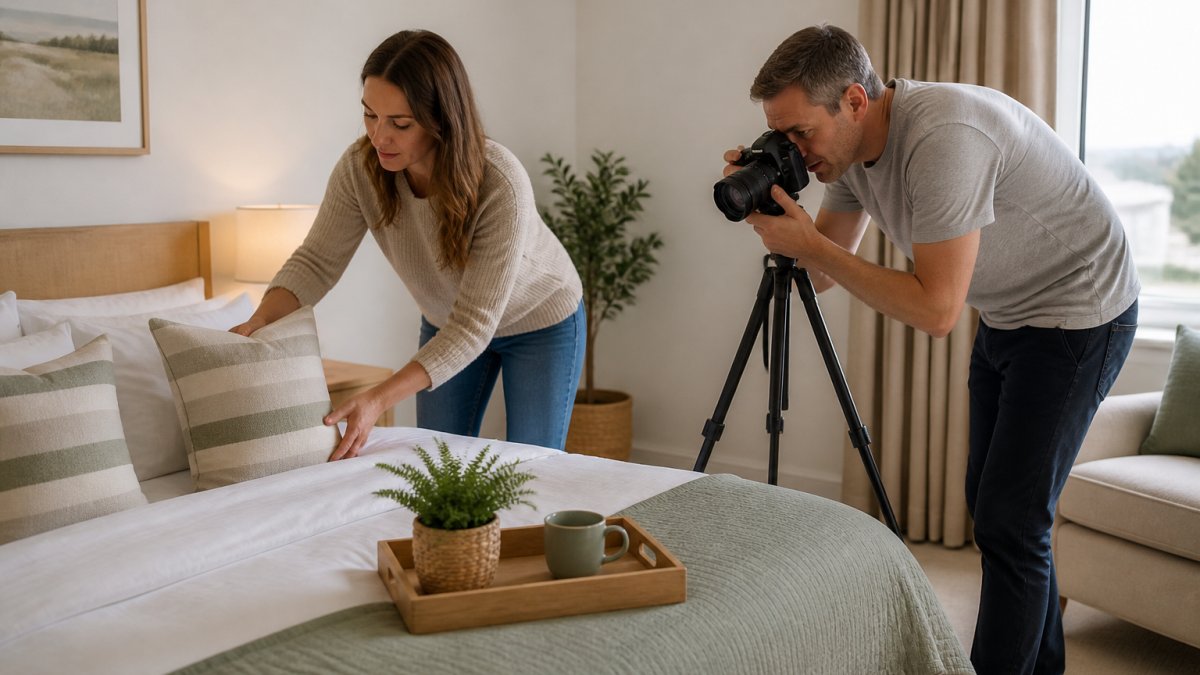
Your property's appearance makes or breaks the booking decision. Most potential guests never visit in person. They only see photos and descriptions.
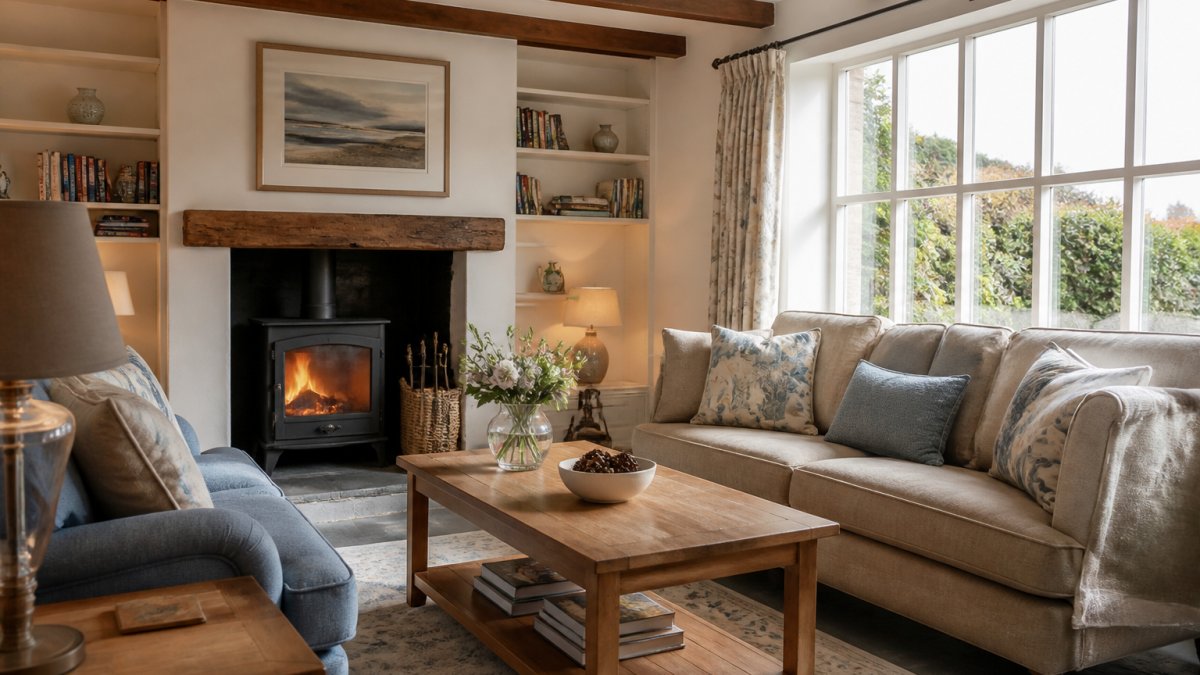
Identify what makes your property special, the view, the modern kitchen, the outdoor space, the period features, and make 5-7 key selling points the focus of your photography.
High-quality images show:
- Room layouts and how spaces connect
- Natural lighting and how bright rooms actually are
- Condition of furnishings and finishes
- Outdoor areas and garden appeal
- Unique features guests care about
Poor photos show empty rooms, harsh shadows, cluttered corners and inaccurate colours. Guests compare your images to others, and better photos win bookings.
Professional photography removes doubt.
Step 3: List Your Property on Holiday Let Advertising Platforms
The major holiday let advertising platforms reach millions of searchers monthly, but they are not interchangeable.
- Airbnb: host service fee typically around 3% of the booking subtotal under the host-only fee model, though the split-fee model (guest pays a service fee) still applies in some listings. Cleaning fees and taxes are handled separately.
- Booking.com: commission is usually in the region of 15% of the room rate, excluding taxes and certain fees. It has a huge international audience and strong brand trust with older and overseas travellers.
- Vrbo: subscription or pay-per-booking models exist, with commission broadly comparable to other major platforms. It skews towards whole-property, family and longer-stay bookings.
- Cottages.com and similar UK cottage specialists: commission structures vary and are usually negotiated or tiered, often in the mid-teens to low twenties percent range. They attract guests specifically searching for self-catering cottages.
- Sykes Holiday Cottages, Hoseasons and independent agency-style platforms: these often bundle marketing, photography and sometimes property management, but take a larger share of the booking in return.
Always confirm current rates before committing, as commission terms change and promotional rates are common for new hosts.
Different platforms attract different guests.
Your listing should include:
- 15-25 high-quality photos (minimum)
- Clear, honest property description
- Accurate guest count and bedroom breakdown
- Amenities list (WiFi, heating, parking, garden)
- House rules and cancellation policy
- Competitive nightly rate
- Accurate location and travel information
Accuracy is not just good manners. Under the Consumer Protection from Unfair Trading Regulations 2008, misleading descriptions can amount to an unfair commercial practice, and the Advertising Standards Authority's CAP Code requires marketing communications not to mislead (Accommodation booking websites: misleading descriptions and practices).
If you collect guest email addresses for marketing, you must comply with the UK GDPR and PECR: get clear consent before sending marketing emails, explain what you'll do with the data, and offer an easy opt-out (How do we comply with the PECR electronic mail marketing rules?).
Platform policies matter too. Airbnb, Booking.com and Vrbo each have rules on cancellation, guest communication, off-platform contact and review disputes.
Don't list everywhere at once.
Step 4: Build Guest Experience and Encourage Reviews
A great guest experience leads to repeat bookings and reviews.
Make the experience memorable from arrival:
- Provide clear check-in instructions before arrival
- Stock a welcome folder with local recommendations
- Ensure the property is spotlessly clean
- Check that heating, WiFi, and appliances work
- Leave contact details for emergencies
- Stock basics (tea, coffee, toilet roll, soap)
After guests leave, ask for reviews within 24 hours with a friendly message and a direct link to your review page.
Respond to every review.
More reviews improve your search ranking on all platforms, properties with 20+ reviews rank higher than those with 3, meaning more visibility, enquiries and bookings.
Step 5: Use Holiday Let Social Media Marketing to Reach Guests
Holiday let marketing through social media reaches potential guests where they spend time, and doesn't require a huge budget, just consistency and genuine content.
Focus on one or two platforms where your ideal guest spends time:
- Instagram (visual, works well for holiday lets)
- Facebook (reaches older demographics, good for families)
- TikTok (reaches younger audiences, growing fast)
Post regularly, at least 2-3 times per week. Show real content:
- Photos of your property in different seasons
- Guest testimonials and photos (with permission)
- Local attractions and nearby activities
- Behind-the-scenes of property maintenance
- Special offers and seasonal promotions
Don't sell hard. Share stories. Show why guests love your area. Encourage followers to visit your listing or website.
Use hashtags relevant to your location and property type. #HolidayLet #CottageGetaway #StayLocal. Research hashtags your target guests actually use.
Social media builds relationships: followers feel connected to your property before arriving, so they're more likely to book, return and recommend you.
Step 6: Drive Holiday Let Direct Bookings with Your Own Website
Listing platforms take 15-25% commission per booking; direct bookings keep 100% of the revenue. A simple website with a booking system captures these bookings and builds your own audience.
Your website should include:
- 20+ high-quality photos (use your professional photography)
- Detailed property description and amenities
- Clear pricing and availability calendar
- Booking system (Airbnb's Booking Button, Calendly, or a plugin)
- Guest reviews and testimonials
- Contact form for enquiries
- Local information and nearby attractions
You don't need a complex site, a single page with clear information and a booking button works. Build it yourself with Wix, Squarespace or WordPress, or hire a designer.
Direct bookings work best when:
- Your website ranks in search engines (takes months)
- Guests find you through social media or referrals
- You offer a small discount for direct bookings (1-3% savings)
- Your booking process is simpler than platform sites
Start building your website now, even if bookings take months to arrive. Direct bookings significantly improve your profit margin over time.
Step 7: Measure Performance and Refine Your Strategy
You can't improve what you don't measure. Most beginners track bookings and nothing else, which tells you what happened but not why.
Track these metrics for each marketing channel:
| Channel | Key Metric | How to Track |
|---|---|---|
| Listing platforms | Enquiries, views-to-booking rate | Platform dashboard |
| Website | Visitors, conversion rate, cost per booking | Google Analytics and booking system |
| Social media | Followers, engagement, link clicks | Platform insights |
| Reviews | Rating, count, response rate | Listing platform |
| Direct bookings | Revenue, source, repeat rate | Booking system |
| Paid ads | Cost per click, cost per booking | Ad platform |
The numbers that actually change decisions are these:
- Enquiry-to-booking conversion rate. If 20 people enquire and 4 book, that is 20%. If it drops to 10%, something in your pricing, photos or response time has changed.
- Occupancy rate. Nights booked divided by nights available. A common target for a well-marketed holiday let is 60-70% across the year, but this varies hugely by location and property type.
- Average daily rate (ADR). Total revenue divided by nights booked. Raising ADR by £10 on 150 nights is £1,500 a year with no extra work.
- Booking lead time. How far ahead guests book. If most book 30 days out, you can discount late. If they book 6 months out, you need to be visible early.
- Cost per booking. Total channel spend divided by bookings from that channel. This is the single most useful number for deciding where to spend.
Here is a worked example. Suppose you spend £300 a month on social media ads and get 6 bookings. Your cost per booking is £50.
Seasonality changes everything. Most UK holiday lets see three demand phases:
- Peak season (school holidays, bank holidays, summer). Demand is high, so hold your rate, set minimum stays of 3-7 nights, and do not discount. Your job is to fill the calendar at full price.
- Shoulder season (spring and autumn). Demand is moderate. This is when you test promotions, offer mid-week discounts, and target couples and remote workers. Minimum stays of 2-3 nights work well.
- Off-season (winter, excluding Christmas and New Year). Demand is low. This is when you push longer stays, work-from-anywhere packages, and local off-season events. Consider a 3-for-2 night offer or a weekly discount.
Your content should follow the seasons too. Post autumn walks and cosy fireside shots in October, not in June.
Check your metrics monthly and review the full picture quarterly. Ask:
- Which channels bring the most enquiries, and which convert best?
- Which guests stay longest and leave the best reviews?
- Where is my cost per booking lowest?
- What is my occupancy in each season, and where are the gaps?
Then adjust:
- Shift budget towards the 2-3 channels with the lowest cost per booking and best guest quality.
- Test one change at a time so you know what worked.
- Improve the weakest link first. If enquiries are high but bookings are low, fix pricing or photos. If traffic is low, fix visibility.
- Build a simple spreadsheet with one row per month and one column per metric. It takes ten minutes and replaces guesswork with evidence.
A common mistake is spreading effort equally across all channels.
Frequently Asked Questions
How can professional photography help increase holiday let bookings?
High-quality photography removes doubt and builds trust instantly. Guests decide within seconds whether to explore your listing further. Professional images show your property's layout, finishes, and atmosphere clearly, reducing guest complaints about mismatched expectations. Properties with professional photography typically see higher inquiry rates and faster booking conversions compared to phone camera images. Investment in professional photography directly supports your entire holiday let marketing strategy.
What are the best holiday let advertising platforms to start with as a beginner?
Airbnb and Booking.com are the largest platforms for holiday rentals and offer strong visibility to international guests. Vrbo (Vacation Rental by Owner) works well for family properties. Staycations.com focuses on domestic travellers. Start with 2-3 platforms rather than all at once; managing listings across too many platforms becomes time-consuming. Each platform has its own audience, so test which drives the most bookings for your property type and location.
How do I get more direct bookings for my holiday let?
Direct bookings reduce commission fees and build guest relationships. Create a simple website showcasing your property with professional photos and clear booking instructions. Include your direct booking link in your email responses to platform enquiries, and add it to your social media profiles and email signature. Encourage returning guests to book directly by offering a small discount or loyalty benefit. Direct bookings require patience; they typically grow as your reputation builds and guests discover you through reviews and word of mouth.
Is professional photography worth the cost for a small holiday let with low booking volume?
Yes. Even small properties benefit significantly from professional imagery. Poor photos lose bookings before guests ever contact you. Professional photography improves your conversion rate across all platforms, meaning each listing inquiry is more likely to become a booking. Over a year, better photos typically pay for themselves through increased occupancy and higher nightly rates. The cost is a one-time investment that supports all your holiday let marketing channels simultaneously.