 ultimate-guide
Property Listing SEO Checklist: A Complete 2026 Guide
Table of Contents
- What Is a Property Listing SEO Checklist and Why It Matters
- Keyword Research and Search Intent for Property Listings
- Crafting an SEO Title for Property Listings That Ranks
- Writing Property Listing Description Examples That Convert
- Property Listing Photography and Image Optimisation
- On-Page SEO, Structured Data, and Technical Elements
- Local SEO, Google Business Profile, and Map Visibility
- Measuring Success: Listing-Level SEO KPIs and Audits
- Frequently Asked Questions
Last Updated: October 17, 2026
What Is a Property Listing SEO Checklist and Why It Matters
Most property professionals treat SEO as an afterthought. They upload photos, write a quick description, and hope the listing platform's algorithm does the heavy lifting.
Here's what makes a property listing SEO checklist essential: it ensures nothing is missed. It covers keyword selection, title optimisation, description crafting, image naming, structured data markup, and local search visibility.
The checklist becomes your launch playbook. It removes guesswork and ensures your listing gets maximum visibility from day one.
Keyword Research and Search Intent for Property Listings
Start with understanding what buyers and tenants actually search for.
A buyer searching "two-bed flat Shoreditch" has different intent from someone searching "affordable housing East London" or "Victorian conversion Shoreditch." The first is ready to view; the second is still exploring.
Use these steps to identify the right keywords for your property:
- Start with your property's core attributes: bedrooms, property type (flat, house, terrace), location, and unique features
- Search Google for similar properties in your area and note what keywords appear in titles and snippets
- Look at Google's autocomplete suggestions when you type your location, these reveal what people actually search for
- Check local property portals and note common search filters; these often mirror keyword patterns
- Consider intent clusters: someone searching "family homes near schools" needs different information than someone searching "investment properties high yield"
Once you've identified 3-5 core keywords (exact location + property type + key feature), use them strategically in your title tag, meta description, and opening paragraph of your listing description.
Crafting an SEO Title for Property Listings That Ranks
Your title tag is the single most important on-page SEO element for a property listing.
The best structure for a property listing title is: [Bedrooms] [Property Type] [Key Feature] in [Location] | [Price or Unique Selling Point]
Examples:
- "3-Bed Victorian Terrace with Garden in Islington | Newly Renovated"
- "2-Bed Modern Flat, River Views, Canary Wharf | £625,000"
- "4-Bed Family Home, Off-Street Parking, Clapham | Guide Price £850K"
Keep your title under 60 characters where possible (search engines truncate longer titles).
Test your title by searching for similar properties in your area.
Writing Property Listing Description Examples That Convert
Your listing description serves two audiences: search engines and humans. For search engines, it needs to include your target keywords and structured information about the property.
Start with a strong opening sentence that combines location, property type, and emotional appeal:
- "This light-filled Victorian conversion sits on a quiet tree-lined street in Islington, just five minutes from the tube."
- "A rare find: a four-bed semi with a south-facing garden and off-street parking in Clapham." Crafting these descriptions requires a precise balance of descriptive flair and technical accuracy, much like the strategic approach required for SEO for lenders to ensure that financial services reach the right homeowners at the perfect moment.
Follow with 2-3 sentences about the property's standout features. Don't just list bedrooms and bathrooms; explain what makes them valuable.
Then structure your description in logical sections:
- Location and transport, Distance to tube, schools, shops, parks. Use specific numbers: "15 minutes to King's Cross" not "close to transport."
- Property layout and condition, Describe flow, light, and recent updates. Use sensory language: "bright", "spacious", "newly refurbished", "period features."
- Key features and selling points, Garden, parking, storage, outdoor space, views, unique characteristics.
- Practical information, Council tax band, EPC rating, tenure (freehold/leasehold), service charges if applicable.
Include your primary keyword naturally 2-3 times throughout the description.
For holiday lets and hospitality venues, describe atmosphere and experience, not just features.
Property Listing Photography and Image Optimisation
Professional property photography is non-negotiable for SEO and conversion. Search engines now factor image quality into ranking signals, and buyers skip listings with poor photos entirely.
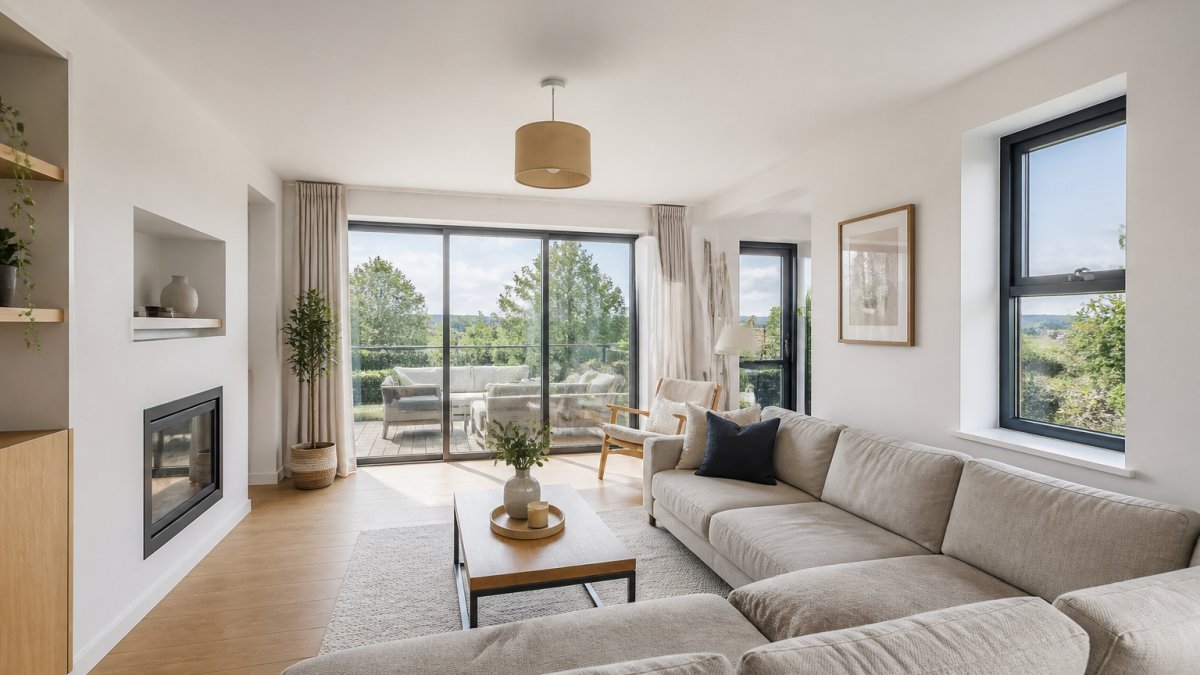
Here's how to optimise images for SEO:
- Shoot in good lighting, Natural daylight is essential. Avoid dark, shadowy rooms or harsh artificial lighting. Buyers need to see the space clearly.
- Capture the full layout, Include wide shots that show room flow and proportions, not just close-ups of features.
- Name files descriptively, Use "3-bed-islington-living-room.jpg" instead of "IMG_4521.jpg". Search engines read filenames.
- Add alt text to every image, Alt text describes the image for accessibility and SEO. Example: "Bright living room with bay window and period fireplace in Islington Victorian terrace."
- Compress images for fast loading, Large image files slow page load, which hurts rankings. Aim for under 100KB per image without visible quality loss.
- Include images of key features, Parking, garden, storage, outdoor space, views. These are search intent drivers.
Property Home Photos ensures every image is shot to professional standards with proper lighting, composition, and file optimisation.
For holiday lets and hospitality venues, shoot lifestyle images that show how guests experience the space: someone relaxing in the garden, breakfast at the table, the view from the bedroom window.
On-Page SEO, Structured Data, and Technical Elements
Beyond title and description, several technical elements signal to Google that your listing is high-quality and relevant.
Meta description, Write a 150-160 character summary of your listing.
Heading structure, Use H1 for the property title, H2 for major sections (Location, Features, Floorplan).
Schema markup (structured data), This is where most property listings fall short.
Include these schema types:
- Property schema (type, bedrooms, bathrooms, price, address)
- ImageObject schema (for each photo, with description and URL)
- LocalBusiness schema (if you're an agency, include contact details and office location)
Page speed, Slow-loading listings bounce visitors and rank lower.
Mobile optimisation, Over 70% of property searches happen on mobile.
Local SEO, Google Business Profile, and Map Visibility
Local SEO is where property listings truly shine. Buyers search with geographic intent, they want homes in a specific area, not the whole country.
If you're an estate agent or property developer, ensure your Google Business Profile is complete and accurate:
- Verify your business location and add your office address
- Add high-quality photos of your office and team
- Write a detailed business description that includes your service area (e.g., "Estate agents in Islington, Shoreditch, and Hackney")
- Encourage satisfied clients to leave reviews, Google prioritises profiles with recent, positive reviews
- Post regular updates about new listings, open houses, or market insights
For individual property listings, ensure the property address is formatted consistently across all platforms. Inconsistent address formatting (e.g., "Islington, London" vs "Islington, London, UK") confuses search engines and hurts local rankings.
Include location-specific keywords in your listing description: neighbourhood name, nearby landmarks, transport links, local amenities.
Measuring Success: Listing-Level SEO KPIs and Audits
SEO isn't complete without measurement. Track these KPIs to understand what's working and where to improve:
- Search impressions, How many times does your listing appear in search results? Use Google Search Console to track this.
- Click-through rate (CTR), What percentage of search impressions result in clicks? A CTR below 2% suggests your title or meta description needs improvement.
- Time on page, How long do visitors spend viewing your listing? Low time-on-page suggests the photos, description, or layout isn't engaging.
- Enquiry volume, The ultimate KPI. Are enquiries increasing month-over-month? If not, revisit your title, description, and photos.
- Bounce rate, What percentage of visitors leave without viewing multiple pages or enquiring? High bounce rates signal a mismatch between search intent and listing content.
Conduct a listing SEO audit every 30 days:
| Audit Element | How to Check | Target |
|---|---|---|
| Title optimisation | Does it include location + property type + key feature? | Yes, under 60 characters |
| Meta description | Does it summarise the listing and include location? | Yes, 150-160 characters |
| Keyword usage | Are primary keywords used 2-3 times naturally? | Yes, no stuffing |
| Image alt text | Does every image have descriptive alt text? | Yes, all images tagged |
| Mobile responsiveness | Does the listing display correctly on mobile? | Yes, fast load time |
| Schema markup | Is structured data present and valid? | Yes, validated in Google Search Console |
| Local signals | Is address consistent across platforms? | Yes, identical formatting |
Property Home Photos works with agents and owners to ensure listings are photographed and optimised for maximum visibility. Professional imagery combined with proper SEO structure removes friction from the buyer journey and accelerates enquiries.
Frequently Asked Questions
How do I choose keywords for a property listing?
Start by researching what buyers and renters actually search for in your area. Use tools like Google Trends and search bar autocomplete to find terms like "3-bed detached house" or "period property with garden." Focus on location-specific keywords (neighbourhood name, postcode district), property type, and key features ("Victorian conversion," "off-street parking"). Include long-tail phrases like "family home near schools" that match buyer intent. Test 3-5 primary keywords per listing and monitor which ones drive organic traffic.
What should a property listing description include?
A strong property listing description should open with the property's strongest selling point, then cover layout and room count, key features (garden, parking, heating system), condition and age, neighbourhood benefits, and any recent upgrades. Keep it between 150-300 words. Write for the buyer's perspective: explain how they'll use each space and why the location matters. Include property listing description examples that show specific details ("original sash windows" rather than "old windows") and avoid vague claims. Always mention local amenities within walking distance.
How do photos affect property listing SEO?
Search engines rank listings higher when they include multiple high-quality images. Property listing photography improves SEO through optimised filenames, alt text, and image metadata that search engines read. Professional photos also reduce bounce rates because visitors stay longer viewing quality images, signalling to Google that your listing is relevant. Images help with structured data markup, which can trigger rich snippets in search results. Additionally, listings with 10+ professional photos typically generate more clicks and inquiries, boosting your listing's visibility and engagement metrics.
How do I optimise a property listing for search engines?
Start with keyword research to find what buyers search for, then incorporate those terms naturally into your title, description, and headings. Optimise your property listing photography with descriptive filenames and alt text. Add structured data markup (schema.org) to help search engines understand property details. Ensure your listing is mobile-friendly, loads quickly, and includes your Google Business Profile information. Build internal links to related properties and location pages. Collect and display reviews, which signal trust to search engines. Track organic traffic and keyword rankings to identify what's working.
What is the difference between a property listing headline and a description?
Your headline (or SEO title) is the clickable link shown in search results, it should be 50-60 characters and include your primary keyword and top selling point (e.g., "3-Bed Victorian Cottage with Garden, High Street Location"). The description is the longer body text that appears on the listing page itself; it expands on the headline with room details, amenities, neighbourhood benefits, and buyer incentives. The headline drives clicks; the description converts clicks into inquiries. Both must align on key keywords but serve different purposes.
How long should a property listing description be?
Aim for 150-300 words. This length is long enough to include essential details, rooms, features, condition, location benefits, without overwhelming busy buyers scrolling on mobile. Shorter descriptions (under 100 words) miss opportunities to rank for long-tail keywords and don't convey enough detail to build buyer confidence. Longer descriptions (over 400 words) often lose reader attention and dilute keyword focus. Break your description into short paragraphs or bullet points for readability. Test different lengths and monitor which ones generate more inquiries.
Can I improve a holiday let listing to get more bookings using SEO?
Yes. Holiday let SEO follows the same principles as residential property SEO. Use keywords that guests search for: "coastal cottage with sea views," "pet-friendly holiday let," or "luxury barn conversion." Optimise your listing title and description with these terms. Include high-quality property listing photography showing the atmosphere, amenities, and views guests care about. Add structured data to highlight nightly rates, availability, and guest reviews. Build local SEO by mentioning nearby attractions and activities. Encourage guest reviews, which boost search visibility and conversion rates. Professional photography in particular drives more bookings because guests want to see what they're paying for.
What information should I include in a property listing?
Include: property type and age, number of bedrooms and bathrooms, square footage or approximate size, key features (garden, parking, heating, broadband), condition and recent upgrades, floor layout or room descriptions, tenure (freehold or leasehold), council tax band, EPC rating, local schools and amenities, transport links, and unique selling points. For holiday lets, add nightly or weekly rates, check-in/check-out times, house rules, and what's included (linen, Wi-Fi, parking). Use property listing description examples relevant to your property type. Include contact information and clear next steps ("Request a viewing" or "Book now"). Avoid vague language and always be accurate.
Optimising a property listing for search engines doesn't require technical expertise, it requires a systematic approach. A property listing SEO checklist ensures nothing is missed, from keyword selection through launch and measurement. The result is listings that rank higher, attract more qualified buyers and tenants, and close faster. Request a quote from Property Home Photos to see how professional imagery and strategic optimisation can accelerate your property sales and rentals.