 ultimate-guide
Do Virtual Tours Really Help Sell Properties Faster?
Last Updated: October 25, 2026
Quick Summary
Virtual tours property sales create immersive 360-degree digital representations that allow buyers to explore properties remotely, generating more inquiries and qualified viewings than static photos alone. Properties with virtual tours attract wider geographic interest, enable serious buyers to self-qualify before in-person visits, and can reduce time on market when costs are offset against holding expenses and prevented wasted viewings.
- Virtual tours property sales generate more inquiries per listing week and help buyers arrive at viewings already mentally invested in the property.
- Professional virtual tour costs break into four components: capture, processing and hosting, add-ons, and turnaround, each affecting total investment differently.
- Virtual tours work best for high-value properties, complex layouts, vacant properties, holiday lets, and commercial spaces where presentation materially affects buyer decisions.
- Buyers who explore virtual tours ask more informed questions during viewings, reducing orientation time and enabling genuine negotiation.
- Virtual tours are available 24/7 and attract self-qualified leads, while open houses require coordination and often attract unserious browsers.
Table of Contents
- What Virtual Tours Deliver for Property Sales
- Virtual Tour vs Property Photos: Which Converts Better
- How to Prepare a Property for a Virtual Tour
- Virtual Tour vs Open House: Reach and Efficiency
- Choosing Property Virtual Tour Software
- Costs, ROI, and When Virtual Tours Make Financial Sense
- Getting Professional Virtual Tours for Your Listing
- Frequently Asked Questions
What Virtual Tours Deliver for Property Sales
Virtual tours property sales represent an interactive, 360-degree digital representation of a property that allows potential buyers to explore spaces remotely at their own pace.
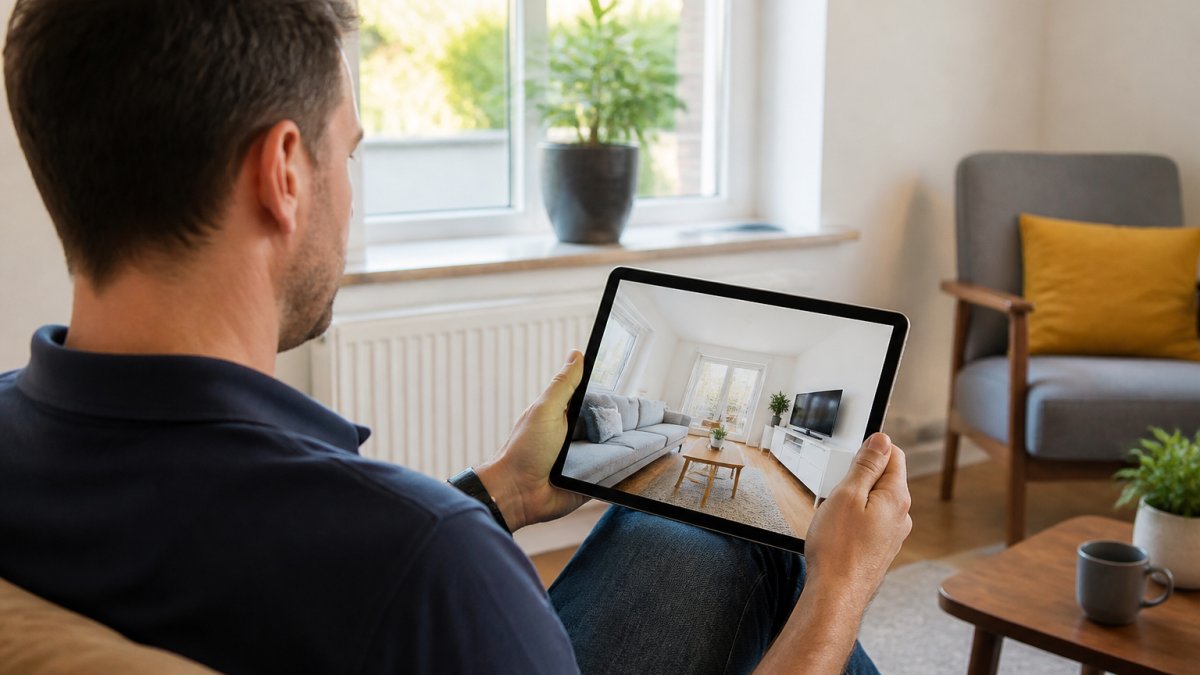
The shift towards virtual tours reflects a fundamental change in how buyers research properties. Remote viewing removes friction from the early stages of the sales cycle.
Virtual tours also serve a practical filtering function. Serious buyers self-qualify by spending time exploring the space.
The engagement difference is measurable in practice. Properties with virtual tours for property sales generate more inquiries per listing week.
Virtual Tour vs Property Photos: Which Converts Better
Static photography captures individual moments. A photo shows you what a room looks like from one angle at one moment in time. Learn how professional photos compare to virtual tours in conversion performance.
The conversion difference comes down to decision confidence. Buyers making an offer based on photos alone carry uncertainty.
Photos remain valuable. They're essential for initial discovery and thumbnails across listings platforms. But they're a starting point, not a complete solution.
For properties with distinctive features, unusual layouts, period details, or outdoor spaces, virtual tours excel because they let buyers understand complexity that photos alone can't convey.
You can explore how professional photography complements this approach through professional property video.
How to Prepare a Property for a Virtual Tour
Preparation determines output quality. The property itself must be in viewable condition, clean, decluttered, and well-lit. Virtual tours capture everything, so minor issues become obvious.
Start with deep cleaning. This includes windows, which affect how natural light appears in the tour.
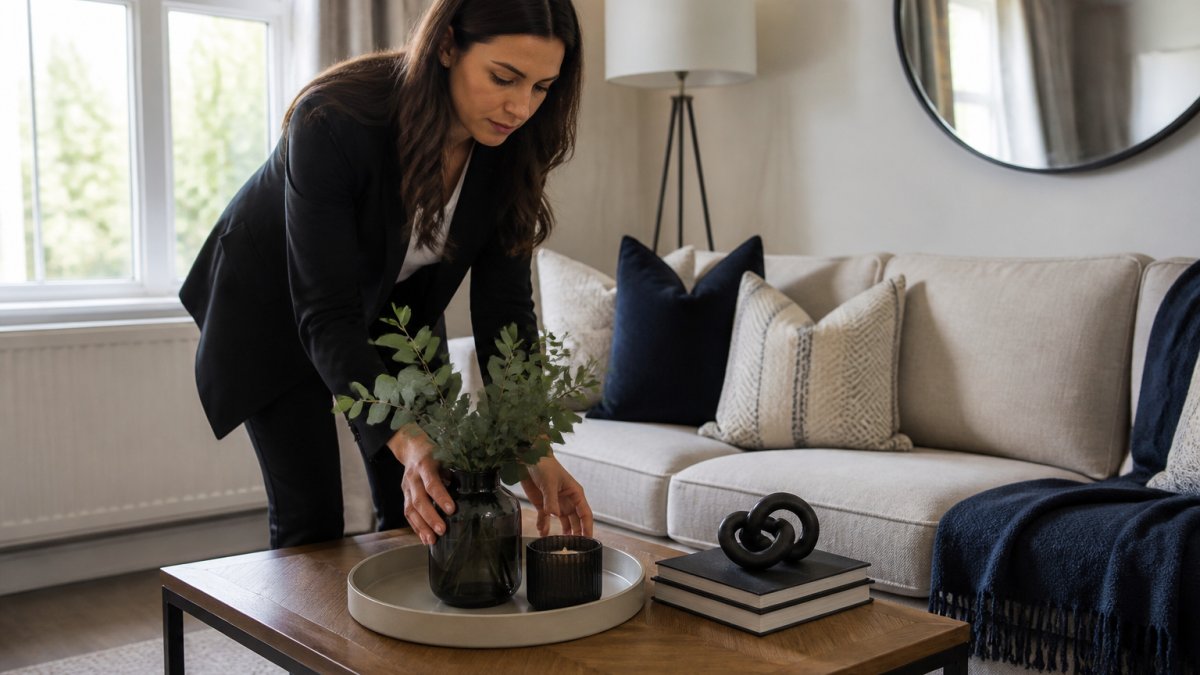
Declutter aggressively. Remove personal items, family photos, and excess furniture that makes spaces feel smaller.
Lighting matters enormously. Natural light is ideal, so schedule the shoot during daylight hours when windows face the sun.
Arrange furniture to show room function and flow. Buyers need to understand how each space works. A bedroom should have a bed.
Remove obstacles from doorways and hallways. Virtual tours work best when the camera can move smoothly through spaces without obstruction.
Virtual Tour vs Open House: Reach and Efficiency
Open houses reach local buyers who can attend at a scheduled time. Virtual tours reach anyone, anytime. The audience difference is substantial.
The time investment differs too. An open house requires coordination, agent availability, property preparation, scheduling. Virtual tours require preparation once, then work continuously.
Virtual tours also reduce wasted viewings. Open houses attract curious neighbours and browsers with no serious intent. Virtual tours attract people already interested enough to spend time exploring.
That said, open houses serve a purpose for certain property types and markets.
Virtual tours also protect your time. Instead of hosting multiple open houses, you can focus on viewings with buyers who've already confirmed interest through the virtual tour.
Choosing Property Virtual Tour Software
Virtual tour software varies in features, ease of use, and cost. Some platforms require professional equipment and technical expertise. Others are designed for simpler, DIY approaches.
Professional virtual tour platforms typically offer 360-degree image stitching, interactive floor plans, and integration with major listing sites.
Simpler platforms focus on basic navigation and ease of use. They're faster to produce and less expensive, but they offer fewer customization options and less sophisticated interactivity.
Integration with listing platforms matters. Can the virtual tour embed directly into property portals where buyers search? Does it work across devices, desktop, tablet, mobile?
Consider whether you want to produce virtual tours in-house or outsource to professionals. In-house production requires investment in equipment and learning.
Costs, ROI, and When Virtual Tours Make Financial Sense
Most guides stop at 'virtual tours pay for themselves'. That is not a decision framework. To judge whether a tour is worth commissioning, you need three things: a realistic cost stack, a defensible way to attribute outcomes, and a clear view of which property types and sale situations tip the balance.
What a virtual tour actually costs
Costs fall into four buckets, and it helps to price each separately rather than accept a single bundled figure:
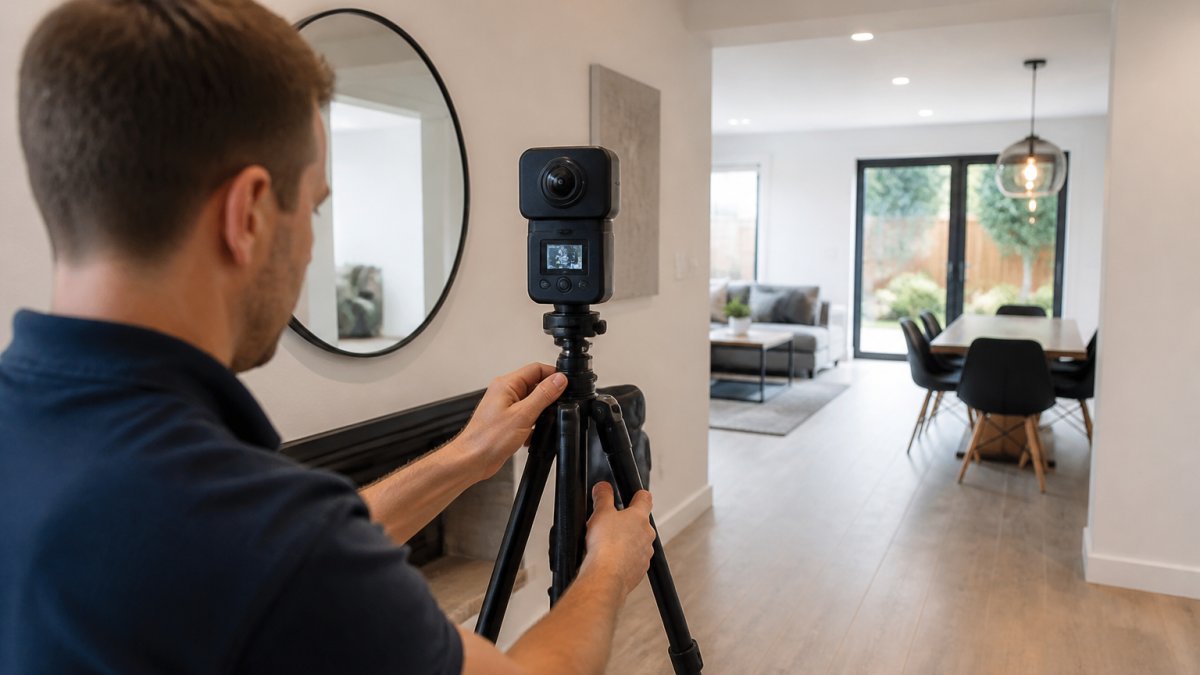
- Capture. A 360-degree camera rig suitable for property work typically runs from a few hundred pounds for a consumer model to several thousand for a professional multi-lens system. Many agents and photographers instead hire a specialist, where the capture fee is usually quoted per property and scales with floor area, number of rooms, and whether exteriors, gardens, or outbuildings are included.
- Processing and hosting. Stitching, colour correction, and hosting on a tour platform are usually charged as a subscription or per-tour fee. Hosting is the recurring cost most sellers forget, a tour that stays live for the whole marketing campaign needs a platform that will keep serving it.
- Add-ons. Interactive floor plans, drone or aerial imagery, measurement tools, and branded navigation all carry a premium. For a distinctive or high-value property these often matter more than the base tour.
- Turnaround. Rush delivery is routinely priced above standard timelines, so build the shoot date into the listing plan rather than paying a premium for a late decision.
Because quotes vary so widely by region, property size, and provider, treat any single 'average price' with suspicion. Ask for an itemised quote that separates capture, hosting, add-ons, and turnaround, then compare like for like.
A defensible ROI calculation
The honest way to model return is to compare the tour's total cost against the outcomes it plausibly influences, and to be explicit about which of those you can actually measure.
- Total cost = capture + processing/hosting for the campaign length + add-ons + any rush fee.
- Value of time saved = (reduction in days on market) × (daily carrying cost: mortgage interest, council tax, insurance, utilities, and any void-period cost for lets).
- Value of viewings avoided = (number of wasted viewings prevented) × (agent time and travel cost per viewing).
- Value of price protection = the extent to which earlier, better-qualified interest reduces the risk of a later price reduction.
A worked example makes the logic concrete. Suppose a tour costs £400 all-in for a campaign. If it shortens time on market by three weeks on a property carrying £60 a day in holding costs, that is roughly £1,260 of avoided cost, before any effect on the achieved price. If it also prevents four abortive viewings at an estimated £50 of agent time and travel each, that is another £200. On that basis the tour is comfortably self-funding even if it does nothing to the sale price.
When the numbers favour a tour, and when they don't
A tour tends to clear its cost most easily in these situations:
- High-value and distinctive properties, where the tour cost is a small fraction of the sale price and presentation materially affects buyer perception.
- Properties with complex or unusual layouts, where photos genuinely cannot convey how spaces connect.
- Vacant properties and new-builds, which photograph and tour cleanly and can be marketed continuously without coordinating access.
- Holiday lets and hospitality venues, where atmosphere drives booking decisions and a tour can reduce cancellations from guests who expected something different.
- Commercial space, where tenants pre-screen and viewings become more productive.
A tour is a harder sell, literally, when:
- The property is a straightforward, low-value listing where the fee is a meaningful share of the margin.
- The market is so hot that properties sell from photos alone before a tour is even processed.
- The property is occupied and cannot be presented well, so the tour would showcase clutter rather than space.
The takeaway
Treat the tour as a marketing cost with measurable offsets, time saved, viewings avoided, price protected, rather than a vague 'premium'. Price it itemised, attribute outcomes cautiously, and reserve it for the listings where the arithmetic and the property type both support it.
Virtual tour costs break down into four distinct components, each affecting the total investment:
| Cost Component | Description | Notes |
|---|---|---|
| Capture | 360-degree camera rig or specialist hire | Scales with floor area and rooms |
| Processing and hosting | Stitching, colour correction, platform fees | Recurring cost for campaign duration |
| Add-ons | Floor plans, drone imagery, measurement tools | Premium features for distinctive properties |
| Turnaround | Rush delivery fees | Build shoot date into plan to avoid premium |
Getting Professional Virtual Tours for Your Listing
Professional virtual tour production starts with understanding your property's strengths and your marketing timeline.
Preparation is the first step. We work with you to ensure the property is in optimal condition before the shoot.
On shoot day, the process is straightforward. We capture comprehensive 360-degree imagery throughout the property, including exterior spaces where relevant. The shoot is typically completed in a few hours depending on property size.
After the shoot, we produce the virtual tour with interactive navigation, floor plan integration where relevant, and optimisation for all devices. Explore property photography services for estate agents, homeowners, landlords, Airbnb hosts, and holiday-let owners.
You can request a tailored property photography or virtual tour quote for your specific property, listing dates, and requirements. We work with homes, holiday lets, hospitality venues, and commercial spaces.
For additional context on how professional photography strengthens your overall marketing approach, explore how to sell property faster.
Frequently Asked Questions
Do virtual tours for property sales actually increase enquiries?
Virtual tours expand your audience by allowing remote buyers, out-of-area purchasers, and international prospects to explore properties at their own pace. They pre-qualify serious buyers before in-person viewings, reducing time wasted on unengaged visitors. Properties with interactive 360-degree or 3D tours typically see higher engagement rates than static photos alone, though measurable enquiry increases depend on listing quality, market conditions, and how well the virtual tour is integrated into your marketing.
How does a virtual tour compare to traditional property photos?
Static photos show individual rooms but don't convey spatial flow or property layout. Virtual tours let buyers explore floor plans, understand room proportions, and develop realistic spatial understanding before visiting. Photos remain essential for first impressions, but virtual tours build buyer confidence and engagement. The combination, professional photos plus an interactive 360-degree tour, typically outperforms either alone, especially for properties marketed to remote or international buyers.
What should I do to prepare a property for a virtual tour?
Declutter thoroughly, deep-clean all surfaces, and ensure good natural lighting by opening curtains and blinds. Remove personal items like family photos and excess furniture to help buyers visualise the space. Fix any obvious damage, ensure carpets are vacuumed, and stage key areas like kitchens and bedrooms to highlight functionality. Professional photographers will guide you on final touches, but starting with a clean, neutral canvas ensures the virtual tour and property photography capture your property at its best.
Is professional virtual tour software worth the cost for a small property business?
For holiday lets, small rental portfolios, or individual sellers, the return depends on your sales cycle and property value. Professional virtual tour creation costs vary based on property size and tour complexity, but the investment typically pays back through faster sales, wider buyer reach, and reduced time-to-offer. Small operators with limited inventory may see better ROI by combining professional photos with a single high-quality 360-degree tour rather than investing in expensive software. Request a quote to compare costs against your typical time-on-market and sale prices.
Virtual tours have moved from novelty to necessity in property marketing. They expand your reach, pre-qualify buyers, and accelerate sales cycles. The decision isn't whether virtual tours deliver value, the data and market practice confirm they do. The decision is whether the investment makes sense for your specific property and timeline. For most properties where speed or reach matters, the answer is yes.