 ultimate-guide
Why Professional Staging Increases Property Value
Table of Contents
- How Professional Staging Impacts Sale Price
- Does Staging Help Sell a House Faster
- Home Staging Cost vs Return on Investment
- How to Stage a House for Photography
- The Psychology Behind Buyer Perception and First Impressions
- Virtual Staging vs Physical Staging for Property Value
- Staging Different Property Types to Maximise Market Appeal
- Frequently Asked Questions
Last Updated: September 30, 2026
How Professional Staging Impacts Sale Price
When a property is staged strategically, buyers see themselves living in it, and this is why professional staging increases property value before a single offer is made. This is where why professional staging increases property value becomes clear: perceived value shifts before a single offer is made.
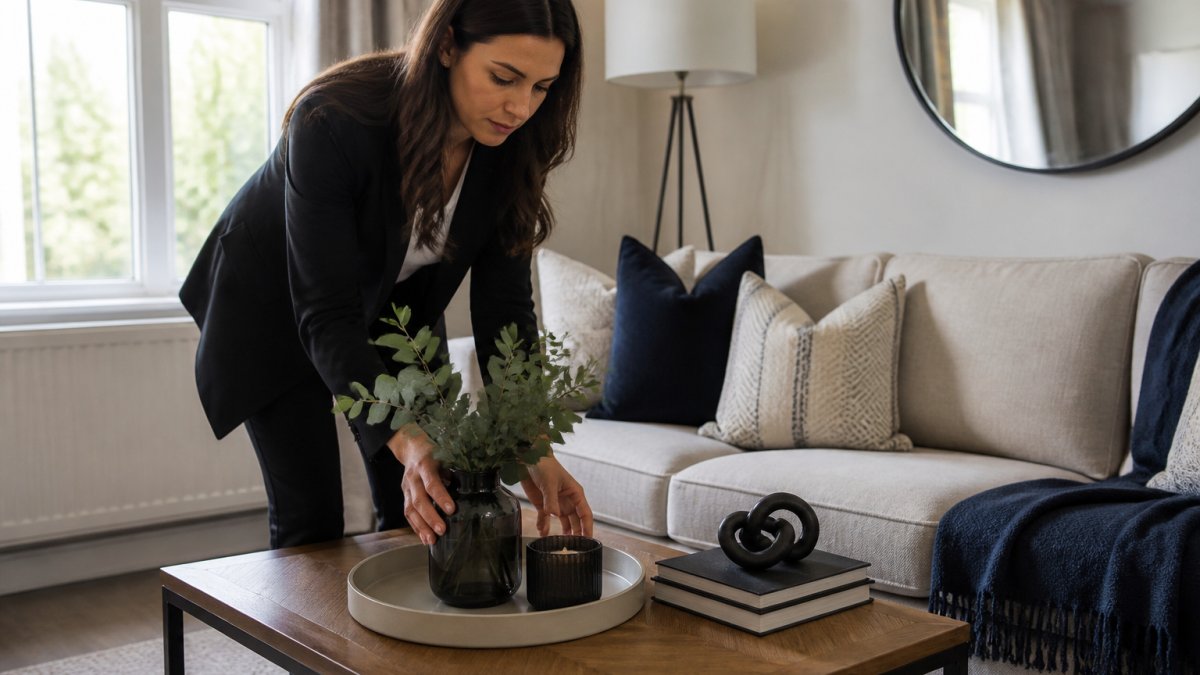
Professional staging transforms how buyers experience a space through deliberate choices that highlight best features and minimise weaknesses, a cluttered bedroom becomes serene, a cramped kitchen opens visually, dark corners catch light and purpose.
Professionally staged homes command higher offers because buyers perceive greater value in properties that feel complete, well-maintained, and move-in ready. This perception gap translates directly into pounds on the final price.
Does Staging Help Sell a House Faster
Staged properties sell faster, but the speed advantage depends heavily on market conditions.
How Staging Accelerates Sales
Staged properties attract more qualified interest and spend less time on market through several mechanisms:
- Better listing photos: Professional staging ensures that listing images capture the property's best features with optimal lighting and composition. Since 80%+ of buyers begin their search online, compelling photos generate more viewing requests from day one.
- Faster first impressions: When buyers arrive for a viewing, a staged property immediately communicates care, value, and move-in readiness. This positive first impression accelerates decision-making and increases the likelihood of an offer.
- More viewings, more offers: More viewings create competitive pressure and multiple offers, which shortens negotiation timelines and accelerates closing.
- Reduced buyer hesitation: Cluttered or poorly presented properties trigger questions: "What's being hidden?" "Will there be expensive repairs?" "Is this property worth the asking price?" Staging removes these doubts and accelerates buyer confidence.
Every week a property sits listed signals weakness to subsequent buyers. Staging removes this doubt by presenting the property in its best light from day one.
Staging Impact in a Seller's Market
In a seller's market, staging still accelerates sales but the advantage is marginal because buyers compete for limited stock. A well-staged property might sell in 2-3 weeks versus 3-4 weeks unstaged, the advantage exists but is compressed.
In a seller's market, staging ROI is lower because properties sell quickly anyway and price premiums are smaller. However, staging can still generate a 2-3% price premium and reduce time on market by 1-2 weeks, justifying investment for high-value properties.
Staging Impact in a Buyer's Market
In a buyer's market, staging becomes critical because buyers have choices and can afford to be selective. Properties that present poorly are passed over for those that present well.
Staged properties sell 20-30% faster than unstaged equivalents in buyer's markets, with price premiums of 5-10% above asking. Faster sales reduce carrying costs (mortgage interest, council tax, utilities, maintenance) and attract serious buyers when unstaged properties generate only viewings.
Balanced Markets: Staging as a Practical Advantage
In balanced markets, staging provides consistent advantage: properties sell 15-20% faster with 3-5% price premiums, reduced carrying costs of 2-4 weeks, and higher buyer confidence. It's a practical investment that pays for itself through faster sales and modest premiums.
How to Assess Your Market Condition
Determine your market type: seller's market (fewer than 3 months inventory), balanced market (4-6 months), or buyer's market (more than 6 months). Your estate agent can provide inventory data and average days-on-market to inform staging ROI expectations.
The Time-on-Market Advantage Across Market Types
| Market Type | Unstaged Days on Market | Staged Days on Market | Staging ROI on Speed |
|---|---|---|---|
| Seller's market | 14-21 days | 10-14 days | Low (1-2 weeks saved) |
| Balanced market | 28-42 days | 21-28 days | Moderate (1-2 weeks saved) |
| Buyer's market | 60-90 days | 35-50 days | High (2-4 weeks saved) |
The Carrying Cost Reality
Each week on market costs approximately £290 in mortgage interest plus £130-£350 in council tax, utilities, and maintenance, totalling £470-£640 weekly. In buyer's markets, staging saves 3-4 weeks (£1,410-£2,560 in carrying costs). In seller's markets, savings are smaller but still meaningful for higher-value properties.
Conclusion: Market Context Matters
Home Staging Cost vs Return on Investment
Understanding the financial equation of staging requires moving beyond simple ROI percentages. The real decision is knowing when professional staging justifies its cost versus when DIY staging or minimal intervention is sufficient.
Professional Staging Costs
Professional staging fees range from £500 to £3,000+ depending on property size and condition. A one-bedroom flat costs £500-£1,000; a four-bedroom house reaches £2,000-£3,000. Fees cover decluttering, furniture arrangement, lighting optimisation, and sometimes furniture rental. Stagers know which styling investments generate measurable buyer response.
DIY Staging: Hidden Costs and Trade-offs
DIY staging appears cheaper but has hidden costs: 20-40 hours of labour (£400-£2,000 at opportunity cost), styling mistakes that suppress buyer interest, poor photography translation, and incomplete execution. Weak photos reduce viewings and extend time on market.
When DIY Staging Makes Sense
DIY staging works if the property is clean and well-lit, you have strong design instincts, it's in a seller's market, and you're willing to invest 30+ hours. You might save £800-£2,000 with acceptable results.
When Professional Staging Delivers Clear ROI
Professional staging is stronger if the property is empty, has condition issues or awkward layouts, you're in a competitive market, it's a luxury or period property, time on market matters, or the price difference between well-presented and poorly presented exceeds the staging investment.
The Numbers: A Practical Comparison
Consider two scenarios for a three-bedroom semi-detached house in a competitive market:
Scenario A: DIY Staging
- Your time: 35 hours at £25/hour = £875
- Décor and accessories: £200
- Total investment: £1,075
- Likely outcome: Adequate presentation, but photos lack professional polish. Property sells in 6-8 weeks at asking price (£350,000).
- Carrying costs during extended marketing: £2,000-£3,000 (mortgage interest, council tax, utilities)
- Net result: £1,075 + £2,500 carrying costs = £3,575 total cost
Scenario B: Professional Staging
- Professional staging fee: £1,500
- Professional photography: pricing depends on quantity, dates, and delivery
- Total investment: £1,800-£2,000
- Likely outcome: Compelling photos, strategic presentation. Property sells in 3-4 weeks at 3-5% above asking price (£360,500-£367,500).
- Carrying costs during faster marketing: £500-£1,000
- Price premium: £10,500-£17,500
- Net result: £2,000 investment + £750 carrying costs = £2,750 total cost, minus £10,500-£17,500 price premium = £7,750-£14,750 net gain
The Market Condition Factor
The Decision Framework
Ask: Is the property in a competitive market? How quickly do I need to sell? Can I objectively stage myself? What's the likely price difference between well-presented and poorly presented? If it exceeds £5,000, professional staging is justified. For most sellers, the investment returns itself within 2-4 weeks of listing.
How to Stage a House for Photography
Staging for photography is different from staging for open houses. The camera sees differently than the human eye. Angles matter. Lighting matters. Negative space matters.
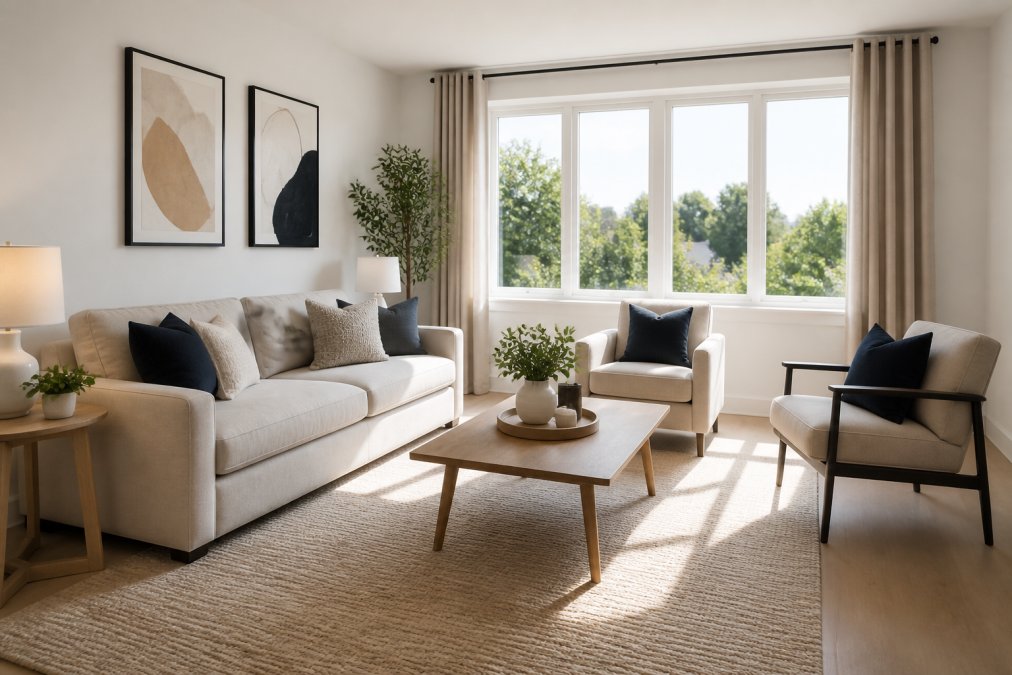
Declutter ruthlessly. Remove personal items, family photos, toys, and distinctive décor to create a neutral canvas where buyers project themselves.
Lighting is non-negotiable. Open all curtains and blinds, turn on interior lights if rooms feel dark, and avoid harsh shadows. Professional photographers understand how to work with available light and enhance it strategically, capturing staged spaces far more effectively than amateur images.
Arrange furniture to create flow and highlight room size. Remove oversized pieces and position furniture to define areas and suggest function without cluttering.
Neutral walls are safer than bold colours, but staged décor can introduce warmth through soft furnishings, plants, and accessories.
The Psychology Behind Buyer Perception and First Impressions
Buyers form opinions within seconds of entering a property. Staged properties trigger positive emotions, clean spaces feel safe, light-filled rooms feel spacious, arranged furniture suggests use. These cues create value perception and willingness to pay. Conversely, cluttered or dark properties trigger doubt about hidden issues and repairs. Strategic staging removes anxiety, highlights features, and creates emotional connection. Curb appeal extends this: a well-maintained entrance and landscaping signal care and set the tone for the entire viewing.
Virtual Staging vs Physical Staging for Property Value
Virtual staging uses digital tools to furnish and style properties in listing photos. Physical staging involves actual furniture, décor, and styling on-site. Both have roles, but they serve different purposes.
Staging Different Property Types to Maximise Market Appeal
Not all properties stage the same way. A studio flat requires different strategies than a detached house. A holiday let has different priorities than a residential property.
Frequently Asked Questions
What are the primary benefits of professional staging for property value?
Professional staging increases perceived value by creating visual appeal and emotional connection. Staged properties typically attract more buyer interest, reduce time on market, and command competitive advantage in listings. Strategic styling removes buyer doubt about layout and potential, helping properties stand out in saturated markets. Quality listing photos of staged spaces generate more enquiries and stronger opening offers.
Does professional staging actually lead to a higher final sale price?
Professional staging directly influences sale price through improved buyer psychology and competitive positioning. Staged properties present better first impressions, which translates to stronger offer values. The return on investment typically exceeds staging costs when properties are marketed with high-quality photography that showcases the curated space effectively. Sale price premium depends on property type, market conditions, and how well staging aligns with buyer demographics.
How much does professional staging cost compared to the return on investment?
Staging costs vary by property size, duration, and whether furniture rental is needed. The ROI calculation should compare staging investment against the sale price premium and reduced time on market. Properties that stage before professional photography shoots often see faster closing speeds and higher offers. Calculate your return by comparing the final sale price of a staged property against similar unstaged properties in your market.
What are the biggest mistakes to avoid when staging a house for photography?
Common staging mistakes include over-personalisation, clutter, and poor lighting that undermines listing photos. Avoid bold colour choices, excessive furniture, and family photos that distract from the property's features. Don't neglect curb appeal or outdoor spaces visible in photographs. Depersonalisation is crucial, remove items that reflect the current owner rather than the property's potential. Professional staging consultation helps identify these issues before the photography shoot.