 ultimate-guide
Tips for Better Property Listings: 7 Proven Steps
Table of Contents
- Why Your First 20 Seconds Decide the Sale
- Home Staging Tips for Rental Properties That Photograph Well
- Professional Property Photography Benefits for Sales and Lets
- How to Increase Holiday Let Bookings With Better Imagery
- Pricing, Descriptions and Market Positioning That Convert
- AI and Platform Algorithms: Where Property Listings Win Now
- Post-Listing Maintenance: Keeping Property Listings Fresh
- Frequently Asked Questions
Last Updated: September 27, 2026
Why Your First 20 Seconds Decide the Sale
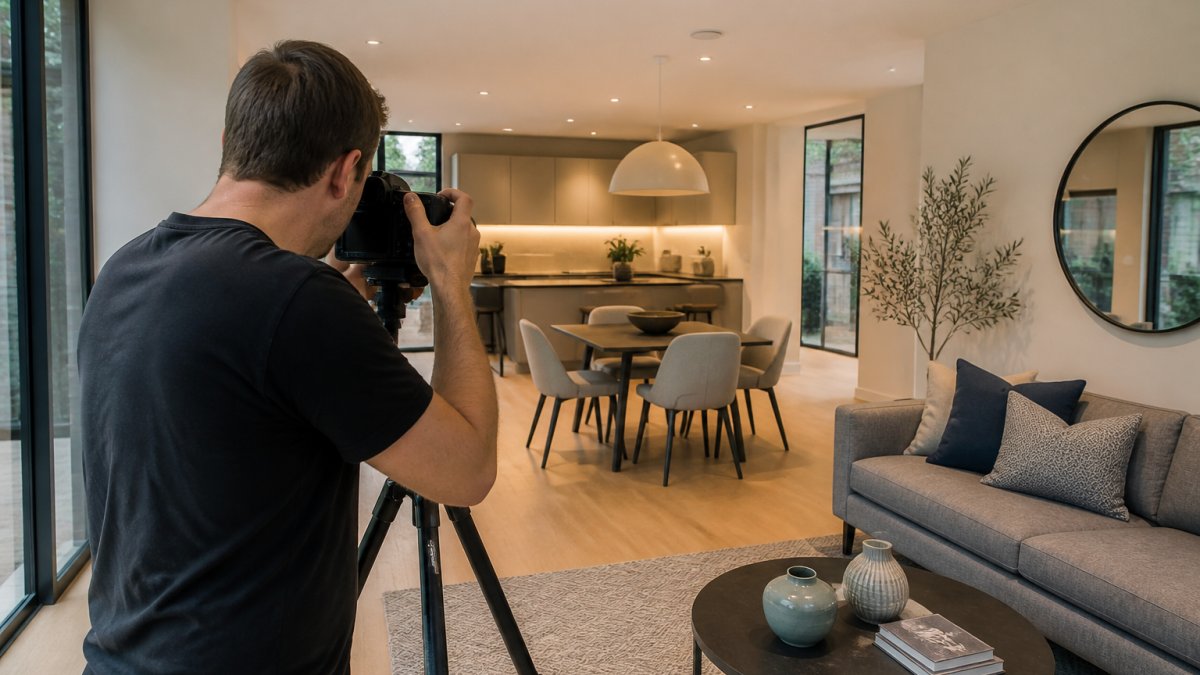
Buyers make up their minds fast. Eye-tracking studies of property portal browsing suggest a first impression forms within seconds, long before a single line of the description is read. At Property Home Photos, we see the same pattern on every shoot: the images that stop the scroll answer a buyer's unspoken question instantly. If your property listings do not communicate quality, space and light in that opening moment, the rest of your marketing never gets a chance.
Home Staging Tips for Rental Properties That Photograph Well
Staging for a rental differs from staging for a sale. Tenants want to picture their own life in the space, so the goal is neutral, spacious and clean rather than heavily styled.
Declutter, Depersonalise, Then Style
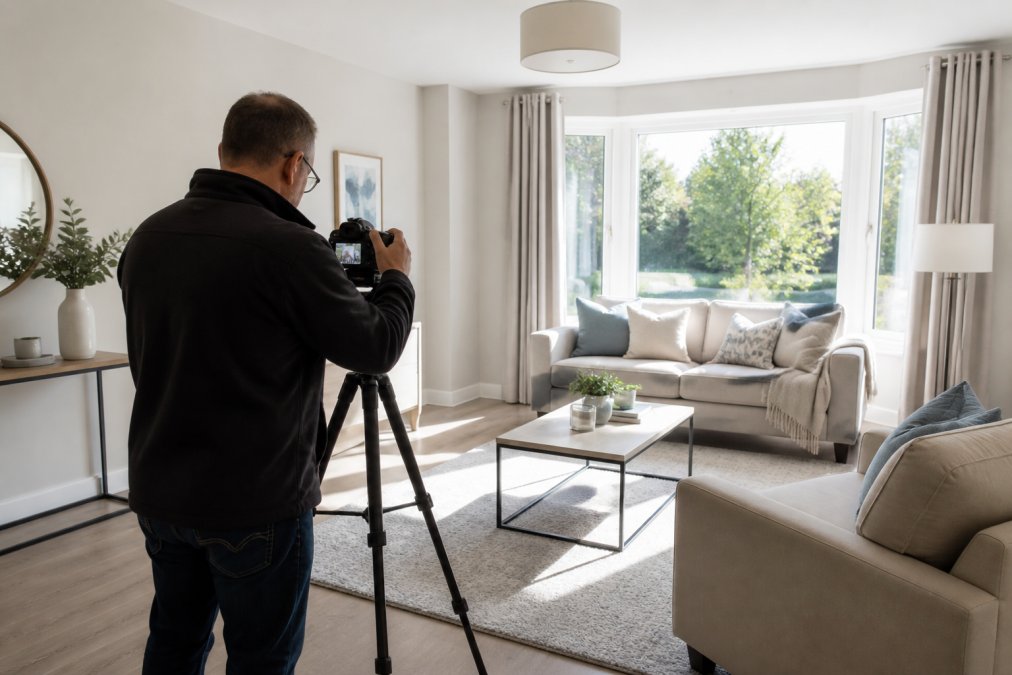
Decluttering is the single highest-return task before any shoot. Clear worktops, remove personal photos and toiletries, and strip back anything that signals "someone else lives here", depersonalising helps tenants imagine themselves in the property.
Lighting and Flow: Getting Rooms Camera-Ready
Natural light is your most valuable asset and it is free. Open every curtain, clean the windows and shoot during the brightest part of the day. Where a room is genuinely dark, add a floor lamp or two rather than relying on the camera to fix it later.
Professional Property Photography Benefits for Sales and Lets
Professional property photography benefits sales and lets for different reasons. On a sales listing, strong imagery supports your property valuation by justifying the asking price and reducing time on market. On a lettings listing, it protects conversion by filtering out applicants who would waste a viewing slot.
What to Look for in a Photographer
Look for someone who understands property, not just cameras. The best property photographers read a floor plan, work with awkward layouts, and shoot in a consistent style across a portfolio.
Ask three questions before booking:
- Can you show me a full set from one property, not just highlights?
- How do you handle a room with no natural light?
- What is your turnaround, and does it protect my launch date?
How to Increase Holiday Let Bookings With Better Imagery
To increase holiday let bookings, your imagery has to sell an experience, not just a building. Guests are not buying square metres; they are buying a weekend, a view, a feeling. Photos showing atmosphere outperform technically perfect shots of empty rooms.
Pricing, Descriptions and Market Positioning That Convert
Pricing strategy and market positioning work together with your imagery, not separately from it. A property priced at the top of its bracket needs imagery that justifies the premium; a value-positioned property needs imagery that still looks credible. Most guides miss the practical link between the number you set, the words you write and how portal search surfaces the listing.
Anchor the Price Against Live Comparables, Not Asking Prices
Asking prices are marketing; sold and let prices are evidence. Before you set a figure, pull the last three to six months of achieved prices for the same property type, bedroom count and postcode sector from the relevant land and property registers and portal sold-price tools. Anchoring to achieved prices gives you a defensible number and a story for the description.
- Premium: priced at the top of the bracket, supported by professional photography, a floor plan, a video tour and a detailed specification. This position only holds if the imagery is genuinely better than the competition on the same search results page.
- Value: priced below comparable stock, with imagery that still looks credible. Cheap-looking photos undermine a value position because buyers read them as a signal about the property, not the marketing budget.
- Distinctive: priced mid-bracket but differentiated on a feature buyers cannot get elsewhere, a garden, a view, a conversion, a parking space. The description and lead image must foreground that feature within the first line.
Write Descriptions for the Portal, Not for Print
Your property description should match the story your photos tell, but it also has to survive how portals truncate and index text. Most portals display only the first 150 to 200 characters in search results, so the strongest feature and the location must appear in the opening sentence. Anything important in paragraph three is invisible until the buyer has already clicked.
A structure that consistently performs:
- Opening line: property type, bedroom count, standout feature and location.
- Second paragraph: the flow of the space, room by room, in the order a viewer would walk it.
- Third paragraph: practical detail, tenure, EPC rating, parking, garden aspect, transport links.
- Closing line: a clear call to action with a specific next step, not a generic "enquire now".
Match the Description to the Imagery
If the lead photo shows a south-facing garden, the opening line should mention it. If the photos emphasise a refurbished kitchen, the description should name the appliances and finish. Mismatch between image and copy is a common reason a listing gets views but no enquiries.
| Step | Action | Why It Matters |
|---|---|---|
| 1 | Declutter and depersonalise | Lets viewers see themselves in the space |
| 2 | Clean and open windows | Maximises natural light |
| 3 | Rearrange for flow | Prevents rooms looking cramped on camera |
| 4 | Book a professional shoot | Consistent, credible imagery across the listing |
| 5 | Anchor price to achieved comparables | Gives a defensible number and a story |
| 6 | Front-load the description | Survives portal truncation in search results |
| 7 | Align copy with lead image | Prevents click-through without enquiry |
| 8 | Review performance after launch | Keeps the listing working after day one |
AI and Platform Algorithms: Where Property Listings Win Now
Platform algorithms reward listings that hold attention, and that is where most agents leave value on the table. Portals and social platforms measure how long a viewer lingers, whether they save the listing, and whether they click through to enquire, strong imagery is the biggest lever on all three. What almost no guide covers is the technical layer underneath: how those systems ingest your images, what they do with the metadata, and how to feed them a format they can read.
How Portal Matching Engines Actually Read a Listing
When you upload a listing, the portal's system does three things in sequence. First, it extracts structured data from your form fields, property type, bedroom count, tenure, EPC rating, price, postcode. Second, it runs image recognition across your photo set to tag detectable features: kitchen, garden, fireplace, period features, natural light levels. Third, it matches those tags against registered buyers' saved-search behaviour and decides which search results pages your listing appears on.
The Technical Requirements Most Agents Ignore
Portals and social platforms publish image specifications, and listings outside them are compressed, cropped or rejected at upload. Rules worth checking before every shoot:
- Aspect ratio: most portals display a 4:3 or 3:2 landscape crop in search results and a different crop on the detail page. Shoot landscape and leave headroom at the top and bottom so the crop does not cut off ceilings or floors.
- Resolution: upload at the highest resolution the portal accepts, typically a minimum of 1024 pixels on the long edge and often 2048 or higher. Downscaling is handled by the platform; upscaling is not.
- File size and format: JPEG remains the safest format. Very large files are recompressed, which softens detail, export at a sensible quality setting rather than maximum.
- Metadata: alt text and file names are read by search engines and increasingly by portal systems. Name files descriptively ("three-bed-semi-south-facing-garden.jpg") rather than "IMG_4821.jpg", and fill in alt text on your own website listings.
- Order: the lead image is weighted most heavily. Portals often allow you to reorder; use it.
Using AI Tools Without Losing Credibility
AI-driven listing optimisation is changing how this works, and it is worth using, carefully. Three applications are genuinely useful:
- Description drafting: AI can produce a first draft from your structured data in seconds. Treat it as a starting point, then edit for accuracy, local detail and tone. Unedited AI copy tends to be generic and full of clichés, which hurts both conversion and search matching.
- Image enhancement: exposure and colour correction tools can rescue a slightly dark room, but heavy virtual staging or sky replacement crosses into misleading advertising. The relevant standards here are the Consumer Protection from Unfair Trading Regulations 2008 and the Property Ombudsman's code of practice, both of which require marketing to be accurate and not misleading. If a photo no longer represents the property, it is a compliance risk, not a marketing win.
- Performance analysis: AI tools can flag which listings are underperforming relative to comparable stock, which is useful for deciding when to refresh imagery or reorder the photo set.
Platform-Specific Behaviour Worth Knowing
The major portals weight signals differently. Some prioritise recency and refresh activity; others weight listing completeness (floor plan, EPC, video, virtual tour) more heavily. Social platforms reward native content over links, which is why a short vertical walkthrough video typically outperforms a link to the portal listing. Publish the same property in the format each channel prefers rather than cross-posting one asset everywhere.
Post-Listing Maintenance: Keeping Property Listings Fresh
A listing is not finished when it goes live. Portals deprioritise stale listings, and buyers notice when the same photos have sat there for months. Refreshing imagery, updating the description, and reordering the photo set so a different image leads can lift performance without a new shoot.
Frequently Asked Questions
Does professional photography increase property booking rates?
Yes. High-quality imagery helps buyers, tenants and guests understand a property's layout and finish before they enquire, which reduces doubt and speeds up decisions. Listings with sharp, well-lit photos tend to earn more clicks and enquiries than phone snapshots. The professional property photography benefits are clearest on holiday lets, where guests book on visual trust alone. Pairing strong photos with an accurate property description and a clear call to action gives the best results.
How do I increase holiday let bookings without lowering my prices?
Focus on presentation before discounting. Refresh your photo set each season, add a short video tour, and make sure your first image shows the strongest room in natural light. Keep your property description specific about what guests get, and update your calendar and pricing for local events. Small improvements to listing exposure, such as mobile-friendly images and fast-loading galleries, often lift the conversion rate more than a price cut.
What are the most important elements of a successful property listing?
Five elements matter most: photography quality, a clear and honest property description, accurate floor plans, a pricing strategy matched to the local market, and a strong call to action. Curb appeal and interior presentation feed directly into the photos, so stage and tidy before the shoot. On portals, search visibility depends on complete data fields and fresh content, so review your listing every few weeks rather than leaving it untouched.
How quickly can professional photos be delivered before a listing goes live?
Turnaround depends on the shoot size, the number of images and any editing required, so confirm dates when you book. Reputable photographers plan delivery around your launch date and portal upload schedule. If your listing must go live on a set day, book the shoot at least a week ahead and agree the delivery window in writing. Ask about a satisfaction guarantee so you know what happens if the images miss the mark.
The gap between a listing that sits and one that sells usually comes down to the first twenty seconds, and those twenty seconds are won or lost on imagery. If you want photos that do the selling for you, get started with Property Home Photos and request a quote. You will work directly with photographer Mark Henry Rood, on a schedule built around your listing date, backed by a satisfaction guarantee.