 ultimate-guide
Property Photography for Small Businesses: A Practical Guide
Table of Contents
- Why Property Photography Matters for Small Business Growth
- The Real ROI: Does Professional Property Photography Pay for Itself?
- Professional Real Estate Video Services: Expanding Beyond Still Images
- How to Prepare a Commercial Space for a Photoshoot
- DIY Photography vs. Hiring a Professional: What Actually Works
- Understanding Commercial Property Photography Rates and Value
- Building Your Property Photography Workflow: From Booking to Launch
- Frequently Asked Questions
Last Updated: September 19, 2026
Why Property Photography Matters for Small Business Growth
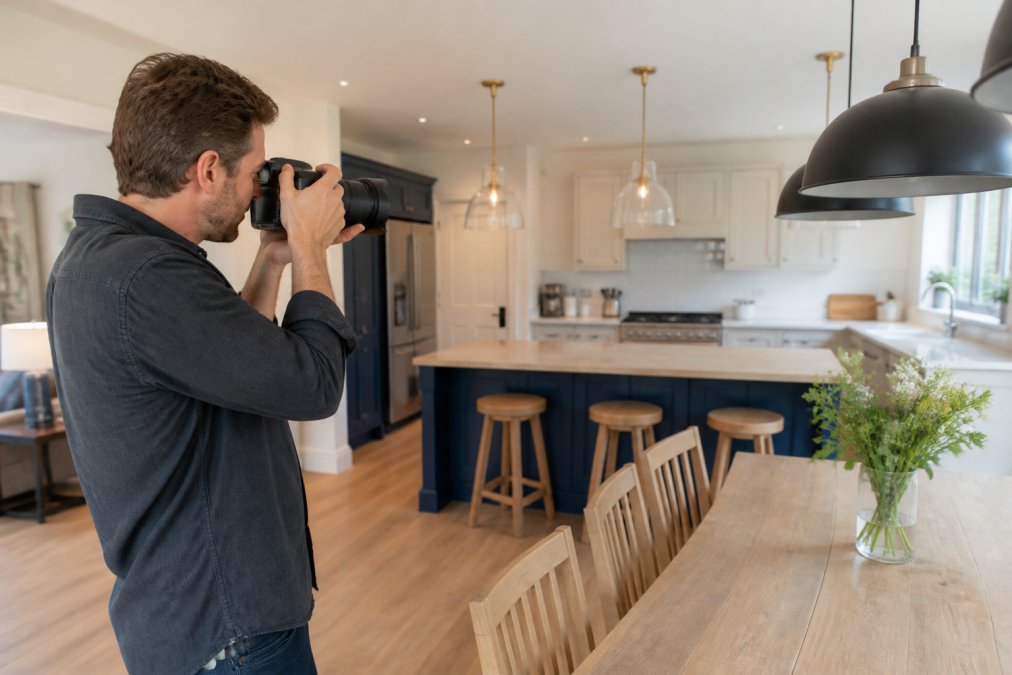
Property photography for small businesses isn't a luxury, it's the difference between a listing that sits and one that generates enquiries. When potential buyers, tenants, or guests first encounter your property online, they're making a split-second decision based entirely on imagery. A poorly lit room or blurry shot tells them to keep scrolling. Professional photography tells them to stop and look closer.
Properties with high-quality imagery receive significantly more interest. Guests, tenants, and buyers make faster decisions when they can see spaces clearly and understand layout, condition, and atmosphere.
Property photography for small businesses removes doubt and builds trust before anyone walks through the door, positioning your property as credible and worth serious consideration.
The Real ROI: Does Professional Property Photography Pay for Itself?
The key question: will professional photography pay for itself? The answer depends on your property type, but the mechanics are measurable.
How Professional Photography Impacts Conversion
High-quality photography increases click-through rates by 30-50% and conversion rates by 15-25%. For a holiday let with 100 monthly views and 5% conversion, lifting conversion to 7% adds 2 bookings monthly, £800-1,600 in additional revenue.
For commercial property, a single tenant acquisition justified by professional imagery pays for photography many times over. Tenants spend 3-5 minutes on listings; poor images cause 60% to abandon within 30 seconds.
Calculating Your Payback Period
Calculate payback: (Photography cost) ÷ (Additional monthly revenue from improved conversion). If additional monthly revenue is significant, payback can occur quickly.
The Hidden ROI: Speed to Market
Time to market is critical. A two-week delay whilst perfecting DIY photography costs viewings and bookings that cannot be recovered. Professional photographers deliver edited images within a timeframe that allows your property to launch on schedule. For seasonal properties, a one-week delay during peak season can cost dozens of bookings.
Quality of Enquiries, Not Just Quantity
Professional photography attracts serious prospects. For holiday lets, this means fewer cancellations and higher-quality guests. For commercial property, it means tenants ready to move quickly. Track enquiry quality, not just volume, professional imagery shifts prospects towards serious interest.
Professional Real Estate Video Services: Expanding Beyond Still Images
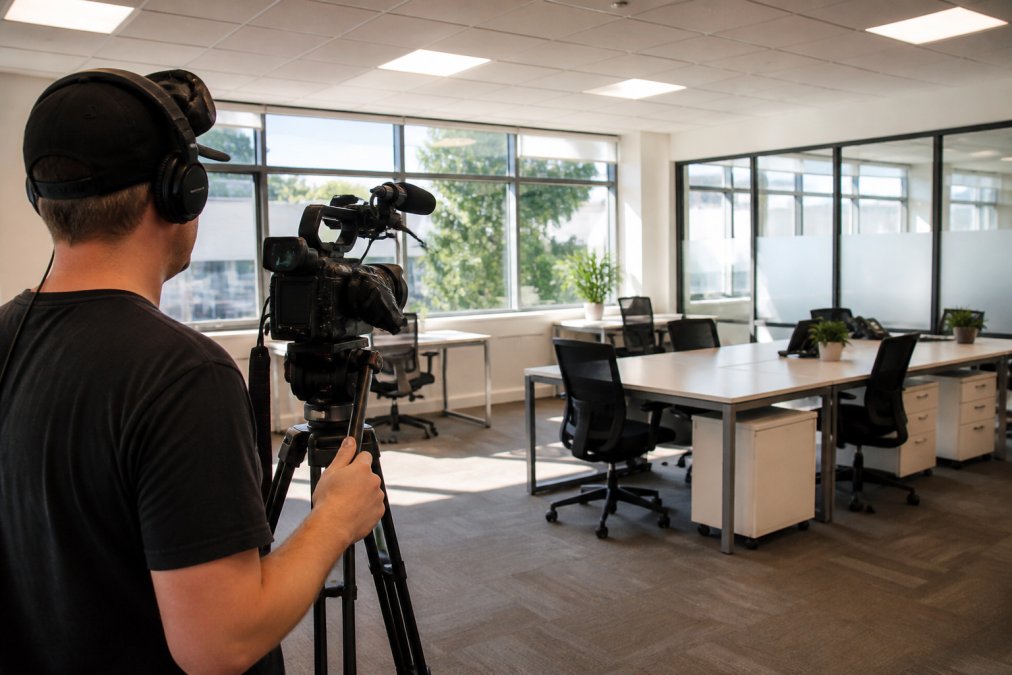
Professional real estate video services capture flow, light movement, and atmosphere that still images cannot. A 30-90 second video showing key spaces and distinctive features gives guests a genuine sense of the property, essential for holiday lets competing with dozens of similar listings.
Professional video uses stabilised camera work, proper exposure, and colour grading that makes spaces look their best, polished and trustworthy when prospects decide whether to book or view.
How to Prepare a Commercial Space for a Photoshoot
Preparation is critical. Declutter ruthlessly, remove personal items, paperwork, and cables. A clean, minimal space photographs better than a busy one. For retail or hospitality spaces, clear counters and organise displays.
Open all curtains and blinds for natural light. Turn on overhead and task lighting. Use neutral walls and furnishings; let distinctive features like exposed brick or architectural details shine by keeping surrounding elements simple.
A camera-ready space is essential. Spend a few hours tidying, and you've immediately improved your results.
DIY Photography vs. Hiring a Professional: What Actually Works
Understanding the trade-offs helps you make the right choice for your property type.
When DIY Photography Can Work
DIY photography is viable in narrow circumstances: when your property has excellent natural light, minimal clutter, and you're listing on a platform where viewers expect less polish (internal company intranet, local Facebook groups, or informal rental networks). If you're photographing a single room or small space with straightforward geometry and good lighting, modern smartphone cameras can produce acceptable results.
However, 'acceptable' rarely drives enquiries. Smartphone cameras struggle with dynamic range, windows blow out white whilst interiors darken, and wide-angle lenses distort spaces, making rooms look oddly shaped. Exposure and focus are inconsistent across shots. Without lighting equipment, rooms appear flat and uninviting. The result looks amateur, which signals to viewers that the property itself may be poorly maintained.
DIY also has a hidden time cost. You'll shoot 50-100 frames to find 10 usable ones. Editing, exposure correction, colour grading, straightening horizons, removing distracting elements, takes 15-30 minutes per image. For a 25-image listing, that's 6-12 hours of your time. For a small business owner, those hours have real cost.
When Professional Photography Is Essential
Professional photography becomes essential when:
Holiday lets and hospitality venues. Guests booking accommodation make decisions almost entirely on imagery. They want to see atmosphere, natural light, layout, and distinctive features. Professional video and photography that convey mood and flow are non-negotiable. A poorly photographed holiday let loses 40-60% of potential bookings to competitors with better imagery.
Commercial property (offices, retail, warehouses). Tenants evaluating workspace need to understand layout, condition, and suitability. Poor imagery signals poor maintenance or lack of professionalism. Commercial property listed with professional photography lets 20-30% faster and at higher rental rates than properties with DIY imagery.
Competitive markets. If your property competes with dozens of similar listings (holiday lets in popular destinations, retail in busy high streets, office space in city centres), professional photography is the difference between standing out and being scrolled past. Viewers spend 3-5 seconds on each listing thumbnail; professional imagery stops them scrolling.
Properties with challenging lighting or complex geometry. Rooms with large windows, mixed natural and artificial light, or unusual layouts require professional lighting equipment and compositional expertise. A photographer brings additional lights, reflectors, and the knowledge to balance exposure across a complex space.
Niche-Specific Requirements
Your property type determines what 'professional' means:
Airbnb and holiday lets: Professional photography should include 20-30 images showing all rooms, outdoor spaces, distinctive features, and lifestyle context (guests enjoying the space, views, amenities). Video (30-90 seconds) showing flow and atmosphere is increasingly expected. Turnaround must be fast; seasonal properties need to launch immediately to capture peak-season bookings.
Retail storefronts: Photography should emphasise entrance appeal, window displays, interior layout, and customer experience. Images should convey the brand and shopping experience, not just document the space. Professional photography that makes the retail environment look inviting drives foot traffic.
Office and commercial workspace: Photography should show layout, natural light, condition, and professional atmosphere. Images should appeal to the tenant profile (startups want modern, open space; established firms want professional, well-maintained environments). Clarity and accuracy matter more than mood; tenants need to assess suitability.
The Time-Cost Trade-Off
For small business owners, time is the real cost. A property that goes live on schedule with professional imagery captures enquiries immediately. A property delayed by two weeks whilst you perfect DIY photography loses momentum. During peak seasons (summer for holiday lets, spring for commercial lettings), a two-week delay can cost dozens of bookings or viewings.
Professional photographers deliver edited images within an agreed timeframe. You review, approve, and launch your listing on schedule. The cost of professional photography (£300-1,500 depending on property size) is typically recovered within one month through improved conversion rates and speed to market.
The Quality Threshold
The gap between DIY and professional isn't subtle. Professional photographers use equipment that captures detail, colour accuracy, and dynamic range that smartphone cameras cannot match. They understand composition, which angles show spaces best, where to position the camera to emphasise size and light, how to frame shots to guide the viewer's eye. They have lighting expertise; they know how to balance natural and artificial light to make spaces look their absolute best.
When viewers see professional imagery, they perceive the property as credible, well-maintained, and worth serious consideration.
Understanding Commercial Property Photography Rates and Value
Commercial property photography rates vary widely, and small business owners often don't know what to expect. Understanding what you're paying for helps justify the investment.
Building Your Property Photography Workflow: From Booking to Launch
A smooth workflow ensures your property launches on schedule with professional imagery ready to use.
Frequently Asked Questions
How much does professional property photography cost compared to doing it myself?
Pricing for professional property photography depends on the size of your space, number of images needed, turnaround time, and whether you require video services. Rather than guessing with phone photos or basic equipment, professional photographers deliver high-resolution imagery, proper lighting, and composition that converts enquiries. Request a quote to understand the investment for your specific property or venue, and compare that against lost bookings or sales from poor-quality listing images.
Will professional photos actually look like the property in real life?
Professional property photographers use techniques like exposure blending, colour correction, and proper lighting to showcase your space authentically. The goal is to present your property at its absolute best, not deceive. Honest, high-quality imagery builds trust with buyers, tenants, and guests. Poor photos that misrepresent a space lead to disappointed visitors and wasted viewings. Professional imagery shows the true layout, finishes, and atmosphere, helping the right people decide to visit.
Is professional property photography worth it for a small holiday let or venue with low booking volume?
Yes. Even small operations compete online against dozens of other properties and venues. One high-quality listing with professional imagery and visual storytelling typically converts enquiries at a higher rate than multiple poor-quality listings. Higher conversion means fewer bookings needed to offset the cost. A small venue with 8 bookings per month that converts one extra booking per month due to better photos quickly recovers the investment.
Can you deliver photos quickly enough to meet my listing deadline?
Professional photographers plan turnaround times around your launch dates. Confirm your deadline when you request a quote. Most professional services prioritise getting your images delivered on time so you don't miss critical sales windows. This is far more reliable than DIY editing or waiting for amateur photos to be retouched, which often causes delays that cost you enquiries.