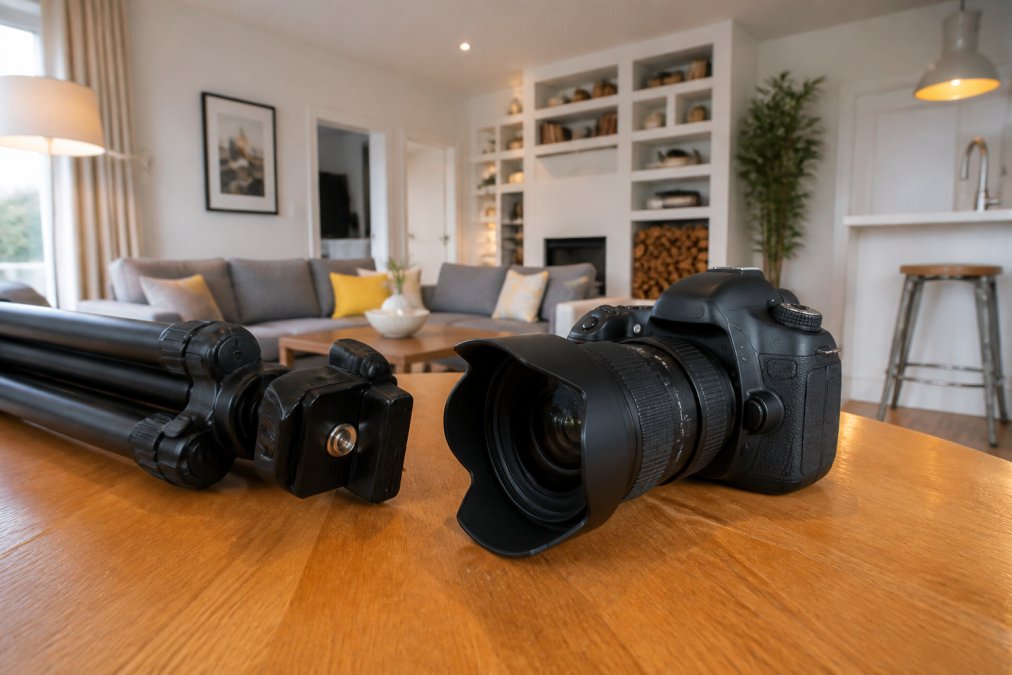
 listicle
Fast Turnaround Property Photography Services
Table of Contents
- Why Property Photography Services Matter for Fast Sales
- Cost of Professional vs DIY Photography
- Estate Agent Photography Turnaround Times
- How to Prepare a House for Professional Photos
- What's Included in a Professional Photography Package
- Technical Standards That Drive Results
- How Property Photography Accelerates Sales and Bookings
- Frequently Asked Questions
Last Updated: September 20, 2026
Why Property Photography Services Matter for Fast Sales
Professional property photography is a competitive necessity. High-quality images determine whether buyers click through or scroll past, generating more enquiries, shortening time on market, and often commanding higher offers than identical properties photographed poorly.
Professional photographers understand lighting, composition, and how to showcase a property's best features using wide-angle lenses, proper exposure, and post-production editing. This builds trust immediately, potential buyers see what they're getting, not a disappointing surprise after viewing.
Fast turnaround property photography services are essential for meeting listing deadlines. Missing the launch window means losing momentum and enquiries. Property Home Photos prioritises turnaround times planned around your listing dates, ensuring your property launches when it matters most.
Cost of Professional vs DIY Photography
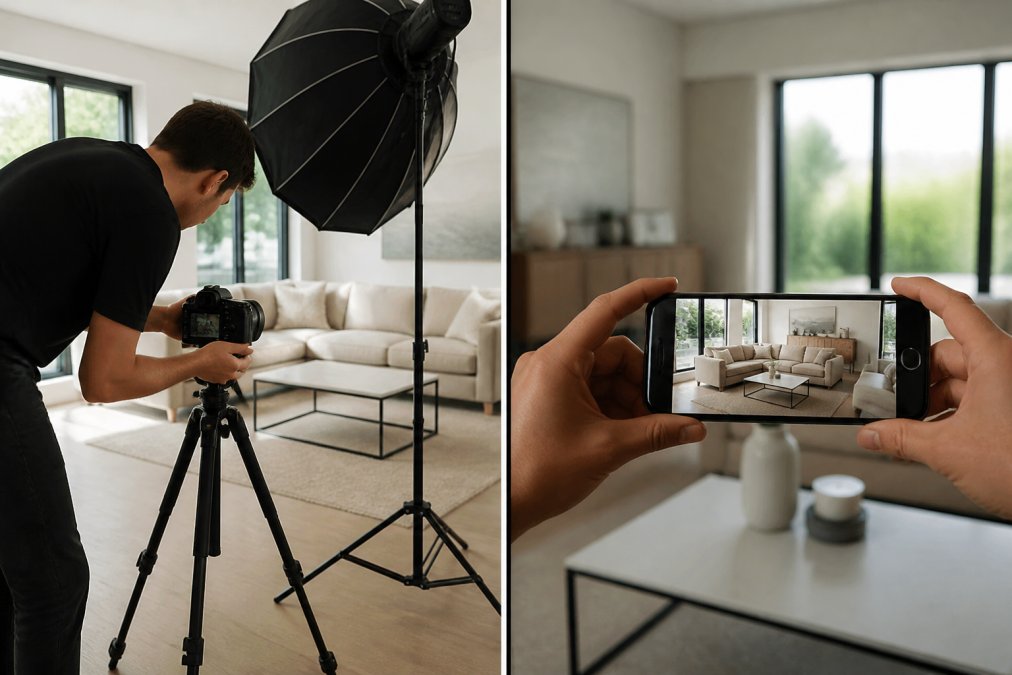
Most property owners ask: why pay for professional photography when I have a decent camera or smartphone? DIY photography creates liability. Blurry images, poor lighting, unflattering angles, and inconsistent colour balance make properties look neglected. Buyers interpret poor photos as a warning sign, assuming the property has something to hide, an assumption that costs enquiries.
Professional photographers use high-resolution cameras, professional-grade lighting rigs, and wide-angle lenses that show space without distortion. They understand how to shoot in different lighting conditions and know which angles sell rooms, editing images to reveal the property's true character whilst maintaining accuracy.
A poorly photographed property sits longer on the market, attracts fewer enquiries, and sells for less. Professional photography accelerates the sales process and often justifies itself in the first week of listing. DIY also demands your time, learning camera settings, composition, lighting, and editing takes weeks. Professional photographers deliver polished, market-ready images in hours.
Estate Agent Photography Turnaround Times
Speed matters. Estate agents operate on compressed timelines, missing a launch deadline cascades into lost enquiries and delayed sales. Industry standard turnaround varies widely. Some photographers promise 24-hour delivery but deliver compressed, poorly edited images. Others take 5-7 days, defeating the purpose of fast turnaround property photography services.
Professional photographers who consistently deliver within 24 hours use specific operational and technical strategies:
Streamlined shoot planning pre-assesses lighting, layout, and challenges, reducing shoot time to 60-90 minutes and minimising scheduling friction.
Batch editing workflows process images in stages, colour-correction, exposure adjustments, then selective retouching, maintaining consistency faster than editing individually.
RAW file processing and software efficiency use dedicated editing software with custom presets that apply consistent colour correction and exposure instantly, then refine individual images from that baseline.
Prioritised editing queue processes shoots in scheduled order, preventing bottlenecks and ensuring predictable delivery.
Quality control checkpoints review images immediately after the shoot and during editing to catch errors before delivery, preventing re-shoots that would blow the timeline.
Property Home Photos works around your deadlines, scheduling shoots and prioritising editing to deliver images that meet your timeline without compromising quality.
How to Prepare a House for Professional Photos
Start with decluttering. Remove personal items, excess furniture, and anything that distracts from the space. Clear surfaces, organise wardrobes, and remove kitchen clutter, this transforms how images read.
Open all curtains and blinds to let natural light flood in. Clean windows, fingerprints and grime reduce image quality. Schedule shoots during daylight hours when possible.
Deep clean everything. Professional photography reveals every detail, smudges on glass, dust on shelves, marks on walls. A thorough clean costs nothing but pays dividends.
Fix loose door handles, repair cracked tiles, and touch up scuffed walls. Visible damage distracts from your property's strengths.
Staging is optional but effective. Simple touches like making beds, adding throw pillows, and fresh flowers help buyers visualise the space.
Communicate with your photographer beforehand about the property's best features and any problem areas you want handled carefully.
What's Included in a Professional Photography Package
Professional packages typically include 20-40 high-resolution edited photos covering all rooms, key features, and exterior views. Image editing includes colour correction, exposure adjustment, and removal of distracting elements. Digital delivery via secure portal allows immediate download and sharing.
Some packages include additional assets like virtual tours, floor plans, and drone footage.
Clarify what's included before booking. Does the package cover exterior shots? Garden photography? Multiple storeys? Basement or attic spaces? Understanding scope prevents surprises and ensures you get images for every part of your property.
| Element | Standard Package | Premium Options |
|---|---|---|
| High-resolution photos | 20-40 images | 40-60+ images |
| Professional editing | Colour correction, exposure | Advanced retouching |
| Digital delivery | Cloud portal | Multiple formats |
| Turnaround time | 24-48 hours | 24-hour rush |
| Virtual tour | Optional | Often included |
| Drone footage | Optional | Premium add-on |
Technical Standards That Drive Results
Professional property photography relies on technical foundations most buyers never think about. Understanding these standards explains why professional images outperform DIY shots and what separates reliable services from inconsistent ones.
Camera and sensor specifications use full-frame DSLR or mirrorless cameras with 20-45 megapixel sensors, allowing enlargement and display across platforms without degradation. Professional cameras capture detail in shadows and highlights simultaneously, revealing the property's true character.
Lens selection is critical and specific. Wide-angle lenses (16-35mm focal length) are standard for interior shots because they show space without the distortion of extreme wide-angle (which creates a "fisheye" effect that looks unnatural). For exterior and garden shots, 24-50mm lenses are preferred. Telephoto lenses (70-100mm) are used selectively for detail shots and to compress perspective in tight spaces. A professional photographer carries multiple lenses and chooses based on room size and desired effect. This flexibility is impossible with a smartphone's fixed lens.
Lighting equipment and technique separate professional results from amateur attempts. Natural light is preferred but inconsistent, morning sun through windows differs from afternoon light, and overcast days require different handling than bright sunshine. Professional photographers use supplementary lighting strategically: reflectors to bounce natural light into shadowed areas, fill lights to balance exposure, and carefully positioned flash units to enhance without dominating. They understand colour temperature (measured in Kelvin), ensuring warm and cool light work together naturally. A room lit with mismatched colour temperatures (warm tungsten from lamps mixed with cool daylight) looks disjointed in photos. Professional lighting correction prevents this. For properties with poor natural light, professional photographers bring 1000-2000 watt lighting rigs that simulate daylight without creating harsh shadows.
Composition follows established principles that guide the viewer's eye and create professional-looking frames. Leading lines (hallways, staircase railings, window frames) draw attention through the space. Rule of thirds placement (positioning key elements at intersection points rather than dead centre) creates balanced, engaging compositions. Photographers position themselves to show room flow and connection, how spaces relate to each other, rather than isolated shots of individual rooms. This matters because buyers mentally navigate the property through photos before visiting in person.
Post-production editing standards are where technical precision becomes visible. Colour correction ensures consistent white balance across all photos (no image should look too warm or too cool relative to others). Exposure adjustments reveal detail in shadows and highlights without creating unrealistic brightness. Selective sharpening enhances clarity on key features (kitchen countertops, bathroom fixtures) without over-processing. Removal of distracting elements (power cables, clutter glimpsed in mirrors, personal items) happens here with precision tools. Professional editing adds polish and consistency without creating expectations the property cannot meet in person.
HDR (High Dynamic Range) processing is increasingly used in property photography. This technique combines multiple exposures of the same scene (one optimised for shadows, one for highlights, one for midtones) to capture detail across the entire tonal range. The result is an image that shows both the bright sky outside a window and the interior detail of a room, which a single exposure cannot achieve. HDR must be applied subtly, over-processed HDR looks artificial, but when done correctly, it reveals the property's true appeal.
Drone photography for exterior and garden shots has become standard for larger properties. Professional drone operators hold Civil Aviation Authority (CAA) permissions and follow strict safety and privacy regulations. Drone images provide perspective impossible from ground level, showing garden size, layout, and relationship to surroundings. This is particularly valuable for properties with significant outdoor space.
Insurance and compliance standards matter more than many photographers acknowledge.
How Property Photography Accelerates Sales and Bookings
The relationship between image quality and sales speed is direct and measurable. Properties with professional photography spend less time on market. They generate more enquiries per listing. They attract qualified buyers ready to view.
Frequently Asked Questions
How long does estate agent photography turnaround typically take?
Turnaround times vary by service provider and property complexity. Standard estate agent photography turnaround ranges from 24 to 48 hours for initial delivery. Property Home Photos plans turnaround around your listing dates and sales deadlines, ensuring photos arrive when you need them. Confirm exact timelines when booking to protect your launch schedule.
What's the difference between professional property photography and DIY photos?
Professional property photography uses high-resolution cameras, professional lighting, wide-angle lenses, and post-production editing to showcase properties accurately and attractively. DIY phone photos lack technical lighting control, often distort room proportions, and appear less credible to buyers and tenants. Professional images drive faster sales and higher inquiry rates. Cost of professional vs DIY photography is offset by improved conversion and reduced time on market.
Does high-quality property photography actually speed up sales?
Yes. Properties with professional photography receive significantly more enquiries and spend less time on market. High-resolution images, accurate colour correction, and proper staging build buyer confidence and remove doubt during initial listing review.
What should I do to prepare my property for a professional photoshoot?
Declutter rooms, remove personal items and family photos, ensure windows are clean for natural light, tidy gardens and exteriors, and arrange furniture to show space flow. Neutral colours and minimal decorations photograph better than bold patterns. Coordinate with your photographer on timing, morning or early afternoon light typically works best. Professional photographers will guide you on specific staging advice during booking.