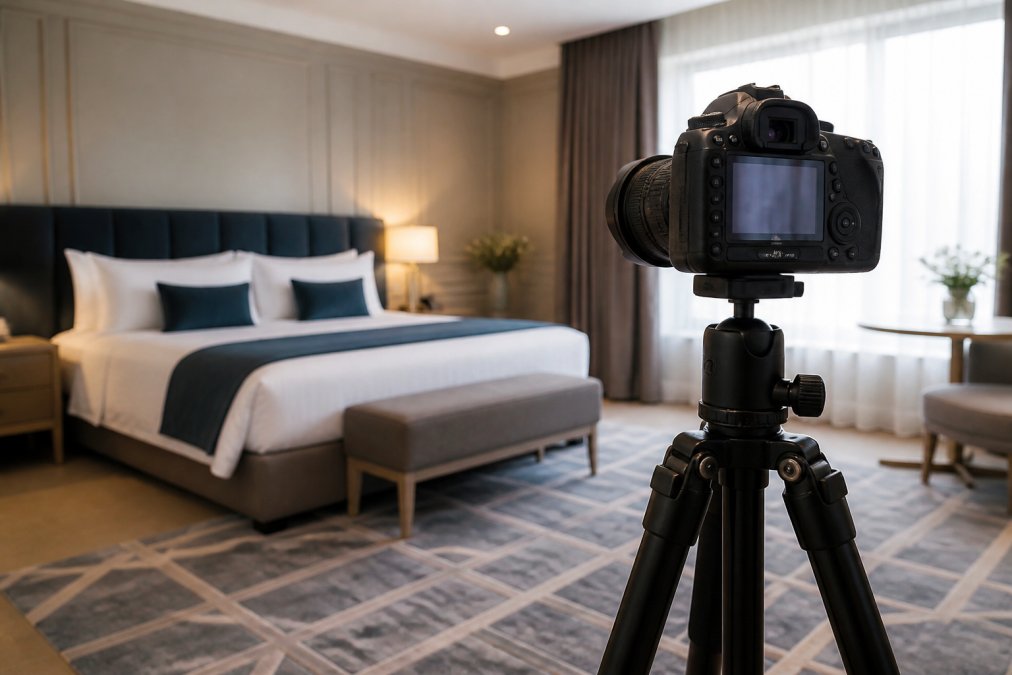
 listicle
Best Property Photography for Hotels: 2026 Guide
Table of Contents
- Why Hotel Photography Differs from Standard Property Photography
- Hotel Photography Tips to Increase Direct Bookings
- The Essential Hotel Photography Shot List
- Cost of Professional Hotel Photography
- Choosing the Best Property Photography for Hotels
- Post-Production and Image Delivery Standards
- Frequently Asked Questions
Last Updated: September 15, 2026
Why Hotel Photography Differs from Standard Property Photography
Hotel photography is the practice of capturing a hospitality venue's rooms, public spaces and atmosphere so that prospective guests can picture themselves staying there. It differs from standard property photography because the goal is not to sell a building. It is to sell a night, a meal, or an occasion.
This guide from Property Home Photos covers the commercial side of that distinction: what to shoot, what it costs to commission, and how to choose the right best property photography for hotels for your venue.
A residential listing only needs to prove the property exists and is well maintained. A hotel listing has to compete against dozens of similar rooms in the same town, on the same booking platform, with the same amenities listed underneath. Guests scrolling a booking engine are not comparing floor plans. They are comparing feelings.
That changes the brief in three ways:
- Atmosphere carries the sale. A hotel room with the curtains open and a newspaper on the bed reads differently from an empty room with the curtains drawn.
- Scale matters more. Guests need to understand how a space flows, from reception to bar to bedroom, because they are buying an experience rather than a floor area.
- Every image has a commercial job. A hero shot sells the venue. A detail shot justifies the room rate. A lifestyle shot reduces the risk the guest feels before booking.
Get this wrong and you get the most expensive outcome in hospitality marketing: a beautiful property that nobody books.
Hotel Photography Tips to Increase Direct Bookings
The single highest-return change most venues can make is to treat photography as a booking tool rather than a decoration. Images that answer a guest's unspoken question, "what will this actually feel like?", convert better than images that simply look impressive.
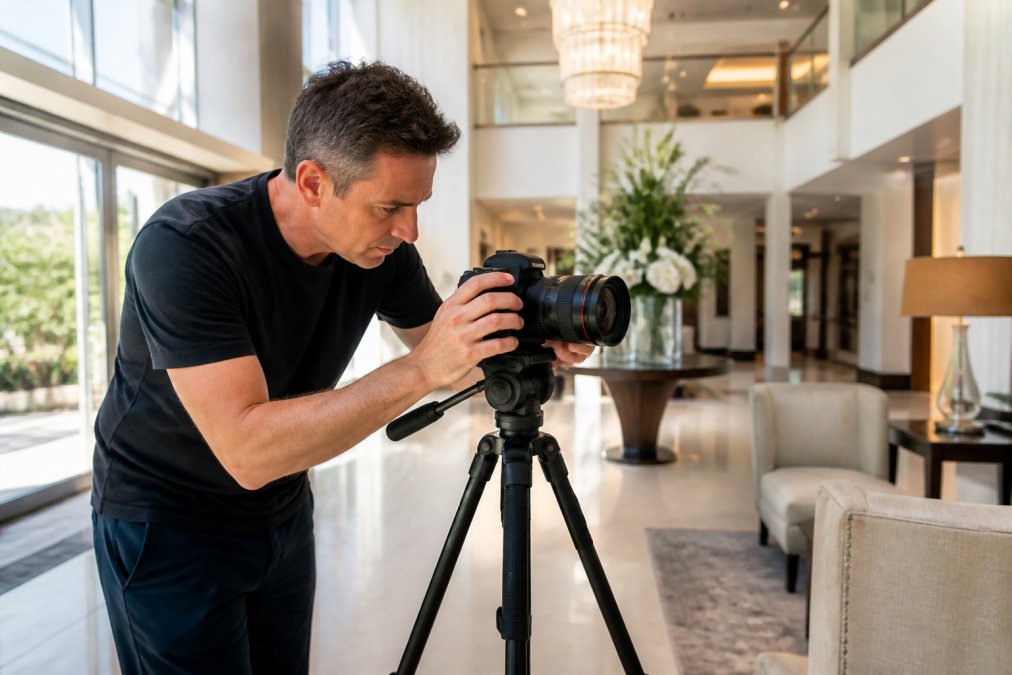
Lighting and Composition for Hospitality Spaces
Shoot rooms in the two hours after sunrise or the two hours before sunset, when ambient light is soft and directional. Harsh midday sun blows out windows and flattens interior detail, which is why so many hotel listings look washed out.
Use a wide-angle lens, typically between 16mm and 24mm on a full-frame body, to show a room's full footprint without distortion at the edges. Keep the camera at roughly chest height and level. Tilting up to fit a ceiling in makes vertical lines lean inward, and that lean is the fastest way to make a well-built room look cheap.
For evening shots of bars and restaurants, mix ambient light with the venue's own lamps and candles rather than firing a bare flash. The goal is warmth, not brightness.
Capturing Lifestyle and Guest Experience
Lifestyle photography puts a human moment in the frame: a couple at the bar, a family at breakfast, a guest reading by the window. It is the difference between showing a room and showing a stay.
You do not need a large cast. One or two relaxed people, positioned naturally and lit by the room itself, do more for a booking page than a dozen empty interiors. Avoid stiff, posed shots. Guests recognise stock-photo body language instantly and it reads as inauthentic.
If using real staff or guests, get written permission before the shoot and keep a signed release on file.
The Essential Hotel Photography Shot List
A standard hotel shoot should produce 25 to 40 usable images covering every space a guest will encounter. Anything less and your marketing team will be recycling the same three photos across the website, booking engine and social channels.
Use this as your working shot list:
- Exterior at the best light of day, plus one evening shot if the venue is lit
- Reception and arrival area, wide and detail
- Each distinct room type, shot from two angles minimum
- Bathroom in every room type, well lit and staged
- Restaurant or breakfast area, empty and in service
- Bar or lounge, including one evening atmosphere shot
- Any function, meeting or event space
- Leisure facilities, spa, pool or garden
- Two or three lifestyle frames showing guest experience
- Three to five detail shots that justify the rate: linens, toiletries, a signature dish, the view from a window
Cost of Professional Hotel Photography
Hotel photography is priced per project, not per image, because the work is driven by the number of spaces, the size of the venue, the turnaround required and whether video or drone footage is included. Any quote that arrives without a site visit, a floor plan or a room count should be treated with caution.
Expect pricing to scale with five variables:
- Volume. A six-room guesthouse is a half-day shoot. A 60-room hotel with a restaurant, bar and spa is a multi-day production.
- Time on site. Larger venues often need a split shoot across two visits to catch the right light in different areas, morning light in the restaurant, evening light in the bar.
- Deliverables. Stills, video, drone footage, 3D tours and floor-plan overlays all carry separate production and editing time.
- Licensing scope. A licence for your own website and booking engine costs less than one that covers OTAs, paid advertising and unlimited social use. Ask what is included before comparing quotes.
- Turnaround. A 48-hour delivery window on a peak-season shoot carries a premium over a two-week standard turnaround.
For a like-for-like quote, send the photographer a room count, a list of public spaces, your target launch date and the platforms you intend to publish on. Property Home Photos quotes per project rather than per image, so the scope of the venue drives the price. Request a quote directly for current figures rather than working from a generic online estimate.
The comparison that matters is not photographer versus photographer. It is a professional shoot against the cost of a weak listing. A holiday let with a handful of bookings a month still loses money every week its photos fail to convert, which is why the question is rarely whether professional photography pays for itself, but how quickly. A useful way to frame the decision is to divide the quote by the number of bookings you would need to recover it, for most venues, that is a small fraction of a single season's direct bookings.
Choosing the Best Property Photography for Hotels
The best property photography for hotels comes from a photographer who understands hospitality marketing, not just interiors. Ask three questions before you book anyone: can they show you a hotel portfolio, do they shoot tethered or review on site, and what is their delivery window?
The portfolio question filters out generalist property photographers whose work is technically fine but commercially flat. You are looking for evidence of atmosphere, not just clean lines.
Delivery window is the one that catches people out. A venue with a launch date or a seasonal campaign cannot wait three weeks for edits.
A few practical checks worth making:
Post-Production and Image Delivery Standards
Mobile-first formatting
Licensing and usage rights
Delivery mechanics
Three standards worth writing into the brief:
Frequently Asked Questions
What makes professional hotel photography different from standard real estate photography?
Hotel photography focuses on guest experience, atmosphere, and lifestyle, not just layout and square footage. It uses wide-angle lenses to capture spaciousness, styling to show how spaces feel, and lighting techniques that highlight ambiance. Standard property photography often shoots empty rooms for sales listings, while hotel photography includes details like breakfast settings, bar areas, and outdoor spaces that help guests imagine staying there.
How does high-quality photography impact direct hotel bookings?
High-quality photography builds trust and reduces uncertainty for potential guests. Clear, well-lit images help people understand room layouts, amenities, and the overall feel of the property. This transparency leads to fewer cancellations and more direct bookings through your own website rather than third-party platforms. Professional images also improve conversion rates on booking engines because guests feel confident about what they are reserving.
What should be included in a professional hotel photography brief?
A strong brief includes a shot list of key areas: exterior, reception, rooms, restaurant, bar, leisure facilities, and any unique features. Specify the time of day for best natural light, whether you want lifestyle shots with models or staff, and any brand guidelines for colour and style. Mention if you need images for specific platforms like booking engines or social media, and confirm turnaround deadlines so nothing delays your launch.
How often should hotels update their property photography?
Refresh photography every two to three years, or sooner if you renovate, rebrand, or change your target market. Seasonal updates help if your property looks significantly different in summer versus winter. Outdated images can mislead guests and lead to complaints, so keep visuals current. Many hotels schedule annual shoots to capture new menu items, room upgrades, or event spaces.
Do I need a specialist photographer for luxury hotel interiors?
A specialist understands hospitality lighting, styling, and the nuances of high-end interiors. They know how to balance ambient light with flash, correct perspective in wide shots, and post-process images to match your brand identity. For luxury positioning, this expertise ensures your property looks credible and aspirational. A general photographer may miss these details, resulting in images that do not compete with other luxury venues.