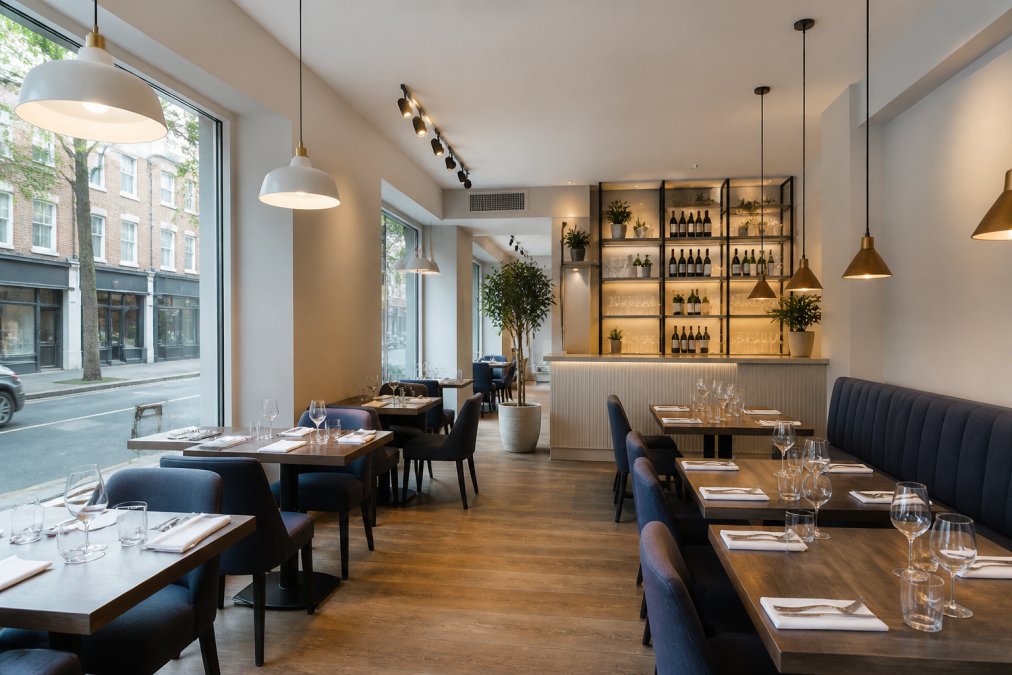
 comparison
Spacephoto Alternative for Commercial Spaces: 2026 Guide
Table of Contents
- Why Commercial Spaces Need a Different Photography Approach
- What to Look for in a Spacephoto Alternative for Commercial Spaces
- DIY vs Professional vs AI-Enhanced Photography: Which Works for Commercial Spaces?
- Professional Real Estate Video Services for Commercial Property
- How to Prepare a Commercial Space for a Photoshoot
- Commercial Property Photography Rates: What Drives the Cost
- Conclusion
- Frequently Asked Questions
Last Updated: September 12, 2026
Why Commercial Spaces Need a Different Photography Approach
Commercial property marketing fails when it borrows residential playbooks. A three-bedroom semi sells on warmth and lifestyle; a 2,000 sq ft open-plan office or a pub with a function room sells on layout, finish, and credibility. That is why anyone searching for a spacephoto alternative for commercial spaces is usually reacting to images that looked fine on a phone and fell flat on a listing portal.
This guide from Property Home Photos is for commercial owners, agents, and venue managers who need visuals that show scale, prove condition, and answer tenant or buyer questions before a viewing.
The core problem is straightforward. Residential buyers forgive imperfect photos because they are imagining a home. Commercial tenants, investors, and hospitality customers are making a financial decision, and vague imagery reads as a warning sign. RICS guidance on property marketing and measurement sets out how space should be described and presented, and photography that contradicts those figures undermines trust immediately.
What to Look for in a Spacephoto Alternative for Commercial Spaces
A credible spacephoto alternative treats commercial property as its own discipline, not residential photography with a wider lens. The practical test is whether they can handle scale, mixed lighting, and empty or partially occupied floors without the result looking distorted or staged.
The fix is not simply a better camera. It is a supplier whose process is built around the specific demands of commercial space.
The five markers that actually separate suppliers
1. Vertical line control, not just wide coverage. A 16-24mm lens captures a large floor plate, but unless the camera is levelled and verticals corrected in post, walls bow outward and the space reads as larger than it is. Ask how they handle converging verticals: the right answer involves a tilt-shift lens, a levelled tripod and software correction, not a wide-angle filter.
2. HDR and RAW processing for mixed lighting. A glazed atrium, a windowless back office and a fluorescent-lit corridor in one building will not expose correctly in a single frame. If a supplier delivers only JPEGs, ask what happens when a room has both daylight and tungsten in frame.
3. Elevated mast photography for exteriors and site context. For retail parks, industrial units and venues with forecourts, the exterior shot showing access, parking and neighbouring occupiers often gets the enquiry.
4. Floor plans and 3D virtual tours offered alongside stills.
5. A named photographer who will discuss the shoot before quoting. This is the cheapest quality signal available. A supplier who will not put a photographer on the phone before quoting is quoting from a template, and the shoot will be run to a template too.
Technical requirements for commercial versus residential shoots
Commercial shoots demand different equipment and technique. A typical residential job can be covered with one wide-angle lens and natural light; a commercial interior often needs specific techniques for handling multiple light sources and careful white balance across fluorescent, LED, and daylight sources in the same frame.
Empty space is also harder to shoot than furnished space. Without furniture to anchor scale, a large floor plate can read as flat and endless. Professional lighting and composition give the viewer a sense of proportion, exactly what a prospective tenant needs.
A useful way to frame the difference is by what each shoot has to prove:
| Requirement | Residential shoot | Commercial shoot |
|---|---|---|
| Primary goal | Create emotional appeal | Prove layout, scale and condition |
| Lighting | Natural light, minimal fill | Multi-source, bracketed, colour-corrected |
| Lens approach | Wide-angle acceptable | Tilt-shift or corrected verticals essential |
| Scale reference | Furniture and rooms | Doorways, ceiling heights, grid lines |
| Deliverables | Stills | Stills, floor plans, tours, video |
| Access complexity | Single household | Multiple tenants, security, trading hours |
How to verify a supplier before you book
Ask for two recent commercial jobs of similar size and type, and what went wrong on each. A supplier who cannot name a single problem is either new to commercial work or not being straight with you. Then ask three questions:
- What is your process when a room has mixed colour temperatures?
- Who attends the shoot, and will they call me beforehand?
The answers tell you more than any portfolio, which can be assembled from a handful of lucky shoots.
RICS guidance on property marketing and measurement sets out how space should be described and presented, and photography that contradicts those figures undermines trust immediately. A supplier who understands that link between the written particulars and the visuals is worth more than one who simply owns better equipment.
DIY vs Professional vs AI-Enhanced Photography: Which Works for Commercial Spaces?
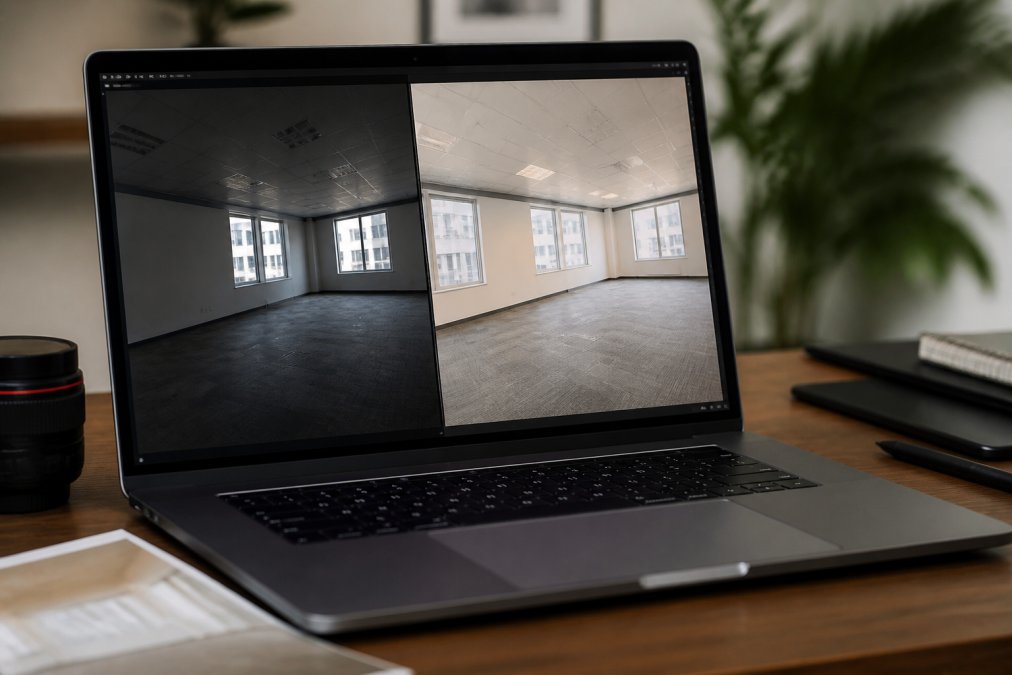
Most commercial owners choose between three routes. DIY suits a small lock-up unit going to a local tenant. Professional photography suits anything where the space itself is the product. AI-enhanced editing sits in the middle, improving source images but never rescuing a badly composed original.
| Route | Best For | Main Limitation | Typical Turnaround |
|---|---|---|---|
| DIY phone or camera | Small units, quick relists | Distortion, poor low-light results | Same day |
| AI-enhanced editing | Photographers scaling output | Needs good source imagery | 24-48 hours |
| Professional shoot | Offices, retail, venues | Requires scheduling access | Days, bookable to deadline |
Professional Real Estate Video Services for Commercial Property
Professional real estate video services turn a static listing into a guided experience. For commercial space, walkthrough videos and 3D virtual tours let a decision-maker shortlist a property without a site visit, vital when the person approving the lease is in another region.
Video and tours work best when they are built from the same shoot as the stills. A single visit producing high-resolution stills, a walkthrough video, and a virtual tour keeps the visual storytelling consistent and avoids the mismatch that happens when different assets are captured on different days. HM Land Registry guidance on property data and records is a useful reminder that what you publish should match the property's actual recorded details.
How to Prepare a Commercial Space for a Photoshoot
Preparation separates an adequate commercial shoot from a strong one, and most of it costs nothing but an hour of your time. The goal is a space that looks operational and cared for, not stripped bare or cluttered.
Most guides stop at a generic checklist. Commercial preparation is a scheduling and access problem before it is a tidying problem. An occupied office, a trading pub and a vacant retail unit each need a different approach, and getting that wrong wastes the shoot day.
Start with access and scheduling, not cleaning
Before anything else, confirm who needs to be on site, when, and what the building requires. This is where most commercial shoots lose time.
- Confirm access times with building management, including any out-of-hours permissions
- Check parking for the photographer's vehicle and any mast or lighting equipment
- Confirm whether security passes, sign-in or escort arrangements apply
- Identify any areas that are off-limits, such as server rooms or tenant-only zones
- Agree a single point of contact on the day who can unlock doors and answer questions
For multi-let buildings, this conversation must happen with each tenant, not just the landlord. A shoot that assumes access to a floor and finds it locked will not be repeated.
The preparation checklist
Once access is settled, work through the space itself. The order matters: clear first, clean second, light third.
- Clear desks, cables, and personal items from visible surfaces
- Clean glazing inside and out; fingerprints show badly in HDR images
- Replace any blown bulbs and match colour temperature across a room
- Remove bins, signage clutter, and temporary notices
- Confirm access, parking, and any building security requirements in advance
- Note EPCs and compliance documents so listing copy matches the visuals
- Schedule around trading hours for venues so atmosphere can be captured
Occupied versus vacant space
An occupied office tells a story of a working business, which is often what a prospective tenant wants to see. The risk is that personal items, whiteboards and clutter distract from the space. A common pattern is to clear personal desks but leave one or two workstations set up to show how the floor plate is used.
A vacant unit has the opposite problem. Without furniture, scale is hard to read and the space can look smaller or more awkward than it is. If it has a reception desk, meeting table or even a few chairs, leave them in place as a reference point. If genuinely empty, ask the photographer to shoot from doorways and corners so walls and ceiling lines provide scale cues.
Venues: capturing atmosphere without disrupting service
For pubs, bars, and hotels, empty rooms tell half the story. Atmosphere comes from lighting, table settings, and a sense of the space in use.
Split the shoot into two parts. Arrive before service for clean, wide shots of each area. Then, once the venue is set up and lit for service, capture a smaller number of set-up shots with service lighting levels. This avoids shooting a venue in flat daylight and ending up with images that look nothing like the customer experience.
If the venue trades in the evening, an evening shoot may be the only way to capture the atmosphere honestly. That is a scheduling decision to make when booking, not on the day.
Documents and compliance
Have the EPC, compliance certificates and current floor areas to hand before the shoot. Listing copy that quotes a floor area the photography visibly contradicts will lose enquiries.
Commercial Property Photography Rates: What Drives the Cost
Commercial property photography rates are driven by scope, not a flat fee. The variables are the size and complexity of the space, how many final images you need, whether floor plans or video are included, travel distance, and turnaround.
Because pricing depends on quantity, dates, and delivery, the sensible approach is to request a quote against your actual brief rather than compare headline figures. Property Home Photos plans turnaround around listing dates and sales deadlines, so a Thursday launch is a scheduling question, not a gamble. RICS professional standards for property professionals is worth reading before you brief any supplier, as it clarifies what a professional should be able to evidence.
Conclusion
The hard part of marketing a commercial space is not taking a photo; it is producing visual assets that answer a tenant's or customer's questions before they ask them. DIY, AI-enhanced editing, and professional photography all have a place, but only one reliably handles scale, mixed lighting, and deadline pressure.
Property Home Photos provides professional property photography and short promotional video services for commercial spaces, with shoots led directly by photographer Mark Henry Rood. You get a punctual, photographer-led visit that respects owners and guests, turnaround planned around your listing dates, and a satisfaction guarantee.
Request a quote from Property Home Photos and give your commercial space visuals that win enquiries.
Frequently Asked Questions
Is professional photography worth the investment for commercial listings?
For commercial spaces, professional imagery does more than look good. It shows prospective tenants or buyers the true scale, layout and finish of a unit, which reduces wasted viewings and speeds up decisions. A spacephoto alternative that includes wide-angle coverage gives viewers a complete picture before they enquire. When a unit sits empty for weeks, the cost of professional photography is usually far lower than another month of void period.
What should I look for when hiring a commercial property photographer?
Check that they have experience with commercial interiors, not just residential homes. Ask about their approach to lighting large open spaces, whether they provide video walkthroughs, and how they handle turnaround around your listing date. Confirm they can work around tenants or trading hours. A photographer who works directly with you, rather than through a large agency, often gives you more control over the final result.
What is the difference between residential and commercial property photography?
Residential shoots focus on making rooms feel warm and liveable, often with styling and furniture. Commercial shoots have to communicate scale, ceiling height, natural light, services and how a space could be used by a business. That means careful handling of mixed lighting. Commercial spaces also frequently need walkthrough videos as part of the same package.
How do I prepare a commercial space before the photographer arrives?
Clear clutter from desks, counters and storage areas, and remove personal items that distract from the space itself. Clean windows and floors, replace any blown bulbs, and make sure all lights work. If the space is occupied, arrange for staff to keep communal areas tidy on the day. Provide access instructions and parking details in advance. A simple checklist shared with your team a day before the shoot prevents most delays.