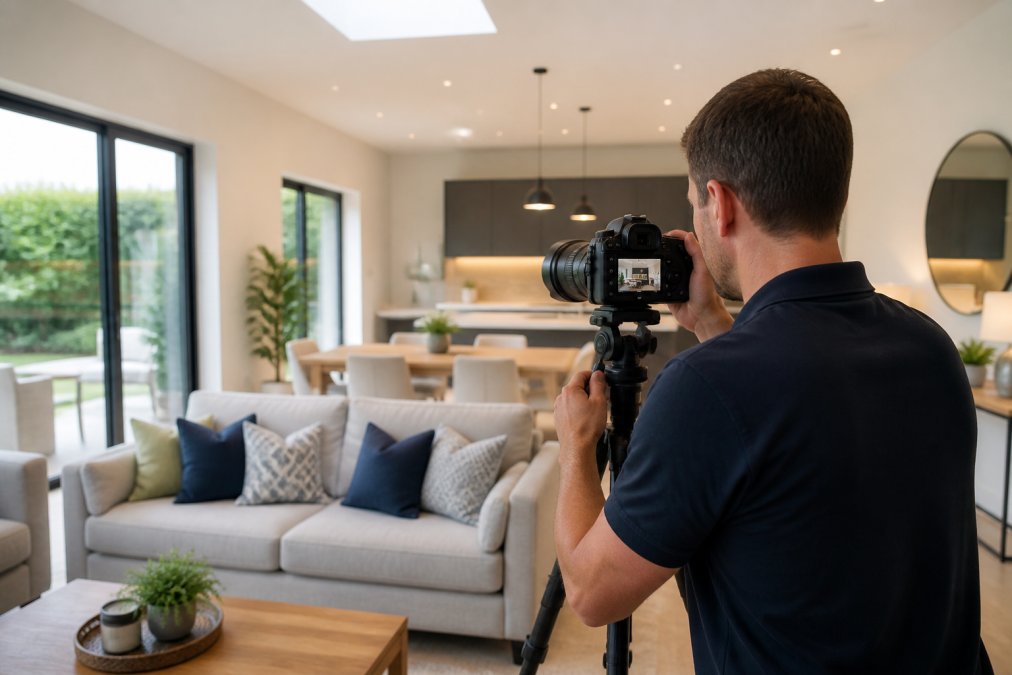
 comparison
Is Professional Property Photography Worth It? A 2026 Review
Table of Contents
- The Verdict: Is Professional Property Photography Worth It?
- The Impact of High-Quality Images on Property Enquiries
- Cost of Professional vs DIY Photography: The Real Numbers
- Why Professional Photos Sell Faster: Buyer Psychology and First Impressions
- How to Prepare a Property for Professional Photos
- Beyond Still Photos: Video and Virtual Tours
- Conclusion
- Frequently Asked Questions
Last Updated: September 5, 2026
The Verdict: Is Professional Property Photography Worth It?
Sellers who list with poor imagery often watch their properties linger while similar homes attract multiple viewings and competitive offers. Professional property photography is worth it for nearly every home, holiday let, and commercial space because it directly influences how many buyers enquire and how quickly you receive offers.
The question of whether property photography is worth it depends on one factor: how much you value a faster sale at a better price. This guide breaks down the real costs, the measurable impact on enquiries, and exactly how to prepare so your shoot delivers maximum return.
The Impact of High-Quality Images on Property Enquiries
The statistics behind property imagery are compelling, yet many sellers still rely on smartphone snapshots taken in poor light. Listings with professional photography receive significantly more clicks and generate a higher volume of buyer enquiries than those with amateur photos, according to Rightmove's guidance on listing presentation. The difference is not subtle; it is the difference between a buyer pausing to view your property details or scrolling past without a second thought.
A common mistake is assuming that a decent camera phone can replicate professional results. Professional photographers bring lighting control, composition expertise, and post-production skills that elevate every room. For holiday lets and hospitality venues, this impact compounds: guests book based on atmosphere and trust, both of which are communicated through image quality.
Cost of Professional vs DIY Photography: The Real Numbers
Comparing the cost of professional vs DIY photography requires looking beyond the upfront fee to the financial consequences of each choice. DIY photography appears cheaper, but the real cost emerges through extended time on market, repeated price reductions, and lost opportunities while your property sits unsold.
Professional photography services charge a project-based fee that reflects the equipment, expertise, and editing time involved. For context, a full-frame mirrorless camera suitable for interior work costs over £2,000 for the body alone, and editing software like Adobe Lightroom runs around £10 per month on subscription, according to Adobe's current pricing for Lightroom. When you add a wide-angle lens, lighting equipment, and the hours spent learning perspective correction and HDR merging, the DIY route demands a serious investment of both money and time.
The table below summarises what each approach actually involves:
| Option | Upfront Cost | Time Investment | Result Quality | Risk |
|---|---|---|---|---|
| DIY with smartphone | Minimal | High learning curve | Inconsistent lighting, distorted perspective | Extended time on market |
| DIY with professional camera | £2,000+ equipment | Significant editing time | Better, but still amateur composition | Costly if abandoned |
| Professional service | Project-based fee | Minimal, photographer-led | Consistent, polished, trustworthy imagery | Low, with satisfaction guarantee |
Pricing for professional shoots depends on the number of rooms, the property type, and delivery timelines. For an accurate quote tailored to your property, request one directly from a photography service.
A Framework for Calculating Your Return on Investment
Most articles stop at 'professional photos help you sell for more.' To decide if the fee is justified, you need a simple calculation based on your local market.
Here is a practical framework you can apply using data from your local estate agent or from portals like Rightmove or Zoopla:
- Estimate your property's market value (V). Use recent sold prices for comparable homes in your postcode.
- Estimate the cost of holding the property (C). This includes your monthly mortgage payment, utility bills, council tax, and any missed opportunity cost on your next home. For a realistic figure, add up these monthly costs and divide by four to get a weekly cost.
- Estimate the potential price impact of professional photos (P). While no one can guarantee a higher sale price, a common pattern in the industry is that well-presented listings can achieve a sale price closer to the top of the valuation range. A reasonable, conservative estimate for planning purposes is 1-2% of the property value (realtor.org).
- Calculate the benefit. Your potential benefit is the sum of (P) plus the avoided holding costs from a faster sale. For example, if your property is valued at £300,000, a 1% price improvement is £3,000. If professional photography helps you sell two weeks sooner and your holding costs are £500 per week, that is another £1,000 in savings. The total potential benefit is £4,000.
- Compare to the cost. If the professional photography fee is £150-£350, the potential benefit of £4,000 represents a return of over 1,000%. Even if the photos only help you achieve the asking price rather than a lower offer, the benefit is substantial.
This framework is a planning tool, not a guarantee. Market conditions, property type, and location all play a role. However, it provides a concrete, numbers-based method for evaluating the investment.
Why Professional Photos Sell Faster: Buyer Psychology and First Impressions
Buyer psychology is predictable: people make snap judgements based on visual cues within seconds of seeing a listing. Professional photos sell faster because they trigger an emotional response that amateur images cannot replicate, signalling that the property is well-maintained, spacious, and move-in ready.
The first impression in digital listings operates differently from traditional curb appeal. Buyers browse on mobile devices and decide whether to enquire based on thumbnail appeal alone. A professionally lit living room with natural light streaming through windows and careful staging tells a story of a desirable home. An empty, dimly lit room photographed with a phone tells a different story entirely.
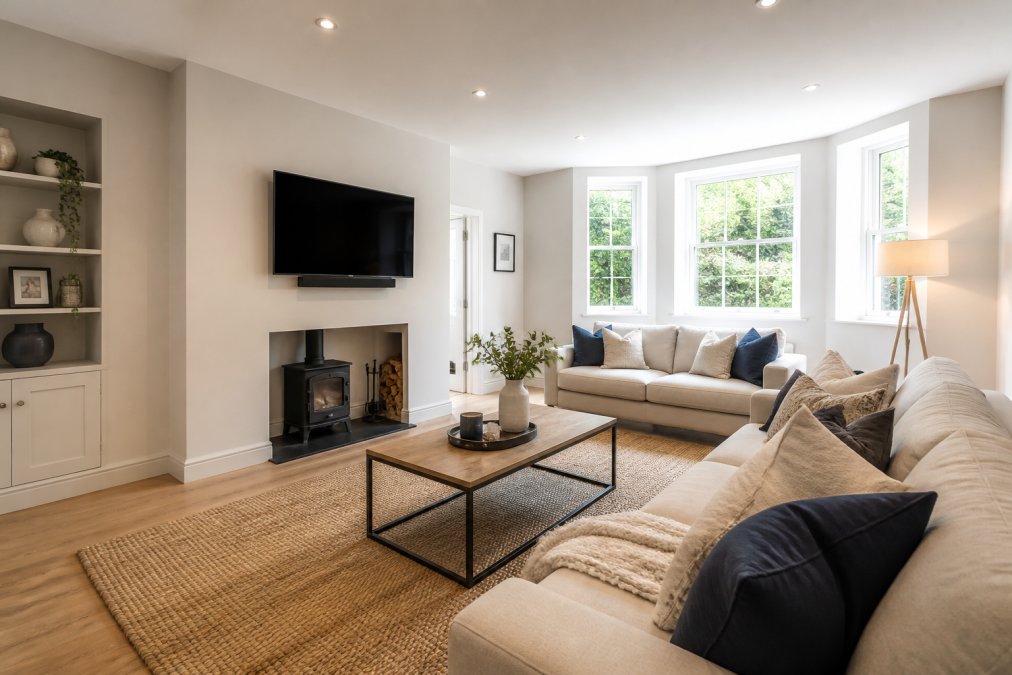
Professional photographers use wide-angle lenses to capture the full scope of a room without distortion, balance natural lighting to avoid harsh shadows, and apply post-production techniques that correct perspective and enhance colour. The result is imagery that builds trust and removes doubt, which is precisely what buyers need to pick up the phone.
How to Prepare a Property for Professional Photos
Preparing for a professional shoot is straightforward, but the difference between a good photograph and an outstanding one often comes down to the details you control before the photographer arrives.
The Photographer's Technical Checklist for Sellers
This is not just about tidying up. It is about preparing your home to be captured by a wide-angle lens and high-resolution sensor, which see things differently than the human eye. Work through this checklist in the 48 hours before your shoot.
Exterior and Curb Appeal
- Mow the lawn and edge the borders. A neat lawn creates a clean line in the photograph. Long grass or patchy areas will be highly visible.
- Sweep or pressure-wash paths and the driveway. Algae, moss, or dirt on paving will look prominent in a bright, wide-angle exterior shot.
- Clean windows and frames. The camera will pick up smudges and cobwebs that you might not notice from the ground.
- Tidy the entrance. Remove doormats that are worn, place a couple of potted plants for colour, and ensure the door number is visible and clean.
- Hide bins and garden tools. Move them to the side of the house or a shed. A wide-angle shot of the front of the house will include the side boundaries.
Interior: The Wide-Angle Lens Perspective
- Remove any furniture that blocks the flow of a room. A wide-angle lens makes rooms look larger, but only if there is a clear path for the eye to travel. If a piece of furniture makes you walk around it, it is too big for the room.
- Push furniture against the walls. This is a temporary measure for the shoot. It creates the illusion of more floor space and a larger room.
- Declutter all horizontal surfaces. This includes kitchen worktops, bedside tables, window sills, and shelves. The camera will capture every single item. A good rule is to remove 50% of what is on display.
- Remove personal items. Family photos, children's artwork, and toiletries on display prevent buyers from imagining the home as their own. Pack them away in a box for the day.
- Pay attention to the kitchen. Clear the worktop of all appliances except for a coffee machine or a neat kettle. Remove tea towels and washing-up sponges from view. Clean the hob and the splashback thoroughly.
- Make the beds with fresh, neutral bedding. Ensure pillows are plumped and throws are folded neatly.
- Check the bathroom. Remove all bottles from the bath and shower. Roll towels neatly and place them on the rail. Ensure the toilet seat is down and the mirror is streak-free.
Lighting and Ambience
- Turn on all lights. This includes lamps, ceiling lights, and under-cabinet lights. This balances the exposure between bright windows and darker corners of the room.
- Open all curtains and blinds. Natural light is the primary tool for property photography. Ensure the windows are clean so the light is not diffused by dirt.
- Replace any dim or mismatched bulbs. A room with one bright bulb and one dim bulb will look unbalanced in the photograph. Use bulbs of the same colour temperature (e.g., all 'warm white' or all 'cool white').
- Turn off ceiling fans. They can create a distracting blur in a long exposure.
- Consider the view from the window. If the view is of a fence or a wall, the photographer may choose to close the curtains to avoid a negative focal point. Discuss this with them beforehand.
The Final Walkthrough
Thirty minutes before the photographer arrives, do a final walkthrough with your checklist. Look at each room through the lens of a camera. What is the first thing you see? Is there a bin in the corner of the shot? Is there a cable trailing across the floor? Is the toilet roll visible in the reflection of the mirror? These small details are what separate a good shoot from a great one.
A well-prepared property allows the photographer to focus on their craft: capturing the light, the space, and the atmosphere. This preparation reduces the time needed on site and ensures you get the maximum value from your investment.
Beyond Still Photos: Video and Virtual Tours
Still photography remains the foundation of any property listing, but video and virtual tours extend your reach to buyers who prefer dynamic content. Short promotional videos allow viewers to experience the flow of a property, while Matterport-style 3D tours provide an immersive, interactive walkthrough.
Buyers increasingly expect to view properties remotely before committing to an in-person visit, and listings that offer video content capture attention for longer periods. A well-produced video that moves smoothly from room to room conveys the scale and layout of a property far more effectively than a sequence of individual photographs.
Professional photographers now offer video production alongside stills, creating a cohesive visual package for your listing. For holiday lets and hospitality venues, video is particularly valuable because it communicates atmosphere and vibe. Commercial property owners also benefit from video walkthroughs that show the practical layout of office or retail spaces.
Conclusion
The evidence is clear: professional photography transforms how buyers perceive your property, generating more enquiries and reducing the time your listing spends on the market. While DIY photography saves money upfront, the hidden costs of extended listing periods make it a false economy for most sellers.
Property Home Photos provides professional property photography and short promotional videos designed to help homes, holiday lets, hospitality venues, and commercial spaces secure more enquiries. By working directly with photographer Mark Henry Rood, you receive a tailored, punctual, and calm on-site experience that captures your space at its absolute best, with a satisfaction guarantee and turnaround planned around your listing dates.
Frequently Asked Questions
Does professional photography help sell a house faster?
Yes. Listings with professional photos typically attract more viewings and spend less time on the market. High-quality images create a strong first impression that encourages buyers to click through and book a viewing. In a competitive market, a property that looks well-presented online generates more serious buyer enquiries, which can shorten the selling process.
What is the difference between DIY and professional property photography?
DIY photos taken on a phone often suffer from poor lighting, distorted verticals, and a lack of wide-angle coverage. Professional photographers use specialised equipment, including full-frame cameras and wide-angle lenses, and apply post-production editing to balance interior lighting. The result is a set of accurate, appealing images that present room sizes and layouts truthfully, which helps avoid disappointing viewings.
Are professional photos worth the cost for holiday lets?
For holiday lets, professional photos typically pay for themselves through higher booking rates. Your listing competes with hundreds of others, and the first image determines whether a guest clicks through. Clear, warm images that show the atmosphere of your property build trust and reduce enquiries based on false expectations, leading to more confirmed bookings and fewer guest complaints.
How do professional photos affect online click-through rates?
Professional photos substantially improve click-through rates on property portals. A listing with a bright, well-composed main image stands out in search results and draws more views. Strong imagery also increases listing engagement, meaning viewers spend longer looking at your property, which signals genuine interest to the portal algorithm and boosts the listing's visibility further.
Professional photography is an investment in how quickly your property sells and the price it achieves. Request a quote from Property Home Photos and give your listing the visual advantage it deserves.