 how-to
How to Capture Property Atmosphere in Photos
Table of Contents
- Why Property Atmosphere Matters for Buyers and Tenants
- Can Professional Photos Fix Bad Lighting in a Property
- Property Staging Tips for Photography That Creates Warmth
- How to Make a Room Look Warm in Photos
- Essential Camera Settings and Equipment for Capturing Atmosphere
- Composition Techniques That Enhance Visual Appeal
- Post-Production Editing to Refine Atmosphere and Mood
- Frequently Asked Questions
Last Updated: September 18, 2026
Why Property Atmosphere Matters for Buyers and Tenants
When someone views a listing online, they're imagining themselves living there. That emotional connection, warmth, comfort, possibility, turns a curious click into a serious enquiry.
Buyers and tenants decide based on how a property feels, not just what it contains. A well-lit, thoughtfully staged room draws people in; a flat, poorly lit space pushes them away, regardless of the property's actual quality.
Professional photography is critical here. A buyer scrolling through listings spends three seconds on yours, in that window, they need to feel curiosity, warmth, and possibility. That feeling comes from how you capture property atmosphere in the image.
Properties that photograph poorly sit on the market longer; those capturing their best atmosphere sell faster and at better prices. Professional photographers reveal a property's true character through light, composition, and staging.
Can Professional Photos Fix Bad Lighting in a Property
Professional photography cannot change the physical light sources in a room, but it absolutely can reveal and enhance the light that's already there.
Bad lighting is a common complaint in property listings. Professional photographers use camera settings, positioning, and post-production techniques to work with available light and reveal the property in its best state.
A skilled photographer can make a naturally lit room look warm and inviting, balance harsh shadows, and expose for spaciousness. But if a room has no natural light and poor artificial lighting, no photography can manufacture warmth that isn't there.
The real fix starts before the camera comes out. Adding warm-toned lamps, opening curtains, and positioning furniture to catch available light all improve what the camera captures. Professional photographers advise on these changes because they understand how lighting translates to the final image.
Professional photography improves listings with structural lighting challenges by working with what exists, not transforming the impossible. Staging and lighting prep are essential pre-shoot steps.
Property Staging Tips for Photography That Creates Warmth
Staging for photography differs from staging for viewings: you're arranging the room for the camera to capture atmosphere and tell a story.
Create visual warmth by decluttering ruthlessly. Remove personal items, excess furniture, and anything that doesn't serve the room's purpose. Clear, organised spaces photograph larger and feel more welcoming, allowing buyers to imagine their own lives in the space.
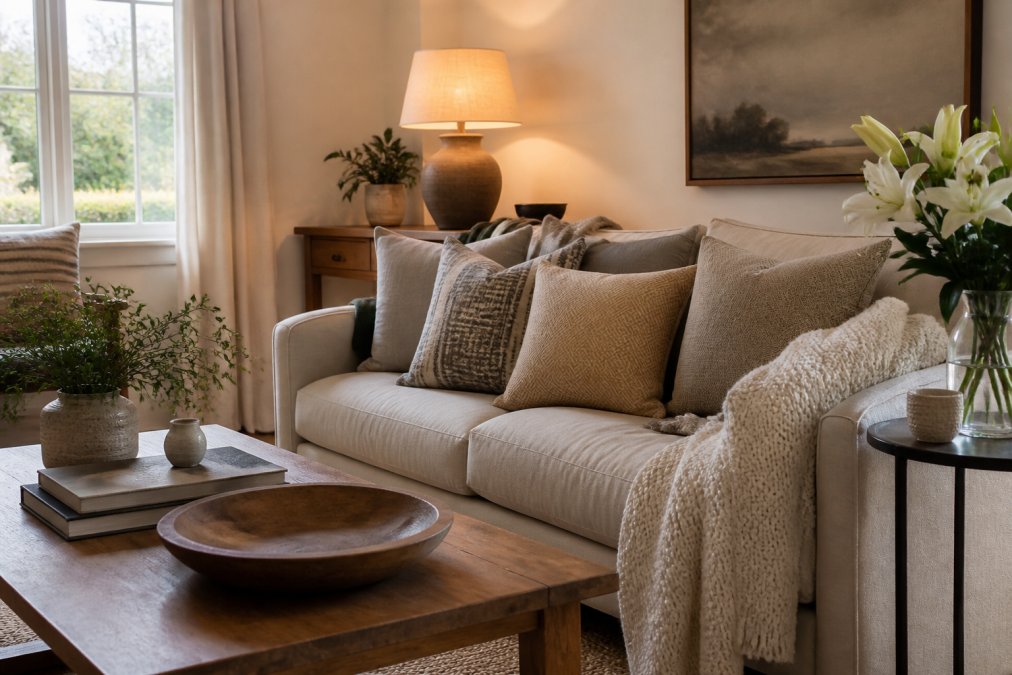
Focus on texture and layering: add throws, cushions in warm tones, and rugs. Fresh flowers or plants bring life and photograph beautifully. A styled bookshelf or kitchen counter with a few carefully chosen items creates a lived-in, homely feel.
Neutral walls photograph better than bold colours, which dominate the frame. Warm whites, soft greys, and natural tones create a welcoming atmosphere. Layer in warmth through soft furnishings, wood tones, and accessories.
For kitchens and bathrooms, cleanliness and organisation are essential. A clean kitchen with a few styled items reads as modern and well-maintained; an empty kitchen reads as cold.
Open all curtains and blinds to reveal windows and improve natural light. In darker rooms, add warm-toned lamps or uplighting for depth. Avoid harsh overhead lights, which create flat shadows.
Identify each room's best feature, fireplace, view, architectural detail, or statement piece, and arrange furniture to draw the eye there. This guides attention and makes the room feel intentional.
How to Make a Room Look Warm in Photos
Warmth in photographs comes from colour temperature, lighting, and styling. A cold room can look inviting in a photo with the right approach.
Warm light, soft whites, creams, and golden tones create a welcoming feeling; cool whites feel clinical. Introduce warm colours through soft furnishings, artwork, and accessories, warm-toned rugs, cushions, and wooden furniture all contribute.
Natural light is preferable but must be balanced. Harsh sunlight creates unwelcoming shadows; soft, diffused light is more flattering. On bright days, use sheer curtains to soften window light.
Use warm white bulbs (around 2700K) in lamps and accent lights. Layer lighting, overhead, task, and accent, to create depth and warmth.
Include natural materials: wood, plants, and textiles. Wooden furniture and frames add warmth; plants bring life. Textiles in warm tones create cosiness.
Avoid stark staging. A few carefully chosen items, books, flowers, a throw, make a space feel inhabited and warm.
Essential Camera Settings and Equipment for Capturing Atmosphere
Capturing property atmosphere requires technical skill and equipment. You don't need expensive gear, but you must understand how settings affect mood.
Camera settings that matter:
Wide-angle lenses (16-35mm) show more of the room, making spaces feel larger. Positioning is critical because wide angles distort perspective.
A wider aperture (f/2.8) lets in more light and softens the background. A narrower aperture (f/8-f/11) keeps more of the room in sharp focus, which is usually preferred for property photography.
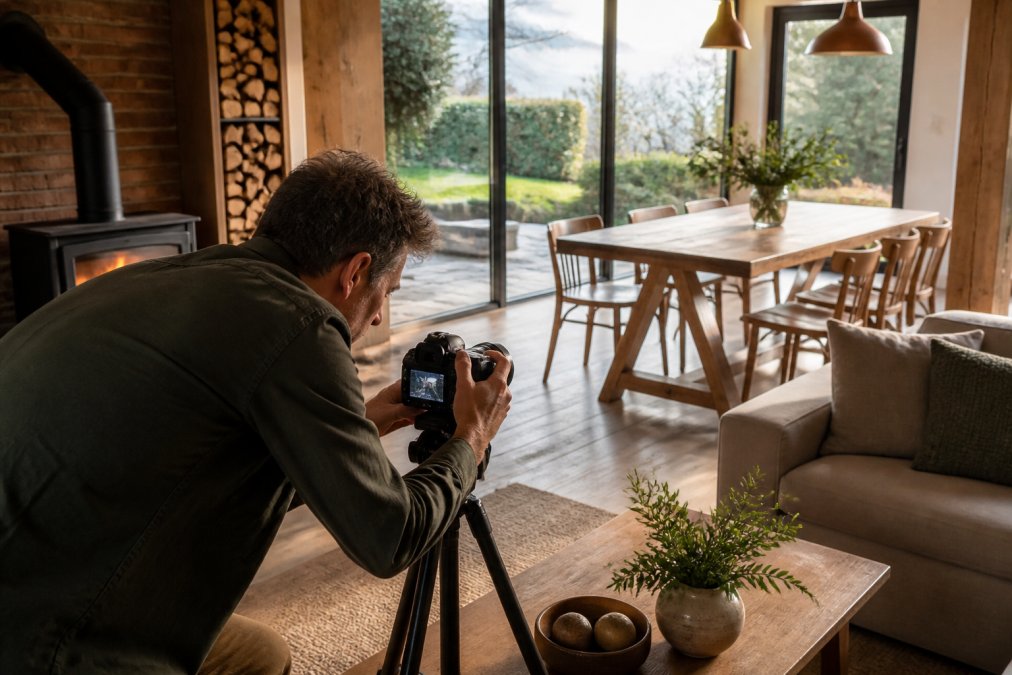
A tripod is essential, it stabilises the camera and allows slower shutter speeds without blur, especially in low light.
Keep ISO low (100-400) in bright conditions; use higher ISO (800-3200) in low light, accepting some graininess. Balance shutter speed, aperture, and ISO to capture detail and atmosphere.
Equipment essentials:
A sturdy tripod is essential, it keeps composition consistent and enables shooting in low light without blur.
A wide-angle lens (16-35mm) is your primary tool, showing enough of the room without extreme distortion.
A reflector bounces natural light into shadows. Portable LED panels provide consistent, warm-toned light to enhance atmosphere without overlighting.
A remote shutter release or timer prevents camera shake when you press the button. This is especially important in low light.
Composition Techniques That Enhance Visual Appeal
How you frame a room determines whether the viewer feels invited into the space or kept at a distance. Composition is the bridge between what the camera captures and the atmosphere the image conveys.
The rule of thirds divides the frame into nine sections. Place key elements along these lines or intersections to create balance and draw the eye through the image.
Leading lines guide the viewer's gaze deeper into the room, creating depth and making the space feel larger.
Foreground, middle ground, and background all matter. Include something in the foreground to anchor the viewer, show the focal point in the middle ground, and add depth in the background.
Angles matter. Shooting from a corner or slightly elevated angle reveals more space and creates exploration. Find the angle that shows the room's best features.
Avoid clutter. Every element should serve a purpose. A clear, intentional frame feels more spacious and welcoming.
Symmetry and balance create calm compositions. Vary your approach to keep the listing visually interesting.
Post-Production Editing to Refine Atmosphere and Mood
Post-production editing brings out mood and ensures consistency across all images in a listing.
Slightly increase exposure to brighten rooms. Adjust contrast to add depth, shadows should be visible but not harsh, to capture property atmosphere without overprocessing.
Warm-toned images feel inviting; cool tones feel modern. Most property photos benefit from a slight warm shift, depending on the property's character.
Adjust white balance to render colours accurately, especially with mixed lighting sources, making the room feel true to life while enhancing its best qualities.
Slightly increase saturation to make colours pop, greens fresher, woods richer, textiles more inviting, but avoid oversaturation.
A slight clarity boost makes details sharper and highlights textures like wood grain, fabric, or stonework.
Selective editing targets specific areas, brighten dark corners, warm cold shadows, enhance focal points, revealing property atmosphere without heavy-handed editing.
All images should have similar colour tone, exposure, and style to create a cohesive narrative and build trust.
Presets or LUTs (lookup tables) maintain consistency across images, saving time while ensuring a professional, unified listing.
Post-production should enhance what's there, not create artifice. Images should represent the property truthfully, at its absolute best.
Capturing property atmosphere requires understanding light, composition, and staging, combined with technical skill. Properties that photograph well generate more enquiries and sell faster.
Investing in professional photography that captures atmosphere is one of the smartest decisions when preparing a property for sale or rental. Working with an experienced photographer like Mark Henry Rood at Property Home Photos ensures your property is presented authentically and compellingly. Request a quote to see how professional photography can transform your listing.
| Technique | Purpose | Impact |
|---|---|---|
| Natural light and staging | Reveals warmth and space | Inviting, spacious feel |
| Wide-angle composition | Shows room scale | More impressive dimensions |
| Warm colour tones | Creates emotional connection | Homely, welcoming atmosphere |
| Decluttering and styling | Focuses attention | Professional, organised impression |
| Post-production refinement | Enhances mood consistently | Polished, trustworthy listing |
Frequently Asked Questions
What elements contribute most to capturing property atmosphere in photographs?
Natural light, colour consistency, and thoughtful staging are the three pillars. Natural light creates depth and reveals the true character of a space. Warm colour palettes and decluttered interiors establish an inviting mood. Focal points, a well-made bed, styled kitchen island, or feature wall, give viewers something to focus on and help them envision themselves in the space. Together, these elements tell a visual story that builds emotional connection.
Can professional photos fix bad lighting, or should the property be improved first?
Professional photography can improve how bad lighting appears through careful composition, exposure control, and strategic use of supplementary lighting during the shoot. However, fundamental issues like dim rooms or harsh shadows cannot be completely eliminated in post-production without losing authenticity. The best approach is to address obvious lighting problems beforehand, open curtains, clean windows, add lamps, and then rely on professional techniques to capture the space at its best. This combination delivers results buyers and tenants trust.
How quickly can professional property photography be delivered if my listing deadline is tight?
Professional photographers understand that listing dates are critical. Turnaround depends on the number of images, editing requirements, and complexity of the property. Property Home Photos plans shoots around your deadline to ensure images are ready when you need them. Discuss your launch date upfront so the photographer can commit to your timeline and avoid missed opportunities.
Is professional property photography worth the investment for a small holiday let or rental property?
Yes. Professional photography directly increases enquiry rates and booking confidence. Guests and tenants decide within seconds whether a listing matches their expectations. High-quality images that capture genuine atmosphere reduce cancellations caused by mismatched expectations and build trust faster than amateur photos. Even small properties benefit from this credibility boost, which translates to more bookings and higher occupancy rates.