 how-to
How to Avoid Misleading Property Photos
Table of Contents
- What Counts as a Misleading Property Photo
- Consumer Protection from Unfair Trading Regulations and Property Marketing
- Material Information Requirements for Property Listings
- The Impact of Over-editing on Property Viewings
- Acceptable Photo Enhancement Techniques
- Risks of Digital Staging and Virtual Furniture
- Avoiding Wide-Angle Lens Distortion
- Consequences of Over-editing and Filtering
- A Buyer's Checklist for Verifying Property Photos
- Frequently Asked Questions
Last Updated: September 2, 2026
What Counts as a Misleading Property Photo
A misleading property photo misrepresents the actual condition, size, layout, or appearance of a property in a way that would influence a buyer's or tenant's decision. This includes distortion from wide-angle lenses, excessive editing, digital staging with virtual furniture, and colour correction that bears no resemblance to reality.
The distinction between enhancement and misrepresentation matters legally and ethically. A well-lit photograph showing the property's best features is acceptable. A photograph using a fisheye lens to make a small room appear cavernous, or removing an entire wall through retouching, crosses into deception (citizensadvice.org.uk).
The Consumer Protection from Unfair Trading Regulations 2008 sets the legal standard (legislation.gov.uk). A property listing must not contain omissions or distortions that would cause the average consumer to make a different decision. If a photograph omits a major structural issue or misrepresents room dimensions through lens distortion, it violates this standard.
Common examples of misleading property photos include removing clutter so extensively that the property looks nothing like its furnished state, using filters that change wall colours beyond what the eye sees, shooting with fisheye or ultra-wide-angle lenses without disclosure, digitally staging with virtual furniture, omitting visible structural damage or neighbouring properties that obstruct views, and brightening underexposed rooms so dramatically that actual lighting bears no resemblance.
Property Home Photos uses professional lighting and composition to present properties truthfully, showing spaces at their best without creating false impressions.
Consumer Protection from Unfair Trading Regulations and Property Marketing
The Consumer Protection from Unfair Trading Regulations 2008 is the primary legal framework governing property marketing in the UK. Traders, including estate agents and private sellers, must not engage in unfair commercial practices. Property listings with misleading photographs constitute unfair commercial practice.
The regulations prohibit misleading actions and misleading omissions. A misleading action occurs when a property photo creates a false impression about the property's characteristics. A misleading omission happens when a listing omits material information that would affect the consumer's decision, such as hiding structural issues.
The test is straightforward: would the average consumer make a different purchasing decision if they knew the truth? If yes, the omission or distortion is unlawful.
Estate agents and property sellers who breach these regulations face enforcement action from trading standards authorities. Buyers may pursue claims for misrepresentation and claim damages if they purchased based on misleading imagery. Courts have awarded compensation to buyers who discovered properties did not match their photographs.
Professional, honest property photography is both ethical and a legal requirement. Misrepresenting a property through photography exposes agents and sellers to regulatory action, civil claims, and reputational damage.
Material Information Requirements for Property Listings
Material information is any fact about a property that would influence a buyer's or tenant's decision to proceed. In property photography, this includes actual room size, true condition of fixtures and finishes, presence of structural issues, neighbouring properties, and natural lighting.
When a photograph omits or distorts material information, it breaches consumer protection law. A photograph hiding a neighbouring industrial building, removing visible damp, or making a room appear twice its actual size all omit material information.
The regulations require traders to disclose material information clearly and accurately. Photographs must reflect the property's actual condition and dimensions, dark rooms shouldn't be presented as bright without disclosure, structural issues shouldn't be obscured through retouching, digital staging must be clearly labelled, and wide-angle lens distortion must be disclosed or avoided.
Courts and trading standards assess material information from the perspective of the average consumer. If photographs hide or misrepresent information a reasonable buyer would need to know, the listing breaches regulations.
Property Home Photos ensures every image reflects the property's true characteristics, using professional lighting and composition to present spaces honestly without distortion or deception.
The Impact of Over-editing on Property Viewings
Over-editing creates a credibility gap. When a buyer arrives for a viewing and finds the property looks nothing like the photographs, trust evaporates immediately. This gap between expectation and reality damages the sale and creates legal liability.
Excessive retouching, heavy filtering, and colour correction bearing no resemblance to the actual property are common culprits. Walls brightened beyond recognition, unnaturally saturated colours, or completely removed shadows create unrealistic impressions. When buyers see the actual condition, they feel deceived.
Buyers who feel misled often withdraw from the purchase, leaving the property unsold. In some cases, buyers proceed only to discover issues that should have been apparent from honest photographs, leading to claims of misrepresentation.
Digital staging and virtual furniture are particularly problematic. A photograph showing an empty room furnished with digital sofas and artwork creates an expectation the actual property cannot meet. When buyers arrive and find an empty room, disappointment is significant.
Professional photography avoids this trap. By using proper lighting, composition, and minimal, honest editing, Property Home Photos ensures photographs match what buyers will see, reducing viewing cancellations and increasing the likelihood of successful sales.
Acceptable Photo Enhancement Techniques
Not all photo enhancement is misleading. The distinction lies between presenting the property at its best and creating a false impression. Acceptable enhancements include proper lighting, colour correction to match natural conditions, and composition that shows the space to advantage.
Lighting adjustment is the most important acceptable enhancement. A naturally dark room can be properly lit during photography without misrepresenting it. The final image should reflect how the room would appear to someone standing in it with eyes adjusted to the space.
Colour correction is acceptable when it restores the true colour of walls, fixtures, and finishes. Walls appearing slightly yellow due to artificial lighting can be corrected to their actual colour. This differs from unnaturally saturating colours or changing the room's tone entirely.
Composition and framing are acceptable tools. Shooting from angles that show room dimensions clearly, avoiding fisheye or ultra-wide-angle lenses that distort space, and framing to highlight the property's best features are legitimate techniques.
Minor retouching is acceptable in specific contexts. Removing temporary items like ladders or parked cars is reasonable. Removing minor blemishes not reflecting the property's condition is acceptable. However, removing entire elements, walls, windows, or substantially altering the space's appearance crosses into misrepresentation.
The rule of thumb: if enhancement could be undone by cleaning, proper lighting, or minor adjustments, it's acceptable. If it requires removing or substantially altering physical elements or creating false impressions, it's misleading.
Risks of Digital Staging and Virtual Furniture
Digital staging presents significant risks. While it may appeal to property owners wanting to show how a space could be furnished, it creates false impressions exposing them to legal liability.
A buyer seeing an empty room furnished with digital sofas and artwork sees a vision, not the space itself. When they arrive and find an empty room, the disconnect is obvious, leading to complaints, cancelled viewings, and misrepresentation claims.
Legally, digital staging not clearly labelled as such is misleading. If the listing doesn't disclose that furniture is virtual, buyers might reasonably assume it's included in the sale or that the room is actually furnished. This omission of material information breaches consumer protection regulations.
Digital staging can also obscure the property's actual dimensions and layout. Virtual furniture can make spaces appear larger or smaller than they are, or hide structural features buyers need to see.
The safer approach is photographing the property as it actually is, using professional lighting and composition to show it at its best. Honest photographs of empty rooms are more credible than digitally staged versions. Property Home Photos captures the property's true characteristics, allowing buyers to make informed decisions based on reality.
Avoiding Wide-Angle Lens Distortion
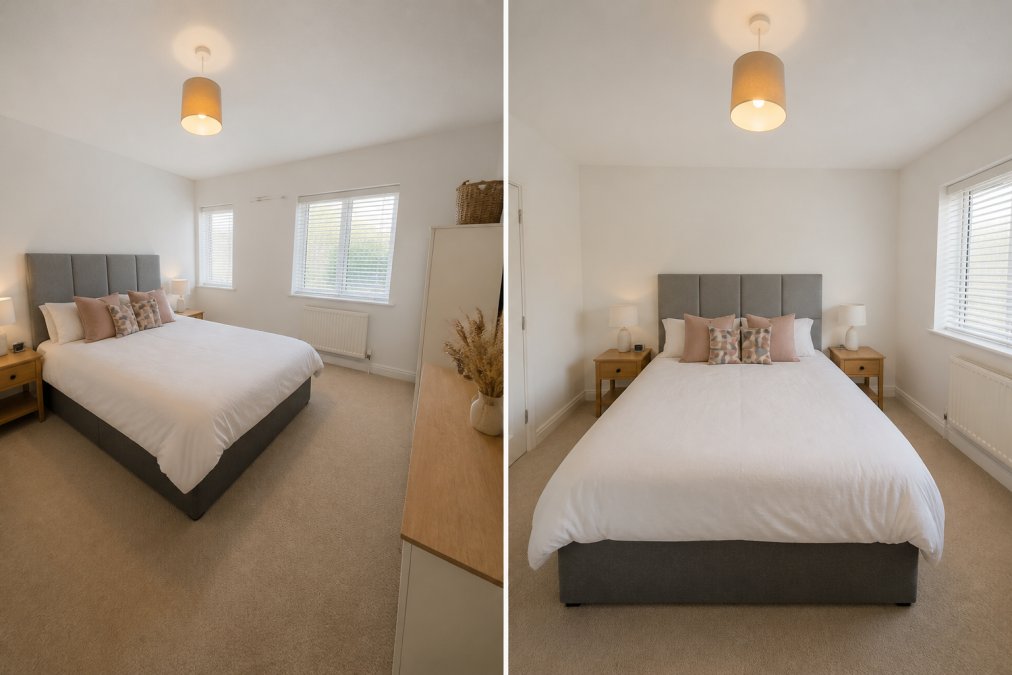
Wide-angle lenses are tempting for property photography because they make rooms appear larger and more spacious. However, they distort spatial proportions, making it difficult for buyers to assess actual dimensions and layout.
A fisheye lens creates extreme distortion, bending walls and making rectangular rooms appear curved. This is rarely acceptable in property photography because it fundamentally misrepresents the space's shape and proportions.
Ultra-wide-angle lenses (typically 14-24mm focal length) also distort space, making rooms appear much larger than they are (peer-reviewed research). A small bedroom photographed with an ultra-wide-angle lens can appear spacious, only for the buyer to discover on arrival that it's actually cramped.
The acceptable approach is using moderate wide-angle lenses (28-35mm focal length) that show room dimensions without significant distortion. Professional property photographers understand lens limitations and choose equipment that captures the property accurately.
Consequences of Over-editing and Filtering
Over-editing and heavy filtering damage the credibility of property listings and expose property owners to legal and financial consequences. When photographs are so heavily edited that they no longer reflect the property's actual appearance, buyers feel deceived and regulatory authorities take action.
The immediate consequence is a failed sale. Buyers who arrive for a viewing and find the property doesn't match the photographs often withdraw from the purchase. The property remains unsold, and the owner's time and marketing investment are wasted.
More seriously, over-editing can lead to legal claims. If a buyer purchases based on misleading photographs and later discovers the property doesn't match the images, they may pursue misrepresentation claims. Damages can be substantial depending on the nature of the misrepresentation and financial impact.
Trading standards bodies enforce the Consumer Protection from Unfair Trading Regulations 2008. If complaints are made about misleading property photographs, trading standards may investigate and take enforcement action against the agent or seller, including warnings, fines, or prosecution.
Over-editing also damages the property owner's reputation. Buyers who feel misled by photographs are likely to share their experience publicly. Negative reviews can damage credibility and make it harder to sell other properties.
The solution is straightforward: use professional photography that presents the property honestly. Property Home Photos delivers images that match what buyers will see, building trust and confidence from the first photograph.
| Editing Technique | Acceptable | Why |
|---|---|---|
| Proper lighting adjustment | Yes | Shows room as it appears with adjusted eyes |
| Colour correction to true tones | Yes | Restores actual wall and fixture colours |
| Removing temporary items (ladder, car) | Yes | Doesn't affect property's actual condition |
| Brightening underexposed rooms | Yes | Reflects how room appears in daylight |
| Removing structural elements | No | Misrepresents property's actual layout |
| Digital furniture staging | No | Creates false impression without disclosure |
| Extreme colour saturation | No | Doesn't reflect actual appearance |
| Fisheye lens distortion | No | Fundamentally misrepresents space |
| Removing visible damage or damp | No | Omits material information |
A Buyer's Checklist for Verifying Property Photos
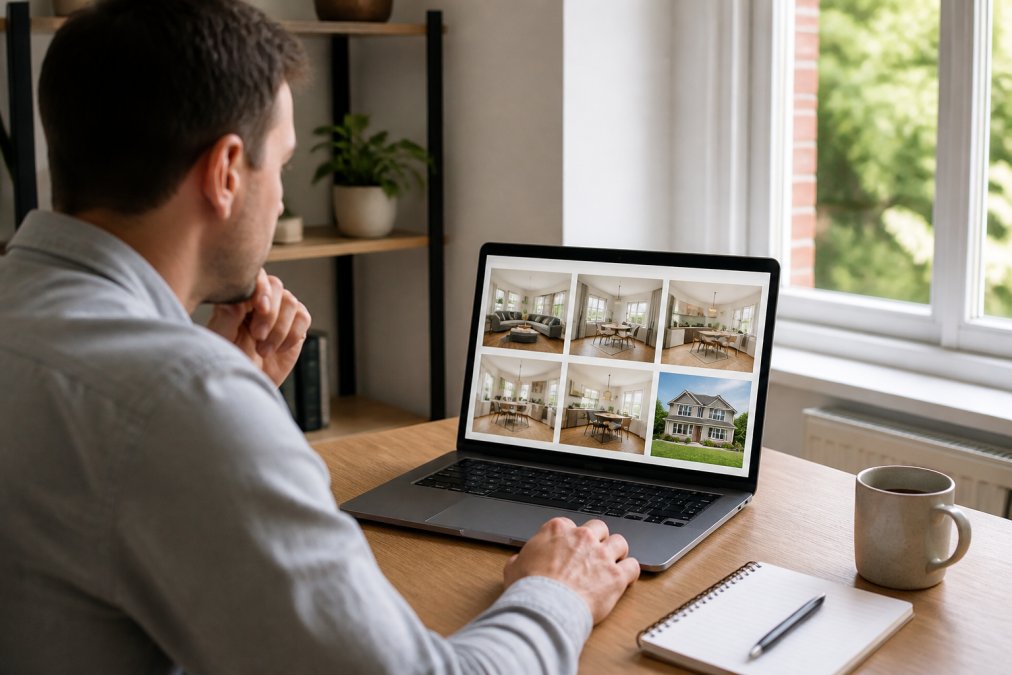
Buyers can protect themselves by developing a critical eye for property photographs. Before scheduling a viewing or making an offer, verify that images honestly represent the property.
Compare multiple photographs. If the listing includes photos from different angles and lighting, it's more likely to be honest. Look for consistency across images; if one photo shows a room as bright and spacious while another shows it as dark and cramped, distortion is likely.
Check for signs of digital staging. Look for furniture that appears artificial, lighting that doesn't match the room's actual light sources, or elements that seem out of place. If the listing includes furnished rooms but doesn't mention that furniture is included in the sale, the staging is likely virtual.
Assess lens distortion by looking at straight lines in the room. If walls, doorframes, or windows appear curved or warped, a fisheye or ultra-wide-angle lens was likely used. Compare apparent room size across different photographs; if one image makes the room appear much larger than others, distortion is present.
Look for signs of over-editing. Unnaturally saturated colours, impossibly bright walls, or completely absent shadows suggest heavy editing. Compare colours in photographs to colours in other rooms in the same listing; consistency suggests honesty.
Consider the lighting. If a room appears brightly lit in the photograph, check whether the room has windows that would provide that light. If the photograph shows bright daylight but the room has no windows, artificial lighting was likely enhanced beyond what's realistic.
Ask questions during the viewing. How bright is the room in natural light? What's the actual condition of walls and fixtures? Does the layout match the photographs? An honest property owner will answer directly.
Trust your instincts. If something feels wrong about the photographs, it probably is. Honest property photography should match what you see when you visit.
Avoiding misleading property photos protects everyone involved in property transactions. For sellers and agents, honest photography builds buyer trust, reduces viewing cancellations, and protects against legal liability. For buyers, it enables informed decision-making based on accurate information.
The Consumer Protection from Unfair Trading Regulations 2008 sets a clear legal standard: property marketing must not mislead through distortion or omission of material information. Professional property photography meets this standard by presenting properties honestly, using proper lighting, composition, and minimal, truthful editing.
Property Home Photos understands that trustworthy imagery is essential to successful property marketing. By working directly with Mark Henry Rood, clients receive professional photographs that reflect their property's true characteristics, building buyer confidence and accelerating the path to sale. Request a quote to discover how honest, high-quality imagery can transform your property listing.
Frequently Asked Questions
What are the legal implications of misleading property photos in the UK?
Misleading property photos can breach the Consumer Protection from Unfair Trading Regulations 2008, which prohibits aggressive or deceptive commercial practices. If a photo materially misrepresents the property's condition, size, or features, buyers may have grounds for legal action or claims of misrepresentation. Estate agents have a duty to ensure listings are accurate; false imagery can result in complaints to trading standards, regulatory fines, or civil lawsuits. Transparency and disclosure of any photo enhancements protect you legally.
Does the Consumer Protection from Unfair Trading Regulations apply to property photos?
Yes. The Consumer Protection from Unfair Trading Regulations 2008 applies to property marketing, including photography. The regulations require that commercial practices be transparent and not mislead consumers about material facts. If property photos omit key information (such as structural damage, poor lighting conditions, or limited space) or use manipulation to misrepresent size, condition, or layout, this constitutes a breach. Agents and sellers must ensure photos accurately reflect the property as it will be viewed in person.
What counts as material information that must be disclosed in property listings?
Material information includes anything that would influence a buyer's or tenant's decision: the property's actual size and layout, structural condition, natural light availability, neighbouring features, and any significant defects or limitations. If a photo uses wide-angle distortion to exaggerate space, or digital staging to hide clutter or damage, you're omitting material information. Filters, colour correction, and lighting adjustments are acceptable only if they reflect how the property genuinely appears. Omissions, not showing a room or feature at all, can be equally misleading if that feature is material to the purchase.
How can over-editing property photos lead to legal disputes?
Over-editing creates a gap between listing expectations and reality. When buyers or tenants view the property in person and find it substantially different from photos, due to excessive retouching, filters, clutter removal, or virtual staging, they may claim misrepresentation. This can trigger complaints, cancelled viewings, withdrawal from sales, or legal claims for damages. Over-edited photos also damage trust and credibility, leading to negative reviews and fewer enquiries. Courts and regulators view aggressive editing as evidence of intent to deceive, increasing liability exposure.