 comparison
Cost of Professional vs DIY Photography: 2026 Guide
Table of Contents
- Professional vs DIY Photography: The True Cost Comparison
- Real Estate Photography Pricing UK: What Shapes the Fee
- DIY Property Photography: Pros, Cons, and Hidden Costs
- Benefits of Professional Property Photography for Listings
- How to Prepare a Property for a Photoshoot
- When Professional vs DIY Photography Is the Right Call
- Frequently Asked Questions
Last Updated: September 1, 2026
Professional vs DIY Photography: The True Cost Comparison
The cost of professional vs DIY photography is rarely straightforward. Most property owners see a photographer's session fee and assume they could do it cheaper themselves, but this calculation almost always underestimates what DIY actually costs. Below, we break down both sides honestly, so you can decide based on real numbers rather than assumptions.
Professional vs DIY photography is a genuine trade-off. The right answer depends on your budget, time, technical proficiency, and what's at stake if images underperform.
What Professional Photography Actually Costs
Professional property photography pricing covers more than the hour or two spent on site. The session fee funds equipment, insurance, post-production, colour grading, and the experience to get lighting right on the first visit rather than the fifth.
For residential property photography, pricing typically reflects property size, number of rooms, and shoot complexity. Commercial and hospitality work commands higher rates because creative direction and turnaround time are more demanding. Pricing varies by provider, region, and deliverables, so requesting a quote is the most reliable way to understand your actual cost.
What that fee buys you is consistency: every image arrives colour-matched, correctly exposed, and optimised for online listings at the resolution platforms require. You receive edited, ready-to-use visual assets, not raw files you still need to process.
The Real Cost of DIY: Equipment, Software, and Time
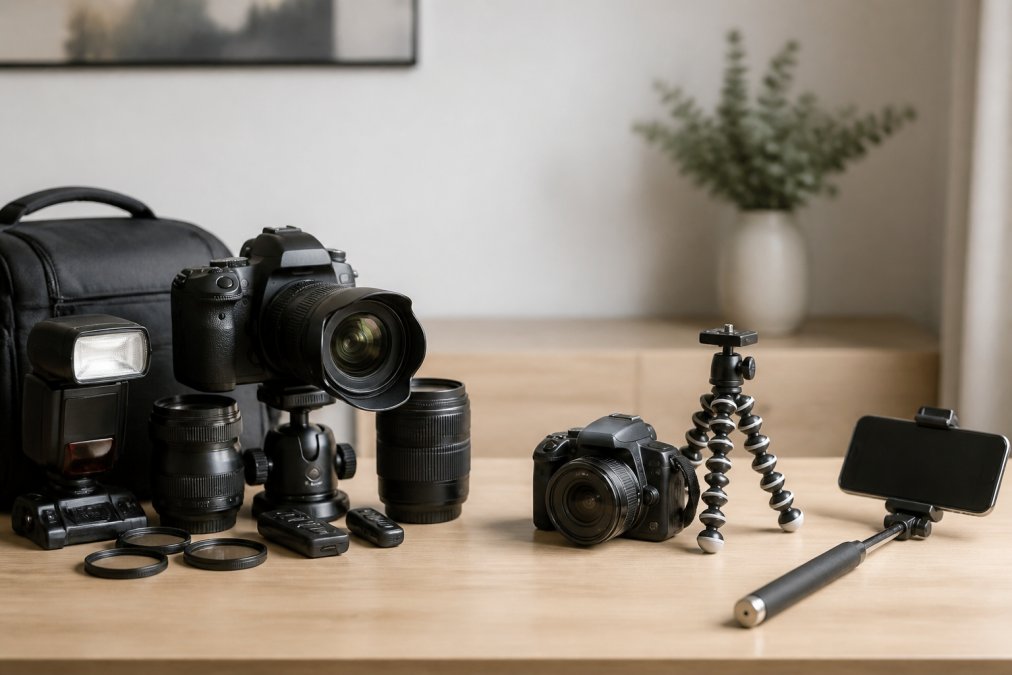
DIY photography looks cheap until you price it properly. A capable mirrorless camera body like the Sony Alpha a6400, suitable for professional listings, costs approximately £800-£1,000. Add a wide-angle lens for interiors, a tripod, remote shutter, and portable lighting, and costs climb quickly.
Then there is editing software. Adobe Lightroom costs £9.98 per month on the Photography Plan (which includes Photoshop). That subscription is ongoing, not one-time.
For professional-grade post-production without learning the software yourself, services like BoxBrownie offer retouching from around £1.30 per image. For a ten-room property, editing costs alone reach £20-£30 before you touch the camera.
Hidden costs compound quickly:
- Camera body and wide-angle lens: £1,000-£1,500+
- Tripod and accessories: £50-£150
- Editing software subscription: ongoing annual cost
- External editing services: per-image fees
- Reshoots when images miss the mark: additional time and travel
Real Estate Photography Pricing UK: What Shapes the Fee
Real estate photography pricing reflects variables that affect both professional and DIY costs. Understanding these factors helps you assess value rather than simply comparing headline numbers.
Property size and complexity are primary drivers. A two-bedroom flat requires fewer shots than a six-bedroom house with garden and outbuildings. Commercial spaces and hospitality venues demand different approaches: capturing a bar's atmosphere differs from shooting a living room.
Turnaround time affects cost on both sides. A professional delivering edited images within 24 hours provides a logistical service as much as a creative one. DIY photographers often underestimate post-production: sorting raw files, selecting hero shots, editing for consistency, and exporting at correct resolution can take four to six hours per property.
Image licensing matters for commercial use. Professional photographers typically provide a licence for marketing collateral as part of their fee. Without a written agreement, copyright belongs to the photographer, not the person who commissioned the work. The Intellectual Property Office guidance on photography copyright confirms this clearly.
Location and travel influence professional fees for on-site work, particularly in rural areas.
DIY Property Photography: Pros, Cons, and Hidden Costs
DIY property photography is not inherently bad. For landlords managing large portfolios of similar properties, or agents shooting dozens of similar homes monthly, building in-house capability can make financial sense over time.
Pros of DIY property photography:
- No session fee per property once equipment is purchased
- Full creative control and immediate access to raw files
- Flexibility to reshoot without scheduling constraints
- Useful for routine updates or low-stakes listings
Cons of DIY property photography:
- Significant upfront capital for camera, lenses, and accessories
- Steep learning curve for interior lighting, composition, and editing
- Inconsistent results until proficiency is established
- Time spent shooting and editing is time away from core business
- Substandard images can harm conversion rates on listings
The Opportunity Cost of Your Own Time
A property developer or estate agent spending four hours photographing and editing a single property is not spending those hours on viewings, client relationships, or deal negotiation. That time has value, typically higher than a professional session fee.
If your billable rate is £50 per hour, four hours of photography and editing costs you £200 in lost productive time, before equipment or software. At £75 per hour, that rises to £300. The professional session fee often compares favourably once this calculation is made honestly.
AI-Assisted DIY Workflows: Do They Close the Gap?
AI editing tools have genuinely changed what is achievable in DIY workflows. Applications automating sky replacement, object removal, and colour grading compress post-production time significantly. Some platforms offer one-click enhancement trained on real estate imagery, producing results that would have required considerable skill two years ago.
AI tools raise the floor of DIY image quality, making obviously bad images harder to produce. What they do not reliably replace is the judgment behind professional lighting setup, knowing which angle makes a room read larger, or the creative direction needed to capture atmosphere in hospitality venues.
For straightforward residential properties in good condition, AI-assisted DIY can produce listing-quality images. For holiday lets competing on visual appeal, commercial spaces where brand perception matters, or hospitality venues where ambience is the product, the gap between AI-assisted DIY and professional photography remains meaningful.
According to Rightmove's guidance on property listing photography, image quality is one of the primary factors influencing click-through rates on property listings, underscoring why visual standard matters commercially.
Benefits of Professional Property Photography for Listings
Professional property photography produces images that do specific, measurable work: they generate enquiries. That is the clearest way to frame the benefits, not as aesthetic preference, but as commercial output.
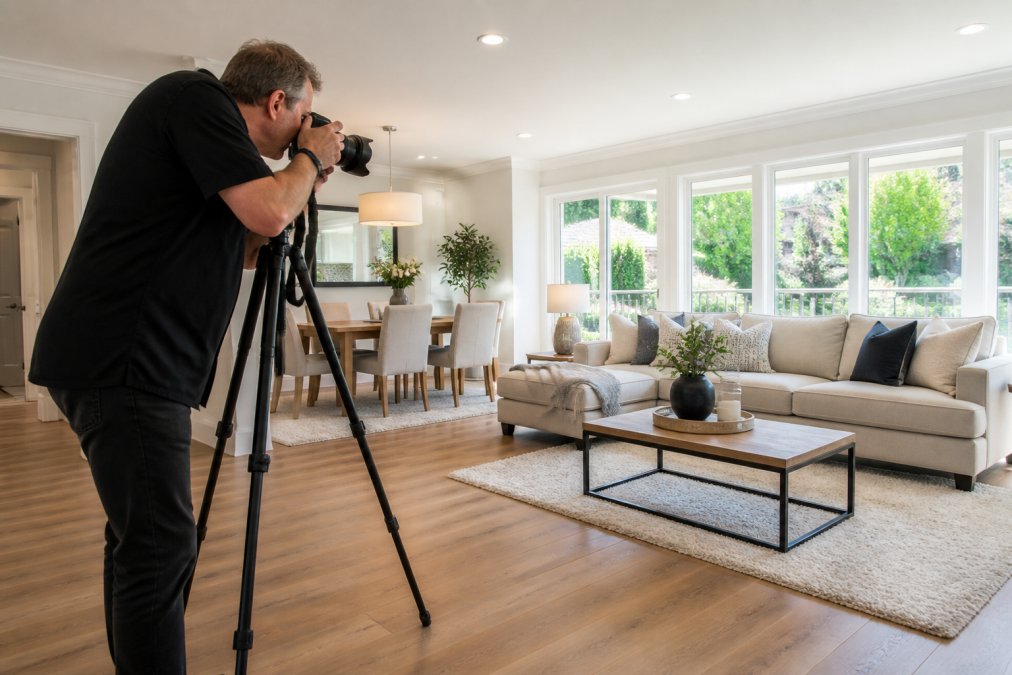
A professional photographer brings calibrated lighting that eliminates the flat, yellow-tinged interiors smartphone cameras produce under artificial light. Wide-angle lenses convey spatial scale without unrealistic distortion. Post-production colour grading ensures consistency across every image, so the listing reads as coherent and trustworthy.
For holiday lets, stakes are higher. Guests make booking decisions almost entirely on photography. Images that accurately represent the property while presenting it at its best build trust that converts browsers into bookings. Images that overstate reality create the reverse: complaints, poor reviews, and cancellations.
Commercial property photography establishes credibility. An office or retail space photographed professionally signals that the landlord or agent takes the asset seriously, which signals to prospective tenants that the management relationship will be professional.
Professional photography also delivers turnaround reliability. A service built around listing deadlines, where the photographer understands that missing a Thursday launch date has real commercial consequences, is worth more than a cheaper option delivering in its own time.
How to Prepare a Property for a Photoshoot
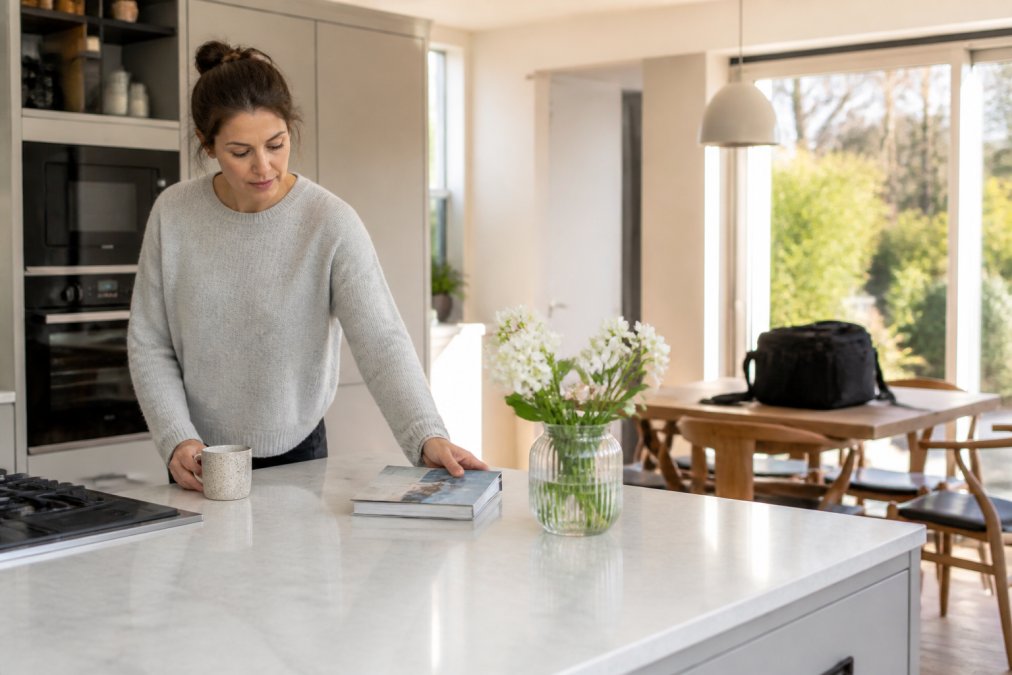
Preparation is where most value in a professional shoot is either captured or lost. A skilled photographer can work with a well-prepared space; no photographer can fix a cluttered, poorly staged property without it looking artificial.
The Property Ombudsman's code of practice for residential estate agents emphasises that property marketing materials must be accurate and not mislead buyers, meaning good preparation presents the property honestly at its best, not fabricating unreality.
Work through this checklist before any shoot:
- Declutter every room: remove personal items, excess furniture, and anything making spaces feel smaller
- Deep clean all surfaces, windows, and floors; cameras pick up dust and smears the eye overlooks
- Replace blown bulbs and ensure consistent colour temperature
- Make all beds with fresh, pressed linen
- Clear kitchen and bathroom counters; keep only deliberate styling items
- Remove vehicles from driveways; ensure exterior is tidy
- Open curtains and blinds fully to maximise natural light
- Add simple styling: fresh flowers, a bowl of fruit, neatly folded towels
- Check garden or outdoor space: mow, sweep, remove equipment from view
For hospitality venues, preparation means thinking about atmosphere: are lights set right, is the bar stocked invitingly, are tables dressed as they would be for service? A venue shot empty under flat overhead lighting looks nothing like the experience you are selling.
When Professional vs DIY Photography Is the Right Call
The decision between professional vs DIY photography is not one-size-fits-all. Here is a practical framework based on your situation.
| Scenario | Best Approach | Key Reason |
|---|---|---|
| Single residential sale | Professional | One-time cost; high stakes for sale price and speed |
| Large portfolio of similar rentals | DIY (with investment) | Volume justifies equipment cost over time |
| Holiday let or serviced apartment | Professional | Visual quality directly drives booking conversion |
| Hospitality venue (pub, bar, hotel) | Professional | Atmosphere requires creative direction, not documentation |
| Commercial office or retail space | Professional | Brand perception and credibility are at stake |
| Progress or interim shots | DIY | Low stakes; speed outweighs quality concerns |
| Urgent listing with tight deadline | Professional (with guaranteed turnaround) | Risk of DIY reshoot missing launch date |
The clearest signal that professional photography is right: when images do commercial work, generating enquiries, driving bookings, influencing decisions, the cost of underperformance exceeds the session fee.
The clearest signal that DIY makes sense: when images are internal, interim, or low-stakes, and when you or your team has genuine technical proficiency.
One overlooked angle is scalability. A business owner shooting their first property themselves, then their second, then finding they spend two days weekly on photography and editing, has not saved money, they have created a job for themselves. Professional photography scales with workload; DIY scales against it.
A second overlooked consideration is liability. Professional photographers carry public liability insurance covering damage or injury during shoots. DIY shoots on occupied properties carry no such protection unless arranged separately. The Health and Safety Executive guidance on risk assessment applies to commercial shoots just as to any workplace activity.
For most property professionals and homeowners preparing a sale, the cost of professional vs DIY photography resolves clearly when all costs are counted honestly: equipment, software, time, opportunity cost, and commercial risk of underperforming images.
The right photography decision comes down to what is actually at stake. For estate agents, holiday let owners, and hospitality venues where images directly influence enquiry volume and booking rates, the case for professional photography is straightforward. Property Home Photos works directly with photographer Mark Henry Rood, offering a satisfaction guarantee and turnaround times planned around your listing dates and sales deadlines. Request a quote and get images that do the commercial work your marketing needs.
Frequently Asked Questions
How much does professional property photography cost in the UK?
Professional property photography pricing in the UK varies based on property size, location, number of rooms, and the deliverables included, such as edited images, floor plans, or short promotional videos. Session fees also reflect turnaround time and whether post-production services like colour grading or high-end retouching are included. Because these factors differ for every instruction, the best approach is to contact a photographer directly for a tailored quote based on your specific property and listing deadline.
What are the hidden costs of DIY real estate photography?
DIY property photography carries costs beyond the camera body. A capable mirrorless camera suitable for interior work costs roughly £800-£1,000 for the body alone, and a wide-angle lens adds further expense. Editing software such as Adobe Lightroom runs around £9.98 per month. Add the hours spent shooting, culling, and editing raw files, plus any outsourced retouching, and the total investment often rivals a professional session fee, without the guarantee of consistent, listing-ready results.
Does professional photography increase property enquiry rates?
Properties marketed with professional photography consistently attract more enquiries than those shot on smartphones or entry-level cameras. High-quality imagery improves aesthetic consistency across a listing, builds credibility with buyers and tenants, and helps viewers understand the layout and finish of a space before arranging a viewing. For holiday lets, strong visual assets directly influence booking decisions. The benefits of professional property photography extend beyond aesthetics: they affect how quickly a property moves and at what price.
What equipment do I need for high-quality DIY property photography?
At minimum, DIY property photography requires an interchangeable-lens camera with a wide-angle lens, a sturdy tripod for interior stability, and an understanding of natural and artificial lighting setups. A camera such as the Sony Alpha a6400 offers solid image resolution for listings. Post-production requires editing software capable of processing raw files. Without this combination, images often suffer from distortion, poor colour grading, and inconsistent exposure, which reduces their impact as marketing collateral.
Is professional photography worth it for a small holiday let?
For a holiday let with even modest booking volume, professional photography pays for itself quickly. Guests make booking decisions almost entirely on visuals, so strong imagery directly affects occupancy rates. A professionally shot property with accurate, appealing images also reduces guest complaints about listings not matching reality, which protects your reviews. The session fee for a small property is typically a fraction of a single booking's revenue, making the cost-benefit analysis straightforward for most owners.