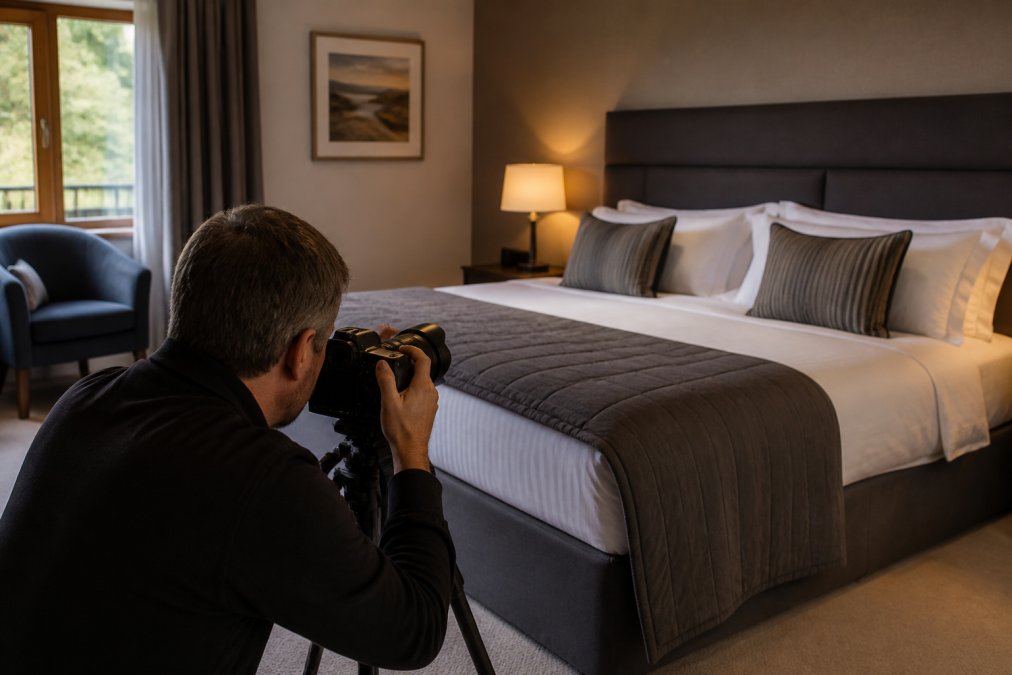
 how-to
Capture Atmospheric Hospitality Photography: A Step-by-Step Guide
Table of Contents
- Why Atmospheric Hospitality Photography Matters for Bookings
- Prepare Your Property Before the Shoot
- Best Lighting for Hotel Photography and Interior Spaces
- Hospitality Photography Styling Tips for Visual Impact
- Composition and Camera Techniques
- How to Increase Holiday Let Bookings with Photography Strategy
- Post-Production and Retouching for Authentic Results
- Conclusion
- Frequently Asked Questions
Last Updated: September 19, 2026
Why Atmospheric Hospitality Photography Matters for Bookings
Atmospheric hospitality photography captures the feeling guests will have when they arrive, showing the actual experience, not just empty rooms. When potential guests see your space, they're imagining themselves there. A photo that captures warmth, light, and genuine atmosphere removes doubt in ways written description cannot, building confidence and driving faster conversions.
Prepare Your Property Before the Shoot
A well-prepared property delivers twice the impact and takes half the time to photograph.
Clean and declutter strategically
Remove personal items, clutter, and mess. Clear kitchen counters, tidy bedrooms, and organised living areas photograph far better than cluttered ones.
Leave items that tell the story: a coffee mug on the nightstand, fresh flowers, quality linens, books on shelves, a wine glass on the bar. These details add personality and show guests how the space functions.
Remove pet toys, personal photographs, and branded items, they distract from the property.
Check lighting conditions and timing
Natural light is your most valuable asset. Spend time in your property at different times of day to understand how light moves through rooms. A room photographed in harsh midday sun looks flat; the same room in soft morning or evening light looks warm and inviting. Address obstacles like trees blocking windows, parked cars, or neighbouring scaffolding before the shoot date.
Best Lighting for Hotel Photography and Interior Spaces
The foundation of atmospheric hospitality photography is light. Not just any light, but the right light in the right place at the right time.
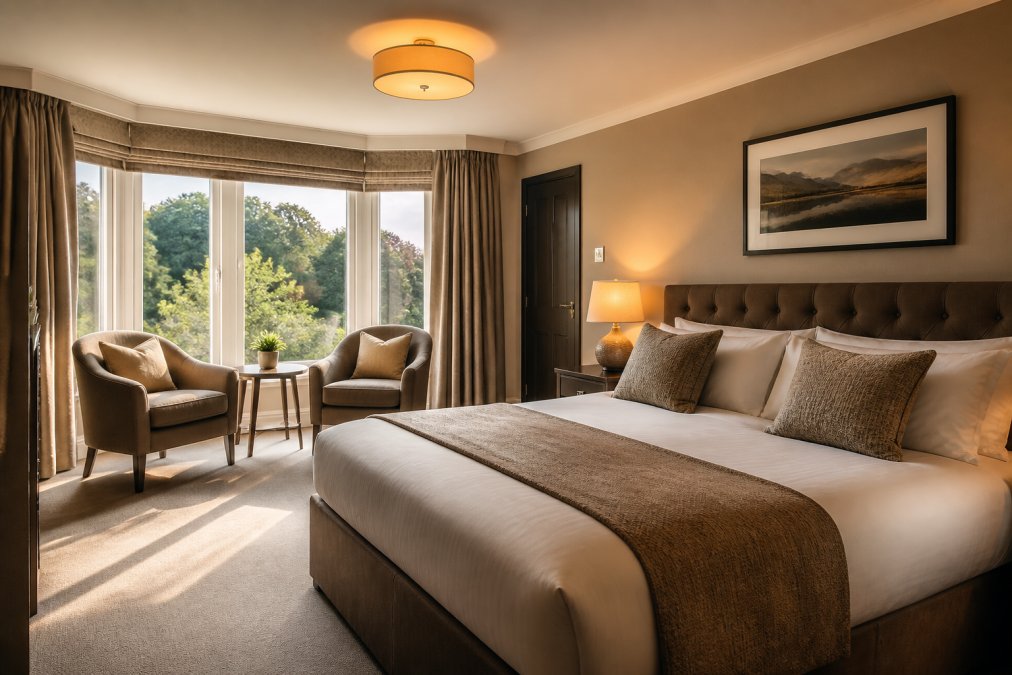
Maximise natural light as your foundation
Natural light is your starting point, it's consistent, flattering, and free. Open all curtains and blinds to let light flood in. Natural light alone often isn't enough on cloudy days or in the evening, which is where supplementary lighting comes in.
Balance ambient and supplementary lighting
Balance is essential. Too much artificial light looks like a showroom; too little looks dark. The photographer layers existing fixtures, portable lighting to fill shadows, reflectors to bounce light into corners, and tripods for consistency. This creates depth, shows texture, and makes the space feel three-dimensional.
Manage dynamic range with exposure blending
Hotels and holiday lets often have bright windows and darker interiors. Exposure blending combines multiple exposures to show detail in both bright and dark areas, capturing the full visual story without losing information in highlights or shadows.
Hospitality Photography Styling Tips for Visual Impact
What you put in front of the camera matters as much as how you light it. Styling transforms a space from functional to inviting.
Choose props and linens that enhance brand identity
Your brand identity should be visible in every image. Linens set the tone immediately, quality matters, and guests notice the difference between cheap polyester and proper cotton. Neutral tones feel calming; bold colours feel energetic.
Props show how the space is used: fresh flowers suggest care, quality glassware suggests craftsmanship, neatly folded towels suggest cleanliness, a book suggests comfort. Every prop should show how the space functions or reinforce your brand identity.
Stage food and beverage elements authentically
For hospitality venues, food and beverage elements are central to atmosphere. Stage food and drinks authentically, a plate of fish and chips should look like actual food, a glass of wine should be filled naturally. Guests can tell when food is staged, so genuine-looking food and drink build trust.
Highlight unique selling points through composition
Every property has unique features, a fireplace, a view, a feature wall, a spacious kitchen. Composition draws attention to these through strategic angles, depth of field, and framing that guides the eye toward your best features.
Composition and Camera Techniques
How the photographer frames each shot determines whether guests see a nice room or a space they want to book.
Use wide-angle lenses to capture space and scale
Wide-angle lenses show more of the room in a single frame, making spaces feel larger and more open. They're essential for atmospheric hospitality photography because they show the full experience of being in the space. Skilled photographers manage edge distortion through careful positioning and post-production correction.
Frame shots to guide the viewer's eye
Every element in the frame serves a purpose. The photographer uses lines, depth, and placement to guide your eye.
Leading lines draw attention, a hallway toward a bright window, a staircase upward, a table edge toward the view beyond.
Depth of field separates foreground from background, showing scale and inviting the viewer into the scene.
Layering shows multiple elements at once, a lamp in the foreground, the bed in the middle ground, the window in the background, creating visual interest.
Shoot in RAW for maximum post-production flexibility
RAW files contain all the data the camera captured, giving the photographer maximum flexibility to adjust colours, refine exposure, and recover details from shadows and highlights.
JPEG files are processed and compressed, containing less information and losing detail that can never be recovered.
How to Increase Holiday Let Bookings with Photography Strategy
Photography strategy increases bookings. How you use your images across listings and marketing channels matters as much as the images themselves.
Create visual storytelling that builds guest confidence
Guests book based on a story the photos tell together. A sequence showing the entrance, living space, bedrooms, bathrooms, and outdoor areas tells a complete story.
Each image should answer a guest question:
- What does the entrance look like?
- Is the living space comfortable and well-lit?
- Are the bedrooms spacious and clean?
- Are the bathrooms modern and hygienic?
- What's the outdoor space like?
- Is there a kitchen, and can I actually cook?
Integrate lifestyle and detail shots into your property marketing
Wide shots show the space; detail shots show the experience. A close-up of crisp linens, a bedside lamp, and a book makes someone feel like they'd sleep well there.
Post-Production and Retouching for Authentic Results
Post-production makes good photographs great, but there's a line between enhancing and misrepresenting.
Correct colour temperature and white balance
Colour temperature is how warm or cool light appears. The photographer corrects this so colours look natural and accurate.
Enhance without misrepresenting your space
Enhancement means bringing out what's actually there, a dull room becomes brighter, a dim corner becomes visible. But enhancement doesn't mean creating false impressions.
Conclusion
Atmospheric hospitality photography is a strategic tool that shows potential guests what they're getting and builds confidence to drive bookings.
Frequently Asked Questions
How do you capture atmospheric hospitality photography that looks like the real property?
Atmospheric hospitality photography relies on honest lighting, thoughtful staging, and composition that shows the space as guests will experience it. Use natural light as your foundation, balance it with ambient fixtures, and avoid over-processing in post-production. Shoot in RAW format to preserve detail, and focus on capturing the mood and layout guests care about: comfort, cleanliness, and character. Professional photographers shoot multiple angles and use exposure blending to maintain realistic dynamic range, this prevents the 'too bright' or 'too dark' look that makes guests feel misled when they arrive.
What is the best lighting for hotel photography?
The best lighting for hotel photography combines natural light with ambient room lighting. Position shots to capture window light without harsh glare, and use the property's existing lamps, ceiling fixtures, and accent lighting to define the space. Exposure blending, combining multiple exposures in post-production, solves the problem of bright windows and dark interiors in the same frame. Avoid artificial flash that flattens atmosphere; instead, use tripods to allow longer shutter speeds and let ambient light do the work. Colour temperature matters too: warm light (around 3000K) feels inviting for hospitality spaces, whilst cooler light can make rooms feel sterile.
How can hospitality photography styling tips help increase bookings?
Strategic styling shows guests what to expect and builds confidence in their booking decision. Fresh linens, thoughtfully placed props (like a coffee cup on a bedside table or flowers in a vase), and subtle lifestyle touches tell a story of comfort and care. Highlight unique selling points, a feature fireplace, original artwork, or quality furnishings, through careful composition and lighting. Avoid over-staging; guests respond to authenticity. Food and beverage elements, when present, should look naturally placed rather than artificial. The goal is to make the space feel inviting and real, not like a showroom, so guests trust that the photos match what they'll experience.
Why should I invest in professional atmospheric hospitality photography instead of taking photos myself?
Professional photographers bring technical expertise in lighting, composition, and post-production that smartphones and amateur cameras struggle to replicate. They understand how to balance natural and ambient light, manage the dynamic range between bright windows and interior spaces, and use wide-angle lenses effectively without distortion. They also know how to stage and style spaces to highlight their best features whilst keeping them authentic. Most importantly, professional photography delivers faster turnaround times around your listing deadlines, and the visual quality directly impacts booking conversion rates. Guests make split-second decisions based on images; professional atmospheric photography builds trust and reduces cancellations due to unmet expectations.