 comparison
Aritect Alternatives for Holiday Lets: 5 Smarter Routes
Table of Contents
- Why Look Beyond Aritect for Your Holiday Let?
- 1. Architectural Technologist for Residential Projects
- 2. Design-and-Build Firms: One Contract, One Point of Contact
- 3. The Cost of Architectural Drawings UK: What to Budget
- 4. Professional Property Photography for Holiday Rentals
- How to Choose the Right Aritect Alternative
- Conclusion
- Frequently Asked Questions
Last Updated: September 4, 2026
Why Look Beyond Aritect for Your Holiday Let?
Finding the right aritect alternative for holiday lets often starts with a mismatch between what you need and what a single service delivers. Many owners discover that securing planning permission, commissioning drawings, and marketing a finished property requires several different skill sets. This guide from Property Home Photos breaks down five practical routes that address the full lifecycle of a holiday let project.
Most owners need pragmatic help: someone to produce compliant drawings, a builder who can price the work accurately, and later, imagery that convinces guests to book. An aritect alternative for holiday lets should be judged on how well it solves each of these distinct problems.
The real cost of a holiday let project is rarely the professional fees; it is the delay between stages. A slow planning process or a marketing launch with poor visuals can cost you an entire booking season. Choosing the right aritect alternatives early can save thousands in redesign fees and lost rental income.
1. Architectural Technologist for Residential Projects
An architectural technologist for residential projects is often the most direct aritect alternative for holiday lets when your focus is technical delivery rather than avant-garde design. Where an architect concentrates on the overall concept, a technologist specialises in building science, detailing, and ensuring your drawings comply with current building regulations.
This distinction matters for retrofit projects, barn conversions, and extensions. A technologist excels at making existing structures work harder, solving moisture problems, and specifying materials that meet performance targets. They are typically more cost-effective for smaller schemes and work closely with structural engineers to validate load-bearing changes.
| Role | Best For | Typical Output | Key Limitation |
|---|---|---|---|
| Architect | Complex, design-led new builds | Concept designs, planning drawings | Higher fees, less focus on technical detailing |
| Architectural Technologist | Conversions, extensions, technical compliance | Building regulations drawings, specifications | Less emphasis on conceptual aesthetics |
| Design-and-Build Firm | End-to-end delivery under one contract | Full construction, project management | Less independent oversight of the build |
A technologist brings a pragmatic eye to buildability, asking hard questions about wall thickness, ceiling heights, and service runs before you commit to a layout. For a holiday let, where the goal is durable finishes that withstand weekly guest turnover, this technical rigour is often worth more than a striking roofline.
2. Design-and-Build Firms: One Contract, One Point of Contact
When you want to avoid the friction between separate designers and contractors, a design-and-build firm offers a compelling aritect alternative for holiday lets. The key advantage is a single contract covering both the architectural design and the construction work, which removes the classic "blame game" when issues arise on site.
This route suits owners who are building from scratch or undertaking major renovations and want a guaranteed fixed price. The firm takes responsibility for the design, the planning application, and the build quality. For a holiday let, this means your project reaches completion faster, because design decisions are made with construction realities in mind from day one.
The main drawback is the loss of independent scrutiny. Because the same team designs and builds, there is less external challenge to design assumptions or construction methods. Check the firm's portfolio of completed holiday lets specifically, and ask for client references who can speak to the final build quality, not just the sales presentation.
The Hidden Cost: Operational and Maintenance Realities
Most advice on design-and-build focuses on the construction phase, but for a holiday let, the long-term operational cost is where the real financial risk lies. Architectural homes often feature bespoke materials, expansive glazing, and complex rooflines that look stunning in photographs but can create significant upkeep burdens. Before you sign a contract, ask how their design choices will perform under weekly guest turnover.
Consider the practicalities of a double-height glazing wall in a rural barn conversion. While it provides the 'wow' factor that drives premium nightly rates, it also means:
- Higher cleaning costs: Reaching upper windows and ledges requires specialist equipment or professional cleaners, adding to costs.
- Increased insurance premiums: Large expanses of glass can be a liability, and some UK insurers may require laminated or toughened glass, which is more expensive to replace.
- Thermal performance challenges: Even with modern double glazing, large glass areas can lead to heat loss in winter and overheating in summer, increasing energy bills and potentially leading to guest complaints about comfort.
Successful owners often request a 'maintenance audit' before finalising plans. This involves the firm identifying every element that will require regular upkeep, from external timber cladding that needs re-oiling every two years to smart home systems that need software updates. A reputable firm will be transparent about these costs, but many owners find they must ask directly.
Protecting Your Investment with a Performance Specification
To mitigate the risk of a design that looks good but costs too much to run, insist on a performance specification in your contract. This should set out measurable criteria for energy efficiency (such as a target EPC rating), acoustic insulation between rooms, and durability of finishes. For example, specify that all flooring in high-traffic areas must be rated for commercial use, or that paint finishes must be washable and scuff-resistant.
A performance specification shifts the conversation from aesthetics to outcomes, forcing the team to justify material choices on grounds of longevity and maintenance. This is particularly important for holiday lets, where wear and tear from guests is far greater than in a private residence. A sofa that cannot withstand a season of family holidays will need replacing within a year, wiping out any short-term savings.
Ensure your contract includes a clear defects liability period, typically 12 months for a new build. This gives you a window to rectify issues from initial occupancy, from leaking seals to faulty underfloor heating. The best firms will proactively schedule six-month and twelve-month inspections, but confirm this is included rather than assume it.
3. The Cost of Architectural Drawings UK: What to Budget
Understanding the cost of architectural drawings UK is essential before you commit to any aritect alternative for holiday lets. Fees vary widely based on project complexity, the professional you choose, and your location, so a qualified range is more useful than a single figure.
For a straightforward single-storey extension or a simple conversion, expect to pay less than for a complex new build with bespoke structural elements. As a general guide, you are paying for the professional's time, their liability insurance, and the technical accuracy required to pass building control. It is worth budgeting for revisions; most projects require at least two rounds of changes before the drawings are approved.
A common mistake is to assume the cheapest quote is the best value. Poorly detailed drawings can lead to expensive structural alterations on site. When comparing quotes, ask what is included: site surveys, structural calculations, and liaison with building control are often quoted as extras. A technologist can be more transparent about costs than a full architectural practice.
The Planning Permission Hurdle: A Practical Guide for Holiday Lets
The single biggest cost driver, and the most common source of delay, is the planning permission process. For a holiday let, the intended use of the property is a critical factor that many owners overlook. Under the Town and Country Planning (General Permitted Development) (England) Order 2015, some changes of use are permitted without a full application, but this does not automatically cover holiday lets (gov.uk).
A key distinction is between a change of use and a new build. Converting a barn or agricultural building may rely on permitted development rights, but these are subject to strict conditions, for example, the building must have been in agricultural use on a specified date, and the conversion must not involve rebuilding more than a certain percentage of external walls. Failing to meet these conditions means you will need a full planning application, adding both time and cost.
For new builds, the situation is more complex. LPAs in rural areas, particularly in National Parks and AONBs, apply stringent design policies, scrutinising architectural merit, landscape impact, and contribution to the local economy. A scheme that clearly demonstrates its holiday let purpose, for example, via a management plan showing year-round occupancy, is far more likely to gain approval than a generic residential design.
Budgeting for the Full Regulatory Landscape
Beyond planning permission, your budget must account for building regulations approval, which is a separate process. Your architectural drawings must demonstrate compliance with Part L (conservation of fuel and power), Part F (ventilation), and Part M (access to and use of buildings), among others (gov.uk). For a holiday let, you should also consider the requirements of the Tourism (Sleeping Accommodation) Act 2024 and the associated licensing scheme, which will require you to demonstrate that your property meets fire safety, gas safety, and electrical safety standards.
A practical way to manage these costs is to ask your technologist or architect for a fixed-fee 'regulatory package' that includes:
- Planning application submission and LPA liaison
- Building regulations drawings and specifications
- Structural calculations (often subcontracted, but should be coordinated)
- A pre-application advice meeting with the LPA (highly recommended for complex or sensitive sites)
Pre-application advice is a particularly valuable investment. Most LPAs charge for this service depending on project scale, but it can save thousands by identifying potential objections before you submit a full application. A planning officer's informal feedback on scale, massing, or materials can dramatically increase the chances of approval at the formal stage.
The cost of drawings is only the beginning. Budget for a party wall surveyor if your project involves a shared boundary, and for a structural engineer's site inspection during the build. A realistic budget for a holiday let conversion should include a contingency of at least 10-15% of the total project cost to cover regulatory and unforeseen site costs (rics.org).
4. Professional Property Photography for Holiday Rentals
Once the build is complete, professional property photography for holiday rentals is the single highest-return investment you can make. Guests make a booking decision in seconds, based almost entirely on the visual impression of your listing. It is the difference between a property that sits empty and one that maintains strong occupancy.
A skilled photographer captures the flow of a space, using natural light to make rooms feel larger and timing the shoot to avoid harsh shadows. This is where Property Home Photos excels. Working directly with photographer Mark Henry Rood, you get a tailored, punctual shoot with a satisfaction guarantee on the results.
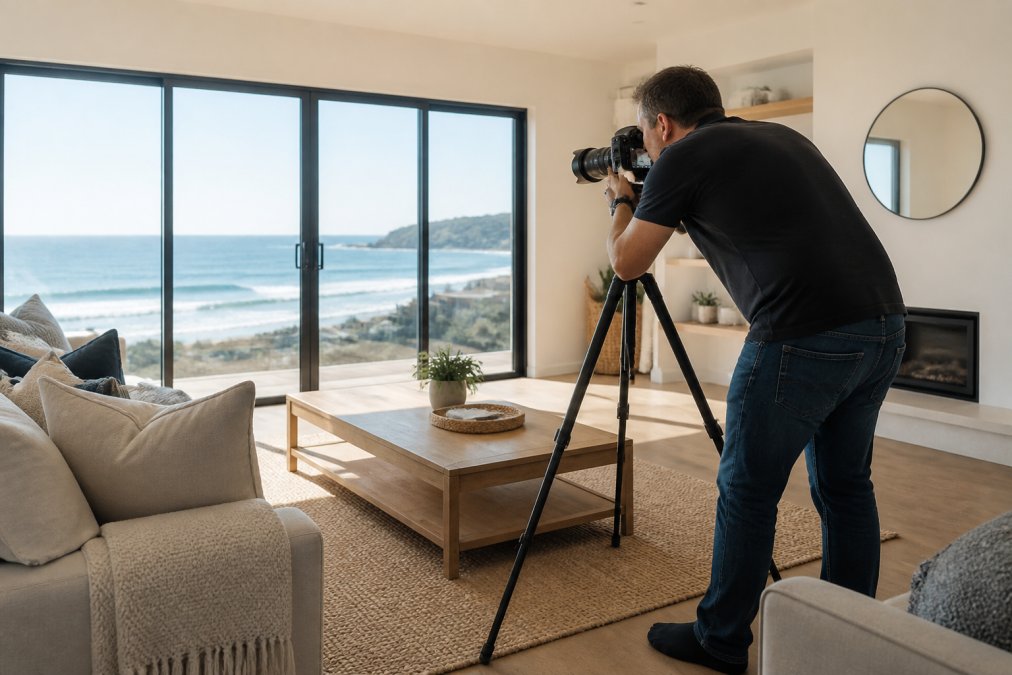
The turnaround is planned around your listing dates, so your property goes live exactly when you need it to. Missing a launch date by a week can cost you peak-season bookings. A photographer who understands this urgency and delivers trustworthy imagery that matches the real property helps you avoid complaints from misleading listings.
How to Choose the Right Aritect Alternative
Choosing the right aritect alternative for holiday lets comes down to matching the professional to your specific project stage and budget. There is no single correct answer, but there is a wrong fit for every project.
For a complex new build where design flair drives rental premiums, an architect or a design-and-build firm is the stronger choice. For a conversion or extension where technical compliance is the main hurdle, an architectural technologist delivers better value. For the marketing phase, professional photography is non-negotiable, and this is where you should not cut corners.
Assess your own skills honestly. If you have project management experience and time to coordinate trades, you can act as your own contractor and hire specialists individually. If you prefer a single point of accountability, a design-and-build contract reduces your administrative burden. The right route plays to your strengths and addresses your project's biggest risk.
Conclusion
The best aritect alternative for holiday lets is rarely a single service. It is a combination: a technologist for compliant drawings, a builder for quality construction, and a professional photographer to present the finished property to guests. Skimping on any one stage undermines the others, and the cost of redoing work always exceeds the cost of doing it right.
At Property Home Photos, we focus on the final, crucial stage: ensuring your holiday let wins bookings from the moment it goes live. Our professional property photography and short promotional videos help homes and lets secure more enquiries, with a satisfaction guarantee and turnaround planned around your listing dates. Request a quote and see how the right imagery simplifies the decision for your next guest.
Frequently Asked Questions
Is there a cheaper alternative to an architect for holiday let renovations?
Yes. An architectural technologist for residential projects typically costs less than a full architect service while handling technical design, building regulations, and planning drawings. For smaller holiday let conversions or extensions, this can reduce fees. Another route is a design-and-build firm, which bundles design and construction into one contract. Always compare quotes and check qualifications before committing.
What are the benefits of using an architectural technologist vs an architect?
Architectural technologists specialise in the technical side of building: structural details, building regulations compliance, and construction methods. They are often more cost-effective for straightforward projects where the layout is already clear. Architects tend to focus more on creative concept and spatial design. For a holiday let needing efficient layouts and robust build quality, a technologist is often the more practical choice.
Do I need an architect for planning permission for a holiday let?
No. You can submit planning permission yourself, but most owners use a professional to prepare drawings. An architectural technologist or a planning consultant can produce the required plans and manage the application. The cost of architectural drawings UK varies by project size and complexity, so request itemised quotes from professionals before deciding.
How much does professional property photography cost for a holiday rental?
Pricing depends on property size, number of images, and whether you require video. Rather than a fixed rate, most photographers quote per session based on your specific needs. Professional property photography for holiday rentals is an investment that typically pays for itself through higher occupancy rates and the ability to charge a premium nightly rate. Request a quote directly from Property Home Photos to get an accurate price for your property.
Frequently Asked Questions
Q: Is there a cheaper alternative to an architect for holiday let renovations?
A: Yes. An architectural technologist for residential projects typically costs less than a full architect service while handling technical design, building regulations, and planning drawings. For smaller holiday let conversions or extensions, this can reduce fees. Another route is a design-and-build firm, which bundles design and construction into one contract. Always compare quotes and check qualifications before committing.
Q: What are the benefits of using an architectural technologist vs an architect?
A: Architectural technologists specialise in the technical side of building: structural details, building regulations compliance, and construction methods. They are often more cost-effective for straightforward projects where the layout is already clear. Architects tend to focus more on creative concept and spatial design. For a holiday let needing efficient layouts and robust build quality, a technologist is often the more practical choice.
Q: Do I need an architect for planning permission for a holiday let?
A: No. You can submit planning permission yourself, but most owners use a professional to prepare drawings. An architectural technologist or a planning consultant can produce the required plans and manage the application. The cost of architectural drawings UK varies by project size and complexity, so request itemised quotes from professionals before deciding.
Q: How much does professional property photography cost for a holiday rental?
A: Pricing depends on property size, number of images, and whether you require video. Rather than a fixed rate, most photographers quote per session based on your specific needs. Professional property photography for holiday rentals is an investment that typically pays for itself through higher occupancy rates and the ability to charge a premium nightly rate. Request a quote directly from Property Home Photos to get an accurate price for your property.